Recent Posts

P0600 Nissan Code – Serial Communication Link


You've encountered a P0600 code on your Nissan, pinpointing a malfunction in the serial communication link crucial for coordinating between control modules. This issue often stems from faulty connections, damaged wires, or a failing automatic transmission (A/T) control unit. Experiencing erratic gear shifts, unusual noises from the gear shifter, or dashboard warning lights are common signs. Addressing this promptly prevents further transmission complications. To diagnose, you'll need an OBD-II scanner and a multimeter to check connections and signal integrity. Professional evaluation ensures accurate troubleshooting pursuing correct repairs. Staying informed on potential underlying issues refines your approach to vehicle maintenance.

P0600 Nissan Code Meaning

The P0600 code on a Nissan indicates a malfunction in the A/T Control Serial Communication Link, affecting transmission communication.

Causes include faulty electrical connections, damaged wires, or a failing A/T control unit.

Inspect connections and battery, and repair or replace defective components promptly to avoid transmission issues.

Error Code P0600 Symptoms

If your Nissan shows the P0600 code, you might notice some troubling signs about the car's systems talking to each other. This code means there's a problem with the communication link that helps different parts of the car work together.

Here are some things you might see:

  1. Dashboard Lights: The battery light might come on, hinting at electrical issues. You might also see the ABS light flashing on and off, which could mean problems with the brakes.
  2. Transmission Problems: The car may shift gears weirdly, making your drive rough and unpredictable. You might hear a clicking noise near the gear shifter, which suggests trouble with the car's modules talking to each other.
  3. Engine Issues: The engine mightn't have as much power or feel slow to respond. The engine and transmission control modules mightn't be communicating well, affecting how the car runs overall.

These signs can make driving difficult and might point to bigger problems. It's a good idea to check these issues quickly to keep everything running smoothly.

Causes of Nissan P0600 Fault Code

If your Nissan shows a P0600 error code, it means there's a problem with the communication between the car's computer systems. Here are some common reasons for this code:

1. Faulty Connections and Bad Control Units: If connectors are bad or the A/T control unit is broken, it can mess up the communication between the transmission control module and engine control module. This often triggers the P0600 code.

2. Wiring Issues: The car's wiring must be in good shape. Problems like short circuits or rusty connectors can stop signals from passing through properly.

These wiring troubles not only cause the P0600 code but can also lead to bigger problems with the car.

3. External Electrical Problems: Sometimes, things like a weak battery can cause temporary issues that show up as the P0600 code. This points to possible electrical problems in your car that might cause more issues if not fixed.

Keep wires and connectors in good condition to make sure the transmission system works smoothly. This helps prevent such error codes from appearing.

Tools Needed to Diagnose

To figure out what's wrong with your Nissan's P0600 code, you'll need some tools that help you check the car's electrical parts. Here's what you'll need:

  1. OBD-II Scanner: This tool reads the P0600 code from your car's computer. It also checks for other codes that might show problems in your car's communication network.
  2. Multimeter: Use this to measure voltage levels and check connections in the transmission and engine control units. It makes sure all wiring is working right.
  3. Wire Strippers and Crimpers: These tools help you fix wiring issues. They let you strip and crimp wires securely for good repairs.

Also, have a flashlight or inspection mirror to look for damage or rust on wires and connectors.

Your car's service manual is helpful too. It gives you detailed steps and wiring diagrams for a good diagnosis.

How to Fix P0600 Nissan Error Code – Step by Step

Step 1:

Begin by inspecting the battery and its connections. Look for any signs of corrosion or loose terminals, as poor electrical connections can frequently trigger the P0600 error code. Make sure all connections are tight and clean.

Step 2:

Use an OBD-II scanner to check for any additional trouble codes. Other codes beyond P0600 might offer further insights into issues between the A/T control unit and the engine control module.

Step 3:

Focus on the wiring and connectors that link the transmission control module to the engine control module. Inspect for any damage, shorts, or corrosion that could disrupt signal transmission and address any abnormalities found.

Step 4:

If the issue persists, test the alternator to ensure it provides adequate voltage output. Low voltage can lead to intermittent communication issues, so replace the alternator if it's found to be faulty.

Step 5:

Once all identified problems have been addressed, clear the error codes using your scanner. Conduct a retest to confirm the P0600 code has been resolved and ensure the vehicle operates correctly before concluding your repair work.

Common Diagnosis Mistakes

When you're dealing with the P0600 Nissan code, some common mistakes can make the job harder. People often assume fixing this error is just about using a scanner and swapping out a part.

But here are some things folks often miss:

  1. Check the Wiring and Connectors: Don't just look quickly at the wires and connectors. Corrosion or damage here can cause the P0600 code. Look closely at each wire and connector to be sure they aren't messing up the car's communication systems.
  2. Look for Other Codes: When you use an OBD-II scanner, make sure you check for all possible error codes. Missing other codes can lead to an incomplete diagnosis. These codes might show other problems that, if fixed, could resolve the P0600 issue.
  3. Do a Visual Inspection: Don't rely only on tech tools. A visual check can find problems, especially in the shifter assembly, that scanners might miss. This step is part of a thorough check-up.

P0600 Nissan Repair Cost

If you're dealing with a P0600 code on your Nissan, fixing it might cost anywhere from $200 to $600. The exact cost can vary based on what's causing the issue and how much local mechanics charge for their work.

Before any repairs, you'll probably need to pay for a diagnostic check. This helps find out exactly what's wrong and adds to the total cost.

If you have a bad alternator, replacing it can be one of the more expensive parts of the repair. Alternators can be pricey, and the labor to install them can also add up.

Fixing or replacing damaged wiring and connectors might also cost you more, especially if the problem is complicated.

It's a good idea to get multiple quotes from different mechanics to make sure you're getting a fair price and quality work.

Ask for detailed quotes that break down parts and labor costs. This helps you see where your money is going and make better choices about your car repairs.

Choosing a trusted mechanic who offers clear pricing and good warranties on their work is a smart move.

Related Error Codes on Nissan

If you're getting a P0600 error code on your Nissan, it's helpful to know about other related codes and what they mean.

  • P0601: This code means there's a problem with the car's memory. It might cause some glitches in how your car runs.
  • P0602: This code shows an error in the programming of the control module. The software might not be installed right.
  • P0603: This code is about a memory reset issue. Your car's settings might change suddenly.
  • P0700: This code points to a transmission problem. It makes sense because communication issues can affect how the transmission works.
  • P0630: This code means there's a problem with the VIN. It can affect how the car's computer systems talk to each other.
  • P0720: This code is linked to the output speed sensor. It can mess with how the transmission gets speed data, which might trigger a P0600 code.

Here's a simple table for quick reference:

Code Description Common Issues
P0601 Memory error in the control module Glitches in car operation
P0602 Error in control module programming Software not installed correctly
P0603 Control module's memory reset problem Settings might change unexpectedly
P0700 Problem with transmission control system Transmission issues
P0630 Problem with VIN programming or compatibility Communication errors
P0720 Issue with output speed sensor circuit Problems with transmission speed data

This guide helps you know what might be causing these error codes.

Can I drive safely with P0600 Nissan?

No, it's not safe to drive with a P0600 code in your Nissan.

This code means there's a big problem with how your car's parts talk to each other.

It can cause issues like stalling or power loss.

Get it fixed by a professional right away!

People Also Ask

What Is the Average Battery Life After Resolving a P0600 Code?

After fixing a P0600 code, your car's battery can last about 3 to 5 years. This depends on how you take care of it and the conditions you drive in. Make sure to keep your car in good shape for longer battery life.

How Does Weather Affect the P0600 Nissan Error?

Weather can cause the P0600 Nissan error. Hot or cold temperatures, humidity, and rain can make car parts rusty or mess with the battery. This can cause problems in how the car's brain talks to the transmission, leading to the error.

Can Aftermarket Accessories Trigger the P0600 Code?

Yes, aftermarket accessories can cause the P0600 code. If they don't work well with your car's electrical system, they might make the system act up. This can mess up the way important parts of your car talk to each other.

Are There Any Recalls Related to the P0600 Nissan Code?

Right now, there are no recalls just for the P0600 code in Nissan cars. To check for updates, you can look at the NHTSA website or ask your car dealer. They can tell you if there are any problems with the car's transmission system.

How Frequently Does the P0600 Code Reappear After Repair?

How often the P0600 code shows up again after fixing depends on what caused it in the first place. If the real problem isn't completely fixed, it might come back a lot. It's important to check things regularly and fix everything properly to stop it.

The 5 Best Brake Pads for Your 2015 Honda Accord – Reliable Stops and Safe Rides


Choosing the right brake pads for your 2015 Honda Accord is crucial for ensuring safe stops and a smooth driving experience. With so many options available, it can be challenging to know which ones will deliver reliable performance and durability. The right choice not only improves safety but also extends the lifespan of your braking system. Keep reading to discover the top five brake pads designed to meet your needs and keep you confident on the road.

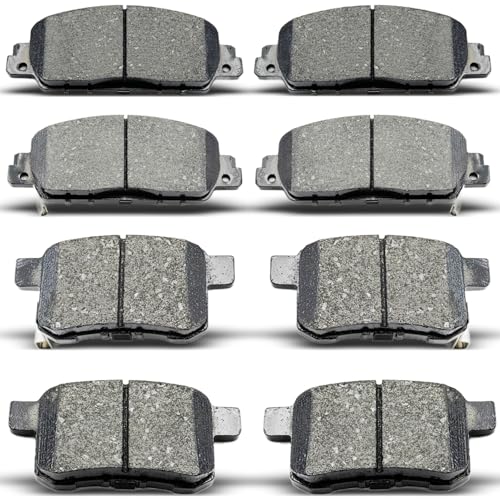
8pcs Disc Brake Pads Kit for Honda Accord (2013-2017)

If you’re looking for a reliable brake pad kit for your 2015 Honda Accord, the 8-piece Disc Brake Pads Kit for Honda Accord (2013-2017) is an excellent choice. This kit includes front and rear brake pads, ensuring comprehensive coverage for your vehicle. Made from high-quality ceramic materials, they deliver durable, low-dust performance and quieter stops. Compatible with both 2-door and 4-door models, they replace part numbers D1451 and D1654. With a reputation for stability and longevity, this kit helps maintain your braking system’s efficiency and safety, backed by a 30-day Amazon return policy and customer ratings of 4.3 stars.

Best For: drivers of 2013-2017 Honda Accords seeking durable, quiet, and reliable brake pads for enhanced safety and performance.

Pros:

  • Made from high-quality ceramic materials for long-lasting durability and low dust.
  • Provides superior braking power with quieter stopping technology.
  • Compatible with both 2-door and 4-door Honda Accord models, replacing specific part numbers D1451 and D1654.

Cons:

  • May be priced higher than generic brake pads due to premium materials.
  • Some users might experience a break-in period before optimal performance.
  • Being manufactured in China, quality control may vary; verify seller reputation for quality assurance.

8pcs Disc Brake Pads Kit for Honda Accord 2013-2017

The pcs Disc Brake Pads Kit for Honda Accord 2013-2017 is an ideal upgrade for drivers seeking reliable stopping power and long-lasting performance. This kit includes eight high-quality ceramic brake pads for both front and rear wheels, ensuring consistent braking and reduced dust. Designed specifically for Honda Accord models from 2013 to 2017, it offers durability and stability, extending your vehicle’s braking system lifespan. Easy to install, this kit provides a cost-effective solution with positive customer feedback. With a 30-day return policy and warranty, you can confidently upgrade your vehicle’s braking performance and enjoy safer, smoother stops.

Best For: drivers of Honda Accord 2013-2017 seeking reliable, long-lasting brake performance with easy installation.

Pros:

  • High-quality ceramic material ensures low dust and stable braking.
  • Includes both front and rear brake pads for comprehensive coverage.
  • Positive customer feedback highlights ease of installation and good value.

Cons:

  • Only compatible with Honda Accord models from 2013-2017.
  • Limited ratings and reviews, which may affect confidence in long-term durability.
  • Availability starting from January 2025, which may delay purchase for some buyers.

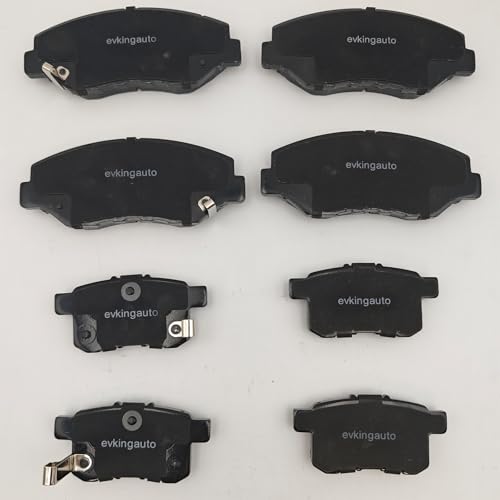
Front and Rear Ceramic Brake Pads for Honda Accord (2011-2017)

Ceramic brake pads for the 2011-2017 Honda Accord deliver a quiet, clean, and reliable braking experience, making them an ideal choice for drivers seeking long-lasting performance with minimal dust and noise. These pads, compatible with both front and rear positions, come in a package of eight from evkingauto, crafted from high-quality ceramic material. They offer features like low dust production, durability, and stable, consistent performance. While installation is straightforward, some users have noted fitment issues or missing wire clips. Overall, these ceramic pads provide a dependable upgrade for your Accord, ensuring safer stops and a smoother ride.

Best For: drivers of 2011-2017 Honda Accord seeking durable, quiet, and low-dust brake pads for both front and rear wheels.

Pros:

  • Made from high-quality ceramic material for long-lasting performance
  • Produces minimal dust and noise, ensuring a cleaner and quieter ride
  • Easy to install with generally stable and consistent braking performance

Cons:

  • Some users reported fitment issues with front brake pads
  • Occasional missing wire clips, requiring reusing old clips
  • Slight sizing concerns noted by a few customers, so proper fitment verification is recommended

Bendix Priority1 Ceramic Front Brake Pads for Honda Accord, BR-V, HR-V

Designed for drivers seeking reliable stopping power, Bendix Priority1 Ceramic Front Brake Pads deliver exceptional performance on Honda Accord models from 2013 to 2022, including the 2015 version. These pads feature advanced ceramic friction materials that provide superior stopping power, even under high temperatures or heavy loads. They help reduce brake fade and ensure consistent braking performance, enhancing your safety on the road. Compatible with the Honda Accord, BR-V, and HR-V, they meet OE specifications for perfect fit and function. With positive reviews and a strong reputation, these brake pads are a reliable choice for safe, smooth stops.

Best For: drivers seeking reliable, high-performance brake pads for Honda Accord, BR-V, and HR-V models from 2013 to 2022 to ensure safe and consistent stopping power.

Pros:

  • Advanced ceramic friction materials offer superior stopping performance under high temperatures and loads
  • Reduces brake fade for consistent braking efficiency and enhanced safety
  • Meets OE specifications for perfect fit, easy installation, and reliable operation

Cons:

  • May be slightly more expensive than standard brake pads
  • Requires proper installation to maximize performance and lifespan
  • Limited compatibility outside listed Honda models and years

D914 D1336 Ceramic Brake Pads Set for Honda Accord (8 pcs)

If you’re looking for a reliable brake pad set that offers smooth and stable braking performance, the D914 D1336 Ceramic Brake Pads Set is an excellent choice for your 2015 Honda Accord. This complete 8-piece kit includes front and rear pads, making installation straightforward. Crafted from premium materials, these ceramic pads produce minimal dust, helping keep your wheels cleaner. They’re designed to deliver consistent braking power while extending your brake system’s lifespan. Before purchasing, double-check the part numbers and fitment to ensure compatibility with your vehicle. With this set, you’ll enjoy reliable stops and safer driving every time you hit the road.

Best For: drivers of 2011-2017 Honda Accord models seeking reliable, low-dust, and durable ceramic brake pads for smooth and safe braking performance.

Pros:

  • Made of premium materials ensuring durability and stability
  • Produces minimal dust to keep wheels clean
  • Easy to install with complete front and rear set

Cons:

  • Compatibility must be verified with specific vehicle models before purchase
  • May not fit Honda Accord models outside the specified years
  • Performance may vary if not installed correctly

Factors to Consider When Choosing Brake Pads for Honda Accord 2015

When choosing brake pads for your 2015 Honda Accord, you need to consider factors like material durability and how well they fit your vehicle. Noise reduction technology and braking power are also important for a smooth and safe ride. Don’t forget to think about dust and cleanliness to keep your wheels looking clean and functioning properly.

Material Durability

Material durability is a crucial factor to consider when selecting brake pads for your 2015 Honda Accord because it directly impacts their lifespan and performance. High-quality ceramic brake pads are known for their exceptional durability and longevity, often lasting much longer than other materials. They resist wear and tear better, ensuring reliable performance over time. Plus, ceramic pads produce less dust, which keeps your wheels cleaner and reduces maintenance. Their stability and consistency help deliver superior braking, especially under high temperatures or heavy loads, minimizing brake fade. Choosing durable ceramic brake pads not only enhances safety but also improves your driving experience by reducing noise and maintaining braking effectiveness over the years. Durability ensures your brakes remain reliable when you need them most.

Compatibility Fitment

Ensuring compatibility fitment is essential when selecting brake pads for your 2015 Honda Accord to guarantee proper performance and safety. First, verify that the brake pads match your specific model variant, whether 2-door or 4-door, as fitment can differ. Confirm that the part numbers, like D1451 or D1654, align with your vehicle’s requirements. Check the manufacturer’s specifications to ensure the pads are designed for the 2015 model year, as compatibility may vary across different years. Additionally, consider the pad type—ceramic or organic—to meet your driving needs. Always consult compatibility charts or your vehicle’s service manual to ensure the brake pads will integrate seamlessly with your existing braking system components, preventing fitment issues and ensuring optimal performance.

Noise Reduction Technology

Noise reduction technology plays a crucial role in selecting brake pads for your 2015 Honda Accord, as it directly impacts your driving comfort. Modern brake pads use advanced materials like ceramics, which produce less noise and dust compared to organic or metallic options. Design features such as shims and damping layers help absorb vibrations, further reducing squeaking and grinding sounds during braking. Proper installation and fit are essential; even the best noise reduction tech won’t work if the pads aren’t installed correctly. Regular maintenance and inspections also help identify issues that could cause noise, ensuring your brake pads perform quietly over time. Choosing pads with proven noise reduction features improves your driving experience by making stops smoother and quieter.

Braking Power

Braking power is essential for safe and efficient stopping, and it largely depends on the friction properties of your brake pads. The key factor is the friction material; ceramic pads typically offer superior stopping performance compared to organic or metallic options. High-quality brake pads are engineered to withstand high temperatures and heavy loads, reducing brake fade and maintaining consistent performance during repeated stops. The coefficient of friction—a measure of how well the pad grips the rotor—directly impacts braking power; higher values mean better stopping ability under various conditions. Enhanced braking power results in shorter stopping distances, crucial for safety. Remember, regular maintenance and timely replacement of worn pads are vital to preserve optimal braking performance and ensure your Honda Accord consistently stops safely when you need it.

Dust and Cleanliness

When choosing brake pads for your 2015 Honda Accord, considering dust and cleanliness is important because low-dust options help keep your wheels looking fresh and reduce maintenance. High-quality ceramic brake pads are known for producing less dust compared to organic or metallic pads, which helps maintain a cleaner vehicle appearance. Excessive brake dust can accumulate quickly, making wheels look dirty and requiring frequent cleaning. By selecting low-dust brake pads, you not only keep your wheels cleaner but also lessen the need for constant detailing. Additionally, reduced dust build-up can improve braking performance by preventing dust from interfering with the brake components. Overall, low-dust brake pads help extend the lifespan of your wheel finishes, saving you time and effort on maintenance.

Price and Warranty

Price and warranty are key factors to consider when choosing brake pads for your 2015 Honda Accord. Typically, you’ll find complete sets priced between $50 and $150, depending on the brand and material quality. Higher-priced options often offer better performance and durability, which can save you money in the long run by reducing replacements. Pay attention to warranty coverage—some manufacturers offer limited lifetime warranties, while others only provide a 30-day return policy. Customer ratings can also help you gauge value, reflecting satisfaction with both price and performance. Be cautious of hidden costs like installation fees or additional parts needed during replacement, as these can increase your overall expense. Balancing price, warranty, and reviews ensures you choose brake pads that deliver both quality and value.

People Also Ask

How Often Should Brake Pads Be Replaced on a 2015 Honda Accord?

You should replace your brake pads roughly every 30,000 to 70,000 miles, depending on driving habits and conditions. Regular inspections help you catch wear early, ensuring safe braking and preventing damage to other brake components.

Can I Upgrade to Performance Brake Pads for Better Stopping Power?

You can upgrade to performance brake pads for better stopping power, but make sure they’re compatible with your 2015 Honda Accord. Consult a professional installer to ensure proper fitment and safety, especially if driving in demanding conditions.

What Signs Indicate Worn-Out Brake Pads on My Vehicle?

You’ll notice squealing noises when braking, a softer pedal feel, increased stopping distance, or vibrations. These signs mean your brake pads are worn out and need replacement to ensure safe, effective stopping.

Are Ceramic Brake Pads Suitable for All Driving Conditions?

Ceramic brake pads work well in most driving conditions, offering quiet operation and low dust. However, you might need different pads if you frequently drive in heavy traffic, tow heavy loads, or require enhanced braking performance.

How Do Brake Pad Choices Affect Overall Vehicle Braking Performance?

Your brake pad choices directly impact your vehicle’s braking performance by influencing stopping power, heat dissipation, and durability. Opting for the right pads ensures safe, reliable stops and prevents premature wear, keeping you confident on the road.

10 Best Brake Pads for Honda CB500F in 2025: Top Picks for Safe and Smooth Riding


Choosing the right brake pads for your Honda CB500F is crucial for ensuring safe, reliable, and smooth rides. With so many options available in 2025, it can be overwhelming to find the best fit for your needs. Whether you prioritize durability, heat resistance, or ease of installation, understanding your choices is essential. Keep in mind that the right brake pads can make all the difference in your riding experience—so, let’s explore the top picks available now.

NICHE Brake Pad Set for Honda CB500F Fury Shadow Victory

The NICHE Brake Pad Set is the perfect choice if you’re looking for reliable, high-performance braking for your Honda CB500F, Fury, Shadow, or Victory motorcycle. Designed with ceramic material, these pads deliver excellent stopping power and smooth operation. They fit both front and rear positions, ensuring comprehensive braking performance. DOT certified, they meet safety standards for confident riding. Compatible with multiple OEMs like Honda, Indian, Kawasaki, Suzuki, BMW, Triumph, and more, these pads are versatile and durable. Easy to install and backed by a warranty, they’re an ideal upgrade to keep your motorcycle stopping safely and efficiently.

Best For: motorcycle owners seeking reliable, high-performance ceramic brake pads for Honda CB500F, Fury, Shadow, Victory, and similar models.

Pros:

  • Compatible with a wide range of OEMs including Honda, Indian, Kawasaki, Suzuki, BMW, and Triumph, ensuring versatility.
  • DOT certified for safety and reliable braking performance.
  • Easy to install with comprehensive coverage for both front and rear brakes.

Cons:

  • Product originates from China, which may concern some users regarding manufacturing standards.
  • Limited information on specific wear lifespan under various riding conditions.
  • No mention of specific noise reduction features or advanced braking technology beyond ceramic material.

Front and Rear Carbon Fiber Brake Pads for Honda CB 500 F NM 4 Vultus NC750 NC 750 S X D 2013-2024

If you’re seeking reliable braking performance for your Honda CB500F or compatible models from 2013 to 2024, front and rear carbon fiber brake pads from Vultus deliver exceptional stopping power. These pads protect your rotors, resist heat, and ensure sensitive, consistent braking in all weather conditions. Made from advanced carbon fiber, they offer a friction coefficient of 0.45-0.55, providing stronger braking and efficient heat dissipation. Designed for quick installation, they minimize noise and vibrations for a smooth, quiet ride. Compatible with various Honda models, including the CB500F, NC750X, and more, they’re built for durability and reliable performance.

Best For: riders seeking durable, high-performance carbon fiber brake pads for Honda CB500F and compatible models from 2013 to 2024 for reliable, consistent stopping power in all weather conditions.

Pros:

  • Excellent stopping power with a friction coefficient of 0.45-0.55 for stronger braking performance
  • Heat-resistant design ensures consistent performance under extreme riding conditions
  • Easy to install, with minimal noise and vibration for a smooth, quiet ride

Cons:

  • Compatibility check required to ensure correct fit for specific model years
  • Made from carbon fiber, which may be more expensive than standard brake pads
  • Limited to Honda models listed; not suitable for other motorcycle brands or models outside compatibility range

Caltric Brake Pads for Honda Cb500F (2013-2016)

Looking for reliable brake pads that deliver consistent stopping power for your Honda CB500F from 2013 to 2016? Caltric Brake Pads are a great choice, offering compatibility with various Honda models like the CB500F, CB500X, and CBR500R. These pads come as a set of two, suitable for both front and rear brakes, ensuring balanced stopping performance. Made in China, they feature precise dimensions for a proper fit. Customer ratings are perfect, with a 5-star rating from two users. Plus, they come with a 30-day return policy and warranty, making them a dependable option for safe and smooth rides.

Best For: riders of Honda CB500F (2013-2016) seeking reliable, compatible brake pads for safe and effective stopping performance.

Pros:

  • Compatible with multiple Honda models including CB500F, CB500X, and CBR500R
  • Comes as a set of two, suitable for both front and rear brakes for balanced stopping power
  • Perfect customer ratings with a 5-star review from two users and a warranty included

Cons:

  • Made in China, which may concern some buyers about quality control
  • Limited number of reviews; long-term durability data is unavailable
  • Only available through online purchase with a 30-day return policy

LOCOPOW Brake Pads for Honda Motorcycles

LOCOPOW Brake Pads are an excellent choice for Honda motorcycle owners seeking reliable stopping power at an affordable price. Designed for various Honda models from 2011 to 2023, these semi-metal rear brake pads meet OEM standards, ensuring a perfect fit and effective performance. Weighing just 13.4 ounces, they’re easy to install and offer solid brake response. Customers rate them 4.5 out of 5 stars, praising their value and ease of use. While some note dust and wear after extended use, overall, these pads provide dependable braking for daily riding and longer journeys alike. They’re a smart, budget-friendly upgrade for your Honda motorcycle.

Best For: Honda motorcycle owners seeking reliable, OEM-standard rear brake pads that are easy to install and budget-friendly for daily use and long rides.

Pros:

  • Meets OEM standards for a perfect fit and effective braking performance
  • Lightweight and easy to install at just 13.4 ounces
  • Rated 4.5 out of 5 stars, offering good value and customer satisfaction

Cons:

  • Some users report increased dust and wear after extended mileage
  • Mixed reviews on long-term durability and performance
  • Limited warranty details may require checking the product link for specific coverage

EBC Brakes FA196HH Disc Brake Pad Set

The EBC Brakes FA196HH Disc Brake Pad Set is an excellent choice for Honda CB500F owners seeking durable, high-performance braking. Crafted with high-pressure die-cast aluminum platforms, these pads deliver strength and reliability. The bonded brake linings enhance durability, ensuring long-lasting performance. Designed with radius ground edges and chamfers at lining ends, they provide smooth engagement and reduce noise. Included with the set are original equipment-style brake shoe springs for easy installation. Whether you ride daily or on long trips, these pads offer consistent stopping power and dependability, making them a smart upgrade for your bike’s braking system.

Best For: Honda CB500F owners seeking durable, high-performance brake pads for reliable stopping power and smooth engagement.

Pros:

  • Constructed with high-pressure die-cast aluminum platforms for strength and durability
  • Bonded brake linings ensure long-lasting performance and reliability
  • Radius ground edges and chamfers reduce noise and promote smooth braking

Cons:

  • May require specific compatibility checks for non-Honda models
  • Installation may be more involved for beginners without proper tools
  • Price could be higher compared to generic brake pads

Caltric Rear Brake Pads for Honda CB500F, CB500X, CB500FA, CB500Xa (2013-2019)

Caltric Rear Brake Pads are an excellent choice if you own a Honda CB500F, CB500X, CB500FA, or CB500Xa from 2013 to 2019 and need reliable replacement parts. These pads come in a set of two, ensuring you have everything needed for a straightforward swap. Designed to fit specific models, including some Triumph and Yamaha bikes, they measure 86 mm in length and 40 mm in width, with a height of 10.5 mm. To install, simply compare the posted picture to your existing pads. They’re a cost-effective option that delivers dependable braking performance when you need it most.

Best For: riders of Honda CB500F, CB500X, CB500FA, and CB500Xa (2013-2019) seeking reliable, affordable rear brake pads replacement.

Pros:

  • Compatible with multiple Honda models and some Triumph and Yamaha bikes for versatile use
  • Includes a set of two pads, making installation quick and convenient
  • Dimensions ensure a proper fit and dependable braking performance

Cons:

  • May require comparison with existing pads to confirm fit before installation
  • Not suitable for models outside the specified years and compatible bikes
  • Does not include additional installation hardware or accessories

Rear Brake Pads for Honda CB500F CB500FA CB500X CB500XA CBR500R CBR500RA

If you’re seeking reliable stopping power for your Honda CB500F or its related models, these semi-metallic rear brake pads are an excellent choice. Designed for models from 2013 to 2019, they fit CB500F, CB500FA, CB500X, CB500XA, CBR500R, and CBR500RA. Manufactured by Celox under part number ZRSDF-16276, they deliver consistent performance and durability. Each set provides the essential stopping force to keep you safe on the road. Plus, with Amazon’s 30-day return policy and warranty options, you can trust these brake pads to meet your riding needs without hassle.

Best For: riders of Honda CB500F, CB500FA, CB500X, CB500XA, CBR500R, and CBR500RA models seeking reliable, durable rear brake pads for enhanced stopping power.

Pros:

  • Compatible with multiple Honda models from 2013 to 2019, ensuring versatile use.
  • Made from semi-metallic material for consistent performance and durability.
  • Comes from a reputable manufacturer, Celox, with a clear warranty and return policy.

Cons:

  • May require professional installation for optimal safety and performance.
  • As semi-metallic pads, they might produce more brake dust compared to organic options.
  • Limited to the specified Honda models and years, not suitable for other bikes.

Cyleto Brake Pads for Honda VTX1300, VT1100, Shadow, CB500F, CBR250R, CBR300R, CBR500R, CMX300, CMX500

Cyleto Brake Pads stand out as an ideal choice for Honda riders seeking reliable stopping power and easy installation. Compatible with models like VTX1300, VT1100, Shadow, CB500F, CBR250R, CBR300R, CBR500R, CMX300, and CMX500, these semi-metallic organic pads deliver quiet operation and excellent wear resistance. You’ll appreciate their simple installation—no special tools needed—and their superior braking performance in various conditions. With a customer rating of 4.5 stars from 188 reviews, you can trust these pads to enhance your riding safety and comfort without hassle. They’re a solid upgrade for your Honda motorcycle.

Best For: Honda motorcycle owners seeking reliable, easy-to-install brake pads with quiet operation and strong stopping performance.

Pros:

  • Compatible with a wide range of Honda models including VTX1300, VT1100, and CBR series.
  • Easy installation that requires no special tools, suitable for non-professionals.
  • Quiet operation and excellent wear resistance for long-lasting safety and comfort.

Cons:

  • May not fit models outside the specified Honda series listed in the compatibility.
  • Slightly heavier weight (13 ounces) which could be a consideration for some users.
  • Limited to semi-metallic organic material, which might not suit riders seeking alternative brake pad types.

LOCOPOW Brake Pads for Honda Motorcycles

LOCOPOW Brake Pads are an excellent choice if you’re looking for reliable, OEM-style replacement parts for your Honda motorcycle, including the CB500F. These semi-metallic pads are designed for both front and rear positions, fitting a wide range of Honda models from 2011 to 2023. They’re easy to install and meet OEM specifications, ensuring compatibility and safety. With a customer rating of 4.5 stars, users praise their effectiveness and value, though some note dust and wear after limited mileage. Overall, LOCOPOW brake pads offer a solid balance of performance and affordability for your Honda motorcycle needs.

Best For: motorcycle riders who need reliable, OEM-style replacement brake pads for their Honda bikes from 2011-2023, ensuring safety and performance.

Pros:

  • Meets OEM specifications for perfect compatibility
  • Easy to install with positive feedback on fit and effectiveness
  • Offers a good balance of performance and affordability

Cons:

  • Some users report dust buildup after limited use
  • Wear can occur relatively quickly under heavy or frequent use
  • Mixed reviews on long-term durability and wear resistance

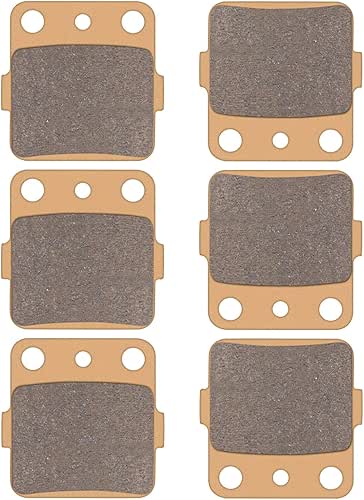
Zinger Brake Pads for Honda Rancher and Yamaha Raptor Models

Zinger Brake Pads for Honda Rancher and Yamaha Raptor models deliver reliable stopping power and long-lasting performance, making them ideal for ATV enthusiasts who demand durability in tough conditions. Designed to fit models like the Honda Rancher 420 Fourtrax and TRX500 Foreman Rubicon, as well as Yamaha Raptor YFM660 and YFM350, these pads are crafted from sintered copper to ensure high heat resistance and excellent braking response. They meet or exceed OEM standards, providing noise-free operation and stability during mud, sand, or rocky terrain. Each package includes three sets, giving you ample supply for extended riding seasons without sacrificing safety or performance.

Best For: ATV enthusiasts seeking durable, high-performance brake pads compatible with Honda Rancher and Yamaha Raptor models for reliable stopping in tough terrains.

Pros:

  • Made from sintered copper for excellent heat resistance and longevity
  • Meets or exceeds OEM quality standards for safety and reliability
  • Noise-free operation with stable braking performance across various challenging conditions

Cons:

  • May require proper installation to maximize performance
  • Availability limited to specific Honda and Yamaha models listed
  • Higher cost compared to generic brake pads, but with superior quality

Factors to Consider When Choosing Brake Pads Honda Cb500f

When choosing brake pads for your Honda CB500F, you need to consider several key factors. The material composition affects performance and durability, while compatibility ensures proper fit and function. Additionally, paying attention to braking performance, noise levels, and wear resistance helps you pick the best pads for your riding needs.

Material Composition Importance

The material composition of brake pads plays a crucial role in determining their overall performance and safety on your Honda CB500F. Different materials, like ceramic and semi-metal, offer distinct benefits. Ceramic pads are quieter and produce less dust, but they have lower heat resistance, which could impact stopping power in extreme conditions. Semi-metal pads excel under high temperatures, providing stronger stopping power and durability, especially in demanding rides. The friction coefficient, typically between 0.45 and 0.55 for high-performance pads, indicates how effectively they stop your bike under various conditions. Sintered metal pads stand out for their longevity and ability to withstand rugged riding. Choosing the right material ensures optimal braking performance, safety, and longer-lasting brake components on your motorcycle.

Compatibility With Honda Models

Ensuring compatibility when choosing brake pads for your Honda CB500F is essential for optimal performance and safety. The CB500F shares compatibility with other models like the CB500X, CBR500R, Fury, and even the CBR250R and CBR300R, spanning production years from 2013 to 2024. To avoid fitment issues, verify part numbers such as 06435-MGZ-J02 for rear pads, which are common across many models in the series. Always check the specific model year and OEM part numbers before purchasing. Compatibility goes beyond just model names—considering these details guarantees the brake pads will fit correctly and perform reliably. This diligence helps prevent accidents and ensures your bike’s braking system operates at peak efficiency.

Braking Performance Metrics

Choosing brake pads for your Honda CB500F involves considering their braking performance metrics, which directly impact safety and riding experience. The key factor is the friction coefficient, usually between 0.45 and 0.55 for high-performance pads, indicating strong stopping power. Ceramic brake pads are a solid choice because they offer better heat resistance and produce less dust, maintaining consistent performance in various conditions. Durability is also essential; high-quality pads resist wear and maintain effective braking over time, saving you money and hassle. Additionally, effective brake pads should minimize noise and vibration, ensuring a smoother ride. Some pads are specially designed to perform well under extreme conditions, providing reliable stopping power regardless of temperature or terrain.

Noise and Vibration Levels

Have you ever noticed how some brake pads produce squeaks or rattles during stopping? Higher friction coefficient brake pads tend to reduce noise and vibrations, making your ride smoother. Semi-metallic pads, however, often generate more noise because of their composition, leading to louder braking sounds. To keep things quiet, choose pads designed specifically to minimize vibration, which results in a more comfortable, quieter ride. Proper installation and regular maintenance are key—poorly fitted pads can cause increased vibrations and unwanted sounds. Environmental factors like moisture and dirt can also boost noise levels, so keeping your brake components clean is essential. Overall, selecting brake pads with low vibration characteristics and maintaining them properly can significantly improve your riding experience by reducing noise and vibrations.

Wear Resistance Longevity

When selecting brake pads for your Honda CB500F, considering wear resistance is essential because it directly impacts how long the pads will last under regular use. High-quality materials like semi-metallic and ceramic offer better durability against friction and heat, extending their lifespan. Pads with a friction coefficient of 0.45-0.55 provide strong braking power while maintaining wear resistance, ideal for varied riding conditions. Regularly inspecting and replacing worn pads helps prevent excessive rotor damage and maintains braking efficiency. Keep in mind that your riding style influences longevity; aggressive braking and frequent stops accelerate wear compared to more conservative riding practices. Choosing pads with proven wear resistance ensures safer, more reliable performance over time, saving you money and reducing maintenance needs.

Heat Dissipation Efficiency

Since excessive heat can significantly reduce braking performance, heat dissipation efficiency is a critical factor to consider for your Honda CB500F brake pads. High-quality pads made from carbon fiber or semi-metallic materials excel at dispersing heat, preventing brake fade during extended use. A high friction coefficient, around 0.45-0.55, not only offers strong stopping power but also helps maintain consistent heat management under demanding conditions. The design and thickness of the pads matter too—larger surface areas facilitate better heat dispersal. Proper installation and alignment are essential to maximize heat dissipation and ensure optimal contact with the rotor. By choosing pads with excellent heat dissipation, you’ll enjoy safer, more reliable braking performance, even during aggressive riding or long rides.

Installation Ease and Fit

Choosing the right brake pads for your Honda CB500F involves ensuring they fit perfectly and are easy to install. Compatibility with your specific model year, from 2013 to 2021, is essential to avoid issues. The installation process is usually straightforward and often requires no special tools, making it a DIY-friendly task. Many brake pad sets come with clear instructions, simplifying installation even for those with limited mechanical experience. To ensure a proper fit, compare the dimensions and part numbers of new pads with your existing ones. Customer reviews frequently mention how well-designed pads make installation hassle-free. Taking these factors into account helps you choose pads that not only perform well but also save you time and effort during installation.

Price and Value Balance

Selecting brake pads that offer the best value involves balancing cost with performance and longevity. You should compare prices across brands, but also consider materials like ceramic or carbon fiber, which, though pricier, can last longer and deliver better stopping power. High-quality pads typically range from $30 to $100, so weigh the cost against their durability and performance benefits. Look for options that come with warranties or return policies, indicating confidence from manufacturers and providing peace of mind. Customer reviews can give you real-world insights into how well the pads perform and hold up over time. Remember, investing a bit more upfront in quality brake pads can improve braking efficiency and reduce maintenance costs, offering better overall value for your ride.

People Also Ask

How Often Should Brake Pads Be Replaced on a Honda CB500F?

You should check your Honda CB500F’s brake pads every 3,000 to 5,000 miles and replace them when they’re worn down to about 1/8 inch thick. Regular inspections ensure safe, smooth stopping and optimal performance.

What Are the Signs of Worn-Out Brake Pads?

You’ll notice squealing sounds, reduced braking performance, or a spongy brake pedal when your brake pads are worn out. If you see thin or uneven pads, it’s time to replace them to stay safe and stop effectively.

Are Ceramic Brake Pads Better for Honda CB500F?

Ceramic brake pads are better for your Honda CB500F because they offer quieter operation, less brake dust, and better durability. You’ll notice smoother braking and longer-lasting pads, making your rides safer and more comfortable overall.

How Do I Choose the Right Brake Pad Material?

When choosing brake pad material, you consider your riding style, climate, and performance needs. You should prioritize durability, stopping power, and noise levels, ensuring you select pads that match your Honda CB500F’s requirements for safe riding.

Can I Install Brake Pads Myself or Seek Professional Help?

You can install brake pads yourself if you’re comfortable with motorcycle maintenance and have the right tools. Otherwise, seeking professional help ensures proper installation, safety, and optimal brake performance, especially if you’re inexperienced.

3 Best Brake Pads for Honda Pioneer 1000 — Top Picks for Safety and Performance


When it comes to upgrading your Honda Pioneer 1000’s braking system, choosing the right brake pads is crucial for safety and performance. With so many options available, it can be challenging to find the perfect fit for your riding style and conditions. Luckily, there are a few standout choices that combine quality, durability, and value. Keep these top picks in mind, and you’ll be better equipped to make an informed decision that keeps you safe on every ride.

Front & Rear Ceramic Brake Pad Set for Honda Pioneer 1000

If you’re looking for a reliable upgrade for your Honda Pioneer 1000, the Front & Rear Ceramic Brake Pad Set is an excellent choice. Made from automotive-grade ceramic, these pads deliver increased stopping power and reduced fade, even during aggressive trail riding. They provide a quiet operation compared to original equipment pads and produce less noise than sintered alternatives. Designed as a direct-fit OE replacement, this full pad set fits models from 2016 to 2025. With a 6-month warranty and positive customer feedback, these pads are a solid option for enhancing your vehicle’s braking performance without sacrificing comfort or noise levels.

Best For: riders of Honda Pioneer 1000 models seeking reliable, high-performance brake pads that offer quieter operation and improved stopping power for aggressive trail and race riding.

Pros:

  • Made from automotive-grade ceramic for enhanced durability and consistent performance
  • Provides increased stopping power and reduced brake fade during demanding rides
  • Operates more quietly compared to sintered and original equipment pads, reducing noise during braking

Cons:

  • May have mixed reviews regarding longevity and noise levels from some users
  • Does not include parking brake pads, requiring separate purchase if needed
  • Limited warranty of 6 months, which might be shorter than some competitors

LOCOPOW Brake Pads for Honda Pioneer 1000 Series

LOCOPOW Brake Pads are an excellent choice for Honda Pioneer 1000 owners seeking reliable, high-performance replacement parts. Designed for models like the Honda Talon 1000R, 1000X, and Pioneer 1000 series (2016-2024), these pads meet or exceed OEM standards. Made from Kevlar Craton, they resist high temperatures, abrasion, and tearing, ensuring safe and consistent braking. With positive customer feedback on fit and price, they’re a solid option. Keep in mind, some users report issues with longevity and squeaking. Supported by a satisfaction guarantee and Amazon’s return policy, LOCOPOW offers a dependable upgrade for your off-road adventures.

Best For: Honda Pioneer 1000 and Talon 1000 series owners seeking reliable, high-performance brake pad replacements for safe off-road riding.

Pros:

  • Made from Kevlar Craton for excellent heat resistance, durability, and tear strength.
  • Designed as direct OEM replacements, ensuring proper fit and reliable braking performance.
  • Positive customer feedback on fit, quality, and affordability.

Cons:

  • Some users report premature wear and shorter lifespan than expected.
  • Occasional squeaking noises during braking noted by customers.
  • Packaging quality issues mentioned in a few reviews, affecting initial presentation.

Brake Pads for Honda Pioneer 1000 Series

Designed for durability and reliable stopping power, brake pads for the Honda Pioneer 1000 series are the ideal choice for enthusiasts who demand consistent performance in challenging conditions. These semi-metallic pads are compatible with models from 2016 to 2024, including the Pioneer 1000-5, Talon 1000R, Talon 1000X, and various SXS configurations. They feature an optimized friction formula that performs well in dry, wet, or extreme environments. With heat resistance, wear-proof construction, and low dust production, these pads ensure extended service life and minimal maintenance. Manufactured by Slother, they come with a 30-day return policy and after-sale support for added confidence.

Best For: off-road enthusiasts and Honda Pioneer 1000 series owners seeking durable, reliable braking performance in a variety of challenging conditions.

Pros:

  • Optimized friction formula provides stable braking in dry, wet, and extreme environments
  • Heat-resistant and wear-proof construction ensures long-lasting performance
  • Low-dust design helps keep wheels clean and reduces maintenance

Cons:

  • Semi-metallic material may produce more brake noise compared to ceramic pads
  • Installation requires basic mechanical skills and proper tools
  • May be slightly more expensive than standard brake pads due to enhanced durability

Factors to Consider When Choosing Brake Pads for Honda Pioneer 1000

When selecting brake pads for your Honda Pioneer 1000, you need to consider several key factors to ensure optimal performance. Think about material quality, durability, and how well they handle different conditions, as well as noise levels and costs. Making informed choices helps you find brake pads that match your riding style and budget while providing reliable stopping power.

Material Compatibility and Quality

Choosing the right brake pads for your Honda Pioneer 1000 depends heavily on their material quality and compatibility with your riding needs. Different materials—like automotive-grade ceramic, Kevlar Craton, and semi-metallic compounds—offer unique benefits. Ceramic pads deliver increased stopping power, less fade, and quieter operation, ideal for aggressive riding. Kevlar Craton pads excel in high-temperature and abrasion resistance, ensuring reliable braking under demanding conditions. Semi-metallic pads provide stable braking across various weather and terrain, making them versatile for different environments. When selecting, consider how each material aligns with your riding style and conditions. High-quality materials not only improve braking performance but also influence maintenance needs and lifespan. Ensuring compatibility between the pad material and your riding requirements guarantees optimal safety and efficiency.

Durability and Wear Resistance

Selecting brake pads with high durability and wear resistance ensures your Honda Pioneer 1000 performs reliably over time, even in tough conditions. Look for materials like automotive-grade ceramic or Kevlar Craton, which can withstand harsh riding environments. Semi-metallic compounds offer enhanced longevity and stability across various weather conditions, reducing the need for frequent replacements. A low-dust design helps keep your wheels cleaner and minimizes contaminants that cause wear, extending the lifespan of your braking system. High-quality brake pads incorporate optimized friction formulas, delivering reliable stopping power and quick response in emergencies. Regularly checking the thickness and condition of your brake pads prevents premature wear and maintains consistent performance. Prioritizing durability and wear resistance ensures your brake system remains effective, enhancing safety during every ride.

Performance in Conditions

To ensure your Honda Pioneer 1000 performs reliably in various conditions, it’s crucial to consider how brake pads respond to different environments. For aggressive trail or race riding, ceramic brake pads deliver increased stopping power and reduced fade, ensuring consistent performance during intense use. If you ride in diverse weather, semi-metallic pads offer stable braking in dry, wet, or extreme conditions thanks to their optimized friction formula. High-temperature resistance materials like Kevlar Craton prevent fading during prolonged use or tough terrains. Noise reduction features can improve your riding experience by minimizing squeaks across different terrains. Additionally, choose pads with enhanced wear resistance and low-dust designs to maintain brake effectiveness and keep your wheels cleaner, even under demanding riding scenarios.

Noise and Vibration Levels

When it comes to brake pads for your Honda Pioneer 1000, noise and vibration levels can significantly impact your riding experience. Brake pads made from automotive-grade ceramic materials typically produce less noise than sintered pads, offering a quieter, smoother ride. Many pads incorporate features like precision compression control and low-dust designs to minimize squeaking and keep wheels cleaner. Customer feedback shows that some brake pads may still generate noise issues, with mixed reviews on squeaking and longevity. The material composition, such as Kevlar Craton or semi-metallic compounds, also influences vibration and noise levels. Some brake pads are specifically engineered for quiet operation, helping you avoid loud squeaks during braking. Choosing the right material can enhance comfort and reduce unwanted noise and vibrations.

Price and Warranty Options

Price and warranty options play a key role in choosing brake pads for your Honda Pioneer 1000, as they can influence both your budget and peace of mind. Prices vary widely, so you’ll find options to fit different budgets, with higher-priced pads often made from advanced materials like ceramic or Kevlar, offering better performance and durability. Be sure to check the warranty offered by manufacturers; some provide a 6-month defect warranty, while others include satisfaction guarantees or extended coverage. Many products on platforms like Amazon come with a 30-day return policy, giving you a safety net if the pads don’t meet your expectations. Customer ratings, averaging around 4.1 out of 5 stars, can also help you gauge value for money when comparing different options.

People Also Ask

How Long Do Brake Pads Typically Last on a Honda Pioneer 1000?

Your brake pads on a Honda Pioneer 1000 typically last between 20,000 to 30,000 miles, depending on your riding habits and terrain. Regular inspections help ensure safety, and replace them when they show signs of wear.

Can Brake Pads Be Replaced by DIY Enthusiasts?

You can replace your brake pads yourself if you’re comfortable with basic tools and mechanical work. Just follow safety precautions, consult your Honda Pioneer 1000 manual, and take your time to ensure proper installation.

You should choose brake pads suited for the terrain you ride on. For mud or rocks, opt for more durable, heat-resistant pads; for smooth surfaces, standard pads work well. Always match pads to your riding conditions for safety.

How Do I Know if My Brake Pads Need Replacing?

You’ll know your brake pads need replacing if you hear squealing sounds, feel decreased braking power, or notice a spongy brake pedal. Regular inspections and monitoring brake wear indicators help keep your vehicle safe and responsive.

Do Upgraded Brake Pads Improve Overall Vehicle Safety?

Upgraded brake pads can improve your vehicle’s safety by providing better stopping power and shorter braking distances. If you prioritize safety and performance, investing in quality brake pads ensures you can stop quickly and confidently when needed.

P0141 Nissan Code – O2 Sensor Heater Circuit Malfunction Bank 1 Sensor 2


The P0141 code indicates a malfunction in the oxygen sensor heater circuit for Bank 1, Sensor 2 in Nissan vehicles. This issue impacts the vehicle's emission control system, potentially leading to increased exhaust emissions and diminished fuel efficiency. Symptoms include a check engine light, lower fuel economy, engine hesitation, and overall sluggish performance. Common causes involve faulty sensors, damaged wiring, or ECM issues. Required diagnostic tools include an OBD-II scanner and multimeter. Repair costs typically range from $100 to $300, depending on the problem severity. Understanding this code is crucial for maintaining engine performance and compliance with emissions standards. Further insights are available on related diagnostic aspects.

P0141 Nissan Code Meaning

The P0141 code in Nissan vehicles indicates a malfunction in the rear oxygen sensor heater circuit for Bank 1 Sensor 2, affecting emissions and engine performance.

Common causes include electrical faults or sensor failures.

Inspection and repair of the sensor and circuit are necessary for resolution.

Error Code P0141 Symptoms

Drivers may notice some signs when their Nissan vehicle shows the P0141 code. This code means there's a problem with the rear oxygen sensor heater circuit. Spotting these signs early can help with repairs and prevent more issues.

  1. Check Engine Light: The check engine light may turn on. This warns the driver about potential problems with the oxygen sensor.
  2. Lower Fuel Efficiency: A faulty O2 sensor can give wrong readings. This leads to an uneven air-fuel mixture. Drivers might see a drop in fuel efficiency, which can raise costs.
  3. Engine Hesitation or Stalling: Problems with the air-fuel mixture can cause the engine to hesitate or stall. This happens because the engine struggles to adjust to the wrong information from the sensor.

Other signs may include rough idling, where the engine can't keep a steady RPM, and higher emissions.

These issues could lead to failing emissions tests. Fixing these signs quickly can improve how the vehicle runs and help meet environmental standards.

Causes of Nissan P0141 Fault Code

When you see the Nissan P0141 fault code, several things could be causing it. Knowing these reasons can help you find the problem.

  1. Faulty Rear Oxygen Sensor: This is often the main issue. The rear oxygen sensor checks exhaust emissions. If it fails, it can give wrong readings and cause problems with the heater circuit.
  2. Damaged Wiring or Connectors: If the wires are frayed or the connections are loose in the heater circuit, it can stop electrical flow. This can trigger the P0141 code, indicating a problem in the circuit.
  3. Blown Fuse: A blown fuse that protects the sensor heater circuit can also cause this code. This points to an electrical issue that needs fixing to avoid more problems.

Corrosion or dirt in the sensor connector can also affect performance.

Additionally, if the Engine Control Module (ECM) is not working properly, it might misread sensor data, leading to false fault codes.

Addressing these issues quickly can help get your vehicle running smoothly again.

Tools Needed to Diagnose

To diagnose the Nissan P0141 code, you need some specific tools to check the rear oxygen sensor and its wiring. Using the right tools makes the process easier and more accurate.

  1. OBD-II Scanner: This tool helps you read the P0141 code and any other codes in the vehicle. It shows real-time data, which helps you see how the vehicle is working.
  2. Multimeter: You use this tool to measure the resistance in the oxygen sensor heater circuit. It also checks the wiring for any breaks or shorts, which is important for a proper diagnosis.
  3. Digital Voltmeter: This tool measures the voltage and ground signals in the sensor circuit. It helps you check if the sensor is getting the power it needs.

Having the wiring diagrams for your vehicle model can help you find pin locations and circuit paths.

You might also need basic hand tools, like socket sets and wrenches, to access the oxygen sensor for inspection or replacement.

How to Fix P0141 Nissan Error Code – Step by Step

Step 1: Utilize an OBD-II scanner to confirm the presence of the P0141 code and gather additional diagnostic data related to the rear oxygen sensor.

This initial step establishes a clear foundation for further investigation.

Step 2: Perform a visual inspection of the rear oxygen sensor and its wiring.

Look for any signs of damage, corrosion, or loose connections that could impair the heater circuit's performance.

Rectify any identified issues before proceeding.

Step 3: Use a multimeter to test the continuity of the sensor heater circuit.

This testing process checks for breaks or shorts in the wiring that would prevent proper functionality.

Step 4: Inspect the relevant fuses for the oxygen sensor heater circuit.

Ensure they are intact and replace any blown fuses to restore electrical flow.

Step 5: If all wiring and fuses prove to be in good condition, replace the faulty rear oxygen sensor.

Installing a new unit resolves the P0141 code and helps restore optimal engine performance.

Common Diagnosis Mistakes

Common mistakes in diagnosing the P0141 code can lead to extra repairs and higher costs for car owners. A careful approach is needed, but there are several common errors that can mislead technicians.

  1. Assuming Sensor Fault: Some technicians jump to the conclusion that the rear oxygen sensor is bad without checking the wiring and connectors first. Damage or corrosion in these areas can lead to unnecessary replacements.
  2. Neglecting Fuse Checks: Skipping the fuse check for the O2 sensor heater circuit can cause technicians to wrongly think the sensor is failing. Often, a blown fuse is the real issue.
  3. Overlooking Continuity Tests: Not performing continuity tests on the sensor heater circuit can create confusion. Damaged wires can look like sensor problems, making the diagnosis harder.

Technicians may also miss checking for issues with the ECM that could trigger the P0141 code.

Additionally, they might overlook visual inspections for wear or contamination at the connector. These mistakes can lead to higher repair costs without fixing the real problem.

P0141 Nissan Repair Cost

When dealing with the P0141 code on a Nissan, car owners can expect repair costs to fall between $100 and $300. The exact amount depends on the specific problems found and the parts needed for the repair. A big part of the cost usually comes from replacing a faulty rear oxygen sensor. This part alone can cost between $50 and $200, not including labor fees.

Car owners might also face extra costs if there is damaged wiring or connectors. The price for fixing these can vary based on how serious the damage is and the local labor rates.

To confirm the P0141 code, diagnostic scans are necessary and usually cost between $50 and $150 at repair shops.

To keep repair costs down, it helps to address any symptoms early on. Regular maintenance can prevent more serious issues with the sensor, saving money in the long run.

Related Error Codes on Nissan

Many error codes can relate to the P0141 code in Nissan vehicles. These codes mostly point to issues with the oxygen sensor or the emissions system. Knowing these related codes can help with diagnostics and repairs.

Error Code Description Implication
P0131 O2 Sensor Circuit Low Voltage Bank 1 Sensor 1 This may indicate a faulty sensor, which can affect the fuel mixture.
P0137 O2 Sensor Circuit Low Voltage Bank 1 Sensor 2 This suggests a problem with the sensor readings, which can impact emissions.
P0420 Catalytic Converter System Efficiency Below Threshold This points to possible catalytic converter failure, often linked to bad oxygen sensors.

Other codes like P0138 (O2 Sensor Circuit High Voltage Bank 1 Sensor 2) and P0140 (O2 Sensor Circuit No Activity Detected Bank 1 Sensor 2) may show up with the P0141 code. These codes indicate different sensor issues, such as high voltage or no activity from the sensor.

To address the P0141 code, you should look at these related codes. They can help identify problems within the emissions system. Ignoring these codes might lead to more issues and higher repair costs.

Can I drive safely with P0141 Nissan?

Yes, you can drive a Nissan with a P0141 code, but it's not safe for long.

This code means there's a problem with the oxygen sensor, which can hurt your car's performance and cause more pollution.

It's best to get it fixed soon to keep your car running well.

People Also Ask

What Does Bank 1 Refer to in the P0141 Code?

In cars, "Bank 1" means the side of the engine with the first cylinder. This helps mechanics find and fix problems, like with oxygen sensors, especially in engines that have more than one side or bank.

Can P0141 Affect Fuel Efficiency?

Yes, a bad oxygen sensor heater can hurt fuel efficiency. It causes wrong readings of the air and fuel mixture, making the engine work harder. This means the car uses more gas and you get fewer miles for each gallon.

How Can I Prevent P0141 From Occurring Again?

To stop oxygen sensor problems from happening again, check the wires and connectors often. Follow the car's maintenance schedule, use good quality parts when replacing, and pay attention to how the engine runs. If you notice anything strange, get it checked right away.

Is the O2 Sensor Covered Under Warranty?

Yes, the O2 sensor can be covered under warranty. This usually depends on the car maker's rules, which may last from three to eight years or between 36,000 to 80,000 miles if it breaks because of problems with its materials or how it was made.

What Are the Long-Term Effects of Ignoring P0141?

If you ignore the P0141 code, your car may use more gas and pollute the air more. This could also cause problems with how the engine runs. Over time, it might damage important parts and make fixing the car cost a lot of money.

2024 Nissan Armada Problems [Technical Report + Consumer Feedback]


The 2024 Nissan Armada, equipped with a 5.6-liter V8 engine delivering 400 hp and 413 lb-ft of torque, faces notable issues despite its strong performance. Reports indicate engine problems, particularly excessive oil consumption, with a satisfaction rate of 65%. Transmission issues manifest as rough shifting, yielding a 58% satisfaction rate. Electrical failures, premature suspension wear, and soft brake pedal concerns also impact user experiences. Additionally, significant recalls for seatbelt defects and fuel leaks necessitate ongoing vigilance from owners. Positive reviews emphasize interior space and towing capacity, signaling attractive features alongside potential drawbacks. Exploring each aspect further offers deeper insights.

Overview of the 2024 Armada

The 2024 Nissan Armada is a full-size SUV known for its strong performance and roomy interior. It has a 5.6-liter V8 engine that provides 400 horsepower and 413 lb-ft of torque. This makes the Armada accelerate smoothly and tow up to 8,500 pounds.

It comes with a 7-speed automatic transmission that helps with quick handling and better fuel mileage, getting 14 mpg in the city and 19 mpg on the highway.

Inside, the Armada can seat up to eight people comfortably. It uses high-quality materials, and you can choose leather seats. The tri-zone climate control keeps everyone comfortable, and the cargo space is large, with up to 95.4 cubic feet available when you fold down the back seats.

For technology, the Armada has an easy-to-use infotainment system with a large touchscreen. It works with Apple CarPlay and Android Auto. Safety features include blind-spot monitoring, lane departure warnings, and automated emergency braking.

When compared to similar SUVs like the Chevrolet Tahoe and Ford Expedition, the Armada often offers better towing capacity and more interior space.

Its mix of performance, comfort, and tech features makes it a solid choice for those needing a reliable family SUV.

Common problems reported for the 2024 Armada

Component/System Specific Issues Frequency of Occurrence Trends/Changes Over Time How the Problem Manifests Impact on Performance Consumer Satisfaction (%)
Engine Excessive oil use Moderate Consistent Warning lights, engine runs poorly Less efficient, possible engine harm 65%
Transmission Rough shifting High Increasing Jerking during gear changes Less smooth drive and comfort 58%
Electrical System Battery drain Moderate New issue Flickering dashboard lights, dead battery Car won't start 60%
Suspension Premature wear Moderate Increasing Noisy ride, uneven tire wear Handling and ride affected 62%
Braking System Soft brake pedal Low Stable Delayed braking Less effective braking 70%
HVAC Poor climate control Moderate New issue Uneven temperature, odd noises Uncomfortable in extreme weather 63%
Interior Materials Upholstery wear High Consistent Cracks, fading, tears in fabric Affects look of car 67%

Common Problems for the 2024 Nissan Armada

The 2024 Nissan Armada has several issues that customers often report. These problems are grouped by the main parts or systems of the vehicle:

  1. Engine:
    • Issues: Many owners talk about the engine using too much oil. This happens fairly often and has been consistent in recent years. It shows up as warning lights and the engine not working as well as it should. This can lower fuel efficiency and might damage the engine, with satisfaction at about 65%.
  2. Transmission:
    • Issues: Rough shifting is a common problem, happening frequently. It's getting worse over time, with people noticing jerking when changing gears. This makes driving less smooth and comfortable, leading to a satisfaction rate of 58%.
  3. Electrical System:
    • Issues: Battery draining is a newer problem, happening moderately often. It shows up as flickering dashboard lights and dead batteries, making it hard to start the car. Satisfaction here is around 60%.
  4. Suspension:
    • Issues: Parts of the suspension wear out too soon, occurring at a moderate rate and increasing. This leads to noisy rides and uneven tire wear, affecting how the car handles, with a satisfaction rate of 62%.
  5. Braking System:
    • Issues: Some people report a soft brake pedal, though it happens less frequently. The problem is stable, not getting better or worse. It makes braking less effective, with a satisfaction rate of 70%.
  6. HVAC:
    • Issues: Poor climate control is another newer issue, happening moderately often. It shows up as uneven temperature and strange noises, causing discomfort in extreme weather. Satisfaction is at 63%.
  7. Interior Materials:
    • Issues: Many complaints about upholstery wearing out quickly and consistently. This includes cracks, fading, and tears in the fabric, affecting the vehicle's appearance and resulting in a satisfaction rate of 67%.

Recall information specific to the 2024 Armada

There are some important recalls for the 2024 Nissan Armada that owners should know about. These recalls point out safety and performance problems that need fixing.

Here are the key recalls for the 2024 Armada:

  • Seatbelt Problem: There's a defect that might stop the rear seatbelt from securing people properly in a crash.
  • Fuel Leak: Some models might have a fuel leak from the fuel delivery system, which could lead to a fire.
  • Electronic Stability Control (ESC) Issue: The ESC may not work right, possibly causing loss of control, especially in bad weather.
  • Tire Pressure Monitoring System (TPMS) Error: The TPMS might not show tire pressure accurately, which could lead to tire blowouts or accidents.

Owners should check the National Highway Traffic Safety Administration (NHTSA) website or talk to their local Nissan dealer to get the latest info on these recalls.

Fixing these issues is important for safety and can affect warranty and resale value.

Stay updated with any news from the manufacturer to know about any new problems or needed repairs.

Owner reviews and satisfaction rates for the 2024 model

Owners of the 2024 Nissan Armada have shared their thoughts, showing both likes and dislikes. Many are happy with the roomy interior and modern tech features. The spacious cabin fits families well, offering lots of legroom and storage space. The infotainment system is easy to use and works well with smartphones.

However, some owners have concerns. Many are disappointed with the fuel economy. The Armada gets about 14 mpg in the city and 19 mpg on the highway, which some feel isn't great for everyday driving or long trips.

There are also comments about ride comfort, especially on bumpy roads. Although it has a strong suspension, some owners think it doesn't handle bumps well, making the ride less smooth.

When it comes to reliability, opinions vary. A few owners have faced minor mechanical problems. This has led to mixed feelings, with some hoping for better performance and efficiency in future models.

Comparison to previous and subsequent Armada model years

2024 Nissan Armada Overview

  • Build and Performance: The 2024 Nissan Armada keeps its sturdy design and strong engine. It features a 5.6-liter V8 engine with 400 horsepower and 413 lb-ft of torque, similar to past models.
  • Safety Features: This model has better safety features than the 2020 and 2021 versions. It includes more advanced driver-assistance systems, boosting its safety.
  • Fuel Efficiency: The Armada has improved fuel efficiency, getting 14 mpg in the city and 19 mpg on the highway. Previous models had 13 mpg city and 18 mpg highway.
  • Comparison with Future Models: Looking ahead to models like the 2025 Armada, the 2024 version is a strong competitor in luxury and off-road ability. It competes with SUVs like the Chevrolet Tahoe and Ford Expedition, which might offer better fuel economy and newer infotainment systems.
  • Consumer Feedback: Buyers like the spacious interior and towing ability. However, they still have concerns about handling and turning radius, similar to older models.

Tips for buying a used 2024 Armada

When thinking about buying a used 2024 Nissan Armada, start by checking the vehicle's condition and history. The Armada is built strong and can handle tough tasks, but make sure the one you're looking at has been taken care of.

Get a vehicle history report. This report will tell you if the car has been in any accidents, has title problems, or if the mileage seems off. It's a helpful way to learn about the car's past.

Look over the car's outside and inside. Check for rust, dents, or paint changes. Inside, see if the seats and electronics work well.

Take the car for a test drive. Notice how it handles, speeds up, and stops. Listen for any odd sounds that might mean there's a mechanical problem, especially in parts like the drivetrain or suspension.

Check what warranty options are available. If there's still a manufacturer warranty, it might cover some repairs.

  • Look at maintenance records to see if the car was regularly serviced.
  • See if there are any recalls and if they've been fixed.
  • Compare prices with similar models to get a fair deal.
  • Read online reviews and forums to hear from other owners.

Maintenance recommendations for the 2024 Armada

Regular care keeps your 2024 Nissan Armada running well. This SUV has a strong V8 engine and lots of space, needing consistent upkeep for best performance. A good maintenance schedule can stop problems and make driving smoother.

Maintenance Schedule

Task How Often Why It Matters
Change Oil Every 5,000 miles or 6 months Keeps engine in good shape
Rotate Tires Every 5,000 to 7,500 miles Helps tires last longer
Inspect Brakes Every 10,000 miles Keeps driving safe

Changing the oil every 5,000 miles or 6 months helps with engine health and saves fuel. Not doing it can cause engine damage. Rotating tires lets them wear evenly. This is key for handling, especially with the Armada's size. Checking brakes every 10,000 miles avoids big issues and saves money on repairs.

Resale value and long-term ownership costs

Taking care of the 2024 Nissan Armada keeps it running well and also helps with its resale value and long-term costs. The Armada is strong and dependable, but several things affect how much it loses value over time. Doing regular maintenance, like oil changes, checking brakes, and rotating tires, can help keep its value steady.

What you can sell the Armada for depends on how much people want it, the economy, and its condition when you're ready to sell. Big SUVs like the Armada usually lose value slower than smaller cars, which can be good for people who want a long-lasting vehicle. But there are other choices in the market, like the Chevy Tahoe and Ford Expedition, that buyers might consider.

When you think about owning the Armada for a long time, consider not just the maintenance costs but also insurance, how much fuel it uses, and any repairs it might need. It might cost more to buy at first, but it could need fewer repairs later because it's built to last.

Here's a quick look at what affects resale value and long-term costs:

Factor Impact on Resale Value
Regular Maintenance Increases resale value
Market Demand Influences depreciation
Vehicle Condition Critical for pricing
Fuel Efficiency Affects ownership costs
Insurance Premiums Varies by model/condition

Knowing these things can help you decide if the 2024 Nissan Armada is right for you.

People Also Ask

What Engine Options Are Available for the 2024 Nissan Armada?

The 2024 Nissan Armada comes with a strong 5.6-liter V8 engine. This engine helps the car go fast and pull heavy things. It is made to be powerful and efficient, making it good for different kinds of drivers.

How Does the 2024 Armada Perform in Off-Road Conditions?

The 2024 Nissan Armada does well off-road. It has a strong engine and a special four-wheel drive system that helps it move over tough ground. The suspension, or the way it handles bumps, is also very good, making it easy to drive in different places.

What Is the Towing Capacity of the 2024 Nissan Armada?

The 2024 Nissan Armada can tow up to 8,500 pounds. This means it can pull heavy things like trailers or boats. It's a strong car, good for families or people who need to carry big loads for fun or work.

Are There Any Notable Technology Features in the 2024 Armada?

The 2024 Nissan Armada has cool tech features! It has a big 12.3-inch touchscreen for easy control, connects with your smartphone, and has driver-help tools to keep you safe. Plus, it can connect to Wi-Fi so everyone stays entertained on the road.

How Does the 2024 Armada Compare in Fuel Efficiency to Competitors?

The 2024 Armada has decent fuel efficiency compared to other similar vehicles, but it isn't the best. It offers a good mix of power and fuel savings, so it's a good choice if you want both strength and okay gas mileage.