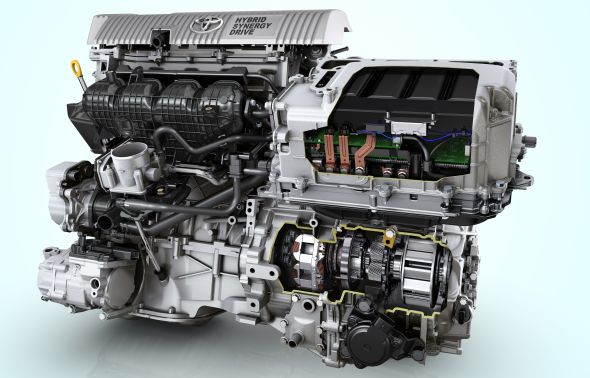
A Toyota hybrid car works by generating electricity as you drive, capturing energy from braking or slowing down, converting it into electrical energy, and storing it in a battery. The car is self-charging, eliminating the need to plug it in for charging.
Toyota’s hybrid system charges the battery in two ways: the petrol engine drives the generator to charge the battery, and regenerative braking utilizes the braking energy to charge the battery. This technology allows the hybrid car to operate efficiently and reduce fuel consumption.
Additionally, Toyota’s hybrid cars have a combustion engine that works similarly to a gas vehicle, injecting fuel into the combustion chamber. Overall, a Toyota hybrid car combines the use of electricity and a combustion engine to enhance fuel efficiency and reduce emissions.
Credit: afdc.energy.gov
How Does A Toyota Hybrid Work
Toyota’s hybrid cars work differently from conventional vehicles. They are self-charging, generating electricity from braking or slowing down. This kinetic energy is converted into electrical energy and stored in a battery, making Toyota hybrids more efficient and eco-friendly.
Introduction
A Toyota Hybrid employs advanced technology to combine an internal combustion engine with an electric motor. This innovative hybrid system optimizes fuel efficiency and reduces emissions, offering an eco-friendly and cost-effective driving solution.
Different Types Of Hybrid Powertrains
There are three primary hybrid powertrain configurations:
Parallel Hybrid
Series Hybrid
Plug-in Hybrid
Charging Methods
Toyota’s hybrid system charges the battery through two methods:
Regenerative braking captures kinetic energy generated during deceleration and uses it to recharge the battery.
The petrol engine powers a generator to produce electricity for recharging the battery while driving.
How The Hybrid System Works While Driving
During acceleration, the electric motor supports the petrol engine, enhancing performance and efficiency. At cruising speeds, the system utilizes both electric and petrol power sources to maintain optimal performance while minimizing fuel consumption.
Regenerative Braking
The regenerative braking system recaptures energy during braking or coasting, converting it into electrical energy to recharge the battery. This process contributes to increased fuel efficiency and reduces wear on the traditional braking system.
Benefits Of Hybrid Technology
By seamlessly integrating electric and petrol power sources, Toyota Hybrid technology offers several advantages, including reduced fuel consumption, lower emissions, and increased overall efficiency. Moreover, it enhances the driving experience and contributes to a more sustainable environment.
Credit: mag.toyota.co.uk
Credit: mag.toyota.co.uk
Frequently Asked Questions For How Does A Toyota Hybrid Work
How Does Toyota Hybrid Car Works?
A Toyota hybrid car works differently from other cars. It generates electricity while driving, capturing energy from braking or slowing down. This kinetic energy is converted into electrical energy and stored in a battery. The car can also charge the battery using regenerative braking.
Toyota’s hybrid cars are self-charging and do not require external charging.
What Are The Disadvantages Of A Hybrid Vehicle?
Hybrid vehicles have some disadvantages, such as being more expensive to buy initially and may have higher running costs. Additionally, finding a mechanic with the required expertise can be challenging. Moreover, their engine technology is continuously evolving which can lead to complexities.
How Does The Toyota Hybrid Charge?
The Toyota hybrid charges in two ways: Firstly, the petrol engine drives the generator to charge the battery. Secondly, regenerative braking captures energy from braking and converts it into electrical energy to charge the battery.
Conclusion
The Toyota hybrid system is a marvel of engineering, harnessing kinetic energy and regenerative braking to charge its batteries. This sustainable approach to powering the vehicle sets a new standard for eco-friendly driving. The seamless integration of electric and petrol power ensures efficient performance and reduced emissions, making Toyota hybrids a smart choice for the environmentally conscious driver.
Unlocking the secrets of how a Toyota hybrid works offers a glimpse into the future of automotive technology.
Choosing the best Hyundai dealership for service involves several key factors.
Customer satisfaction is crucial, as it reflects the dealership's commitment to providing excellent service. Certified technicians ensure that your vehicle is in capable hands, with the expertise needed to address any issues. Genuine parts availability is important for maintaining the quality and performance of your Hyundai.
Amenities such as a comfortable waiting area, shuttle service, or loaner vehicles can enhance your overall experience. Warranties on service and parts provide peace of mind and protection for your investment.
Considering all these factors can help you select the Hyundai dealership that best meets your needs and ensures your vehicle receives top-notch service.
Evaluating Customer Reviews
Analyzing customer reviews offers invaluable insights into the quality of service and customer satisfaction at any Hyundai dealership. When you're considering where to take your Hyundai for service, diving into the reviews can reveal much about what you might expect. Initially, review authenticity is vital. Genuine, detailed feedback from customers provides a clearer picture than generic, overly positive reviews. You'll want to look for patterns in the comments—consistent mentions of friendliness, efficiency, or perhaps issues with scheduling. These patterns tell a story that goes beyond individual experiences.
Another key factor is response time. How quickly a dealership responds to both positive and negative reviews indicates their commitment to customer service. A dealership that takes the time to thank customers for positive feedback or address concerns in negative reviews shows they value customer satisfaction and are proactive in maintaining a high standard of service. This level of engagement can greatly influence your decision, as it reflects the dealership's dedication to resolving issues and improving their service quality.
Importance of Certified Technicians
Ensuring your Hyundai is serviced by certified technicians is essential for maintaining its optimal performance and longevity. These professionals have undergone rigorous training programs specific to Hyundai's engineering standards and technologies. This specialized knowledge is vital for diagnosing and resolving issues accurately, guaranteeing your vehicle receives the care it needs.
Certified technicians possess a level of expertise that general mechanics might not. Their training includes both theoretical knowledge and practical skills, tailored to your vehicle's specific requirements. This guarantees that they can handle everything from routine maintenance to complex repairs with precision.
Training programs: Certified technicians undergo continuous education to stay updated on the latest automotive technologies and repair techniques. This ensures they can handle the newest models and understand the intricacies of older ones.
Technician experience: Experienced technicians are more likely to quickly diagnose and fix problems, reducing the time your car spends in the shop.
Quality of work: Certified technicians adhere to Hyundai's high standards, ensuring the work done on your vehicle is of the highest quality.
Choosing a Hyundai dealership with certified technicians guarantees your vehicle gets the best possible service, keeping it running smoothly for years to come.
Availability of Genuine Parts
Bypassing the expertise of certified technicians, it's also crucial for your Hyundai to be equipped with authentic parts to sustain its performance and reliability. The top Hyundai dealership for service doesn't just excel in skilled labor; it excels in part sourcing. This guarantees that whenever your vehicle needs a replacement, you're guaranteed to receive genuine components designed to work seamlessly with your vehicle's specifications.
Managing part sourcing is no small feat. It involves a dealership's deep-rooted connections with manufacturers and a sophisticated inventory system to track and order parts efficiently. This system prevents delays in repairs and servicing, directly impacting your satisfaction and your vehicle's health.
Furthermore, the risk of counterfeit parts is a real concern. Counterfeit components, often cheaper, pose significant risks to your vehicle's functionality and your safety. These parts may not meet the standards and specifications required for ideal operation, leading to malfunctions or, worse, accidents. A reputable Hyundai dealership combats these risks by ensuring access to genuine parts, safeguarding your vehicle's integrity and your peace of mind.
Service Center Amenities
When you visit a top Hyundai dealership's service center, you'll find that the amenities offered greatly improve your waiting experience, reflecting the brand's commitment to customer satisfaction. The waiting area isn't just a place to sit; it's designed to assure your comfort and convenience while your vehicle is being serviced.
Analyzing what makes these service center amenities stand out, it's clear that Hyundai dealerships prioritize creating an environment that respects your time and needs. Here are three key features you'll often find:
Comfortable Seating: The waiting areas are furnished with comfortable seating options, allowing you to relax or work while you wait.
Complimentary Refreshments: Dealerships understand the importance of hospitality, offering complimentary coffee, tea, and snacks to make your wait more pleasant.
Wi-Fi Access: Recognizing the need to stay connected, free Wi-Fi is available, enabling you to work or entertain yourself without using your data plan.
These amenities demonstrate Hyundai's understanding that service center visits aren't just about the car; they're about the customer's entire experience. By providing a welcoming environment, Hyundai dealerships show their dedication to service excellence and customer care.
Warranty and Service Plans
Hyundai dealerships offer a variety of warranty and service plans tailored to meet your vehicle's needs, ensuring peace of mind over its lifetime. When delving into these plans, it's important to understand the coverage limits and transferability rules, as these aspects greatly impact their value.
Coverage limits outline the scope and duration of the service your vehicle is entitled to. Hyundai is renowned for its generous warranty terms, often exceeding those of competitors. This includes thorough bumper-to-bumper coverage, powertrain warranties, and additional perks like roadside assistance. However, it's vital to read the fine print. Some services may have specific mileage or time restrictions, and grasping these will help you maximize the benefits.
Transferability rules are another critical factor. If you plan to sell your vehicle, the ability to transfer the warranty can significantly increase its resale value. Most Hyundai warranties are transferable to subsequent owners, but there might be conditions or a transfer fee involved.
Conclusion
To summarize, when you're selecting the best Hyundai dealership for service, it's important to critically evaluate customer reviews and prioritize dealerships employing certified technicians. Availability of genuine parts directly impacts the quality of repairs, ensuring your vehicle remains in top condition.
Moreover, consider the service center's amenities for a comfortable wait. Finally, grasping warranty and service plans can greatly impact long-term satisfaction. Analyzing these factors objectively will guide you to a dealership that meets your needs thoroughly.
2020 Hyundai Venue XT Problems, Symptoms, Causes and How to Fix
The 2020 Hyundai Venue XT has experienced several issues reported by owners and automotive experts. While generally considered a reliable subcompact SUV, some common problems have emerged with this model year. This technical guide will explore the most frequently reported issues, their potential causes, and possible solutions.
Transmission Problems
The most significant issue reported for the 2020 Hyundai Venue XT is related to its transmission. Some owners have experienced transmission failures, rough shifting, and unexpected loss of power while driving.
Symptoms of transmission problems in the 2020 Venue XT include:
Difficulty shifting gears
Jerking or shuddering during acceleration
Unexpected loss of power while driving
High RPMs without corresponding acceleration
Whistling noises from the engine compartment
These issues typically occur after driving long distances, often around 200 miles or more. In some cases, the problems may not trigger a check engine light immediately, making diagnosis challenging.
Potential causes of transmission problems:
Faulty CVT (Continuously Variable Transmission)
Overheating transmission fluid
Malfunctioning transmission control module
Worn internal transmission components
If you experience transmission issues with your 2020 Venue XT, it’s crucial to have the vehicle inspected by a certified Hyundai technician. In some cases, a complete transmission replacement may be necessary.
Brake Pedal Design Flaw
Some users have reported a design flaw with the brake pedal in the 2020 Hyundai Venue XT. The issue stems from the brake pedal being positioned higher than the accelerator pedal.
Key points about the brake pedal problem:
The offset positioning can cause the driver’s foot to become trapped under the brake pedal
This design flaw may lead to braking difficulties and increase the risk of accidents
Some users report that fully depressing the brake pedal doesn’t always initiate braking
To address this issue, Hyundai may need to consider a redesign of the pedal layout in future models. In the meantime, drivers should be aware of this potential problem and adjust their foot positioning accordingly.
Driver Assistance System Malfunctions
The 2020 Hyundai Venue XT comes equipped with various driver assistance features. However, some users have reported malfunctions in these systems, particularly with the Lane Keep Assist and Adaptive Cruise Control.
Common driver assistance system issues include:
1.Lane Keep Assist:
Misalignment causing the vehicle to veer off the road
Steering the vehicle into oncoming traffic
2. Adaptive Cruise Control:
Sudden and unexpected drops in vehicle speed
Failure to maintain a safe distance from vehicles ahead
These malfunctions can significantly increase the risk of accidents. If you experience any issues with the driver assistance systems in your 2020 Venue XT, it’s essential to have them inspected and recalibrated by a Hyundai technician.
Exterior Lighting Problems
Some owners of the 2020 Hyundai Venue XT have reported issues with the vehicle’s exterior lighting, particularly the headlights and taillights.
Lighting problems reported include:
Dim headlights, reducing visibility while driving at night
Weak taillights, potentially increasing the risk of rear-end collisions
Inconsistent light output
These issues can compromise safety, especially during nighttime driving or in poor weather conditions. If you notice any problems with your Venue XT’s exterior lighting, have it inspected by a qualified technician to ensure proper functionality and alignment.
Acceleration Issues
While less common than transmission problems, some 2020 Hyundai Venue XT owners have reported issues with acceleration. These problems can manifest in various ways and may be related to the vehicle’s engine or transmission.
Acceleration problems reported include:
Loss of speed when depressing the accelerator pedal
Sudden drops in speed while maintaining constant throttle input
Delayed response to accelerator input
In some cases, users have reported their vehicle’s speed dropping from 65 mph to 10 mph when pressing the accelerator. These issues can be dangerous, especially when merging onto highways or attempting to pass other vehicles.
Potential causes of acceleration problems:
Faulty throttle position sensor
Clogged fuel injectors
Malfunctioning mass airflow sensor
Transmission control module issues
Power Steering Failures
Some users have reported instances of power steering failure in the 2020 Hyundai Venue XT. This issue can significantly impact the vehicle’s handling and increase the risk of accidents.
Symptoms of power steering problems include:
Sudden loss of steering assist
Difficulty turning the steering wheel, especially at low speeds
Unusual noises when turning the steering wheel
Power steering failures can be caused by various factors, including:
Low power steering fluid levels
Faulty power steering pump
Damaged steering rack
Electrical issues affecting the power steering system
Airbag Concerns
While not widespread, there have been a few reports of airbag issues in the 2020 Hyundai Venue XT. These concerns primarily relate to potential deployment problems.
Airbag issues reported include:
Concerns about airbags not deploying in the event of a collision
Airbag warning lights illuminating on the dashboard
If you notice any airbag warning lights or have concerns about your vehicle’s safety systems, have it inspected by a Hyundai technician as soon as possible.
Infotainment System Glitches
Some owners of the 2020 Hyundai Venue XT have reported occasional glitches with the vehicle’s infotainment system. While not a critical safety issue, these problems can be frustrating for users.
Common infotainment system issues include:
Screen freezing or becoming unresponsive
Bluetooth connectivity problems
Issues with Apple CarPlay or Android Auto integration
Audio system malfunctions
In most cases, these problems can be resolved by resetting the infotainment system or updating its software. If issues persist, consult with a Hyundai technician for further diagnosis and potential solutions.
Fuel Economy Concerns
While not necessarily a “problem,” some owners have expressed disappointment with the fuel economy of the 2020 Hyundai Venue XT. The EPA rates the 2020 Venue XT at 30 mpg combined (27 city/35 highway), but real-world results may vary.
Factors that can affect fuel economy include:
Driving habits and conditions
Vehicle maintenance
Tire pressure
Use of climate control systems
To maximize fuel efficiency in your Venue XT:
Keep tires properly inflated
Perform regular maintenance, including oil changes and air filter replacements
Avoid aggressive acceleration and braking
Use the ECO driving mode when appropriate
Ride Quality and Handling
Some owners have reported that the 2020 Hyundai Venue XT’s ride quality can be harsh, especially on rough roads. This is partly due to the vehicle’s short wheelbase and relatively firm suspension setup.
Ride quality concerns include:
Excessive bouncing on uneven surfaces
Sensitivity to crosswinds on highways
Noticeable body roll during cornering
While these characteristics are inherent to the Venue XT’s design, some improvements can be made:
Ensure proper tire inflation and alignment
Consider upgrading to higher-quality shock absorbers
Be mindful of crosswinds when driving on highways
Interior Quality and Comfort
While not a widespread issue, some owners have expressed concerns about the interior quality and comfort of the 2020 Hyundai Venue XT, particularly on longer trips.
Interior concerns reported include:
Lack of lumbar support in the seats
Limited adjustability of the driver’s seat
Road noise at highway speeds
Cramped rear seating for adult passengers
These issues are largely subjective and may not be problematic for all users. However, they are worth considering if you frequently take long trips or regularly transport adult passengers in the rear seats.
Recalls and Technical Service Bulletins
As of 2024, the 2020 Hyundai Venue XT has been subject to one recall related to the seat belt pretensioners. Additionally, Hyundai has issued several Technical Service Bulletins (TSBs) addressing various issues.
Key recall and TSB information:
Recall: Seat belt pretensioner may explode upon deployment (NHTSA Campaign Number: 22V458000)
TSBs have been issued for various issues, including:
Transmission control module software updates
Engine control module calibration adjustments
Infotainment system software updates
Conclusion
While the 2020 Hyundai Venue XT has experienced several issues, it’s important to note that not all vehicles will be affected by these problems. Many owners report satisfaction with their Venue XT, praising its compact size, maneuverability, and value for money.
2020 Hyundai Venue XR Problems, Symptoms, Causes and How to Fix
The 2020 Hyundai Venue XR, while generally reliable, has faced several issues reported by owners. These problems range from transmission failures to electrical issues and understanding them can help current and prospective owners manage or avoid potential headaches.
Infotainment system reboot loop, instrument cluster issues
Power Steering
Loss of steering control
Airbags
Deployment failure, seat belt pretensioner recall
Exterior Lighting
Dim headlights and taillights
Acceleration
Sudden speed drops
Recalls
Seat belt pretensioners may explode, recall issued to fix the problem
Transmission Problems
The 2020 Hyundai Venue XR has been reported to have significant transmission issues. Owners have experienced problems such as the car stalling, difficulty shifting gears, and unexpected increases in RPM.
Details:
Stalling: Some owners have reported that their Venue XR stalls randomly, even at low mileage. This can be particularly dangerous if it happens in traffic.
Gear Shifting Issues: There are complaints about the car having trouble shifting gears, with the RPM needle bouncing and shifts occurring at unusual times. In some cases, the car fails to accelerate properly.
Unexpected RPM Increases: Instances where the RPM suddenly shoots up to 6000, causing the car to lose acceleration, have been noted. This issue often requires the car to be towed and checked by a dealer.
Brake Pedal Issues
The brake pedal design in the 2020 Hyundai Venue XR has been criticized for being higher than the accelerator pedal, which can lead to braking failures.
Details:
Design Flaw: The higher brake pedal can trap the driver’s foot, making it difficult to brake effectively.
Braking Failure: Some users have reported that pressing the brake pedal all the way down does not always initiate braking, increasing the risk of accidents.
Electrical Problems
Electrical issues are another common problem with the 2020 Hyundai Venue XR. These issues can affect various systems in the car, including the infotainment system and the instrument cluster.
Details:
Infotainment System: Some owners have experienced the infotainment system getting stuck in a reboot loop, rendering it unusable.
Instrument Cluster: There have been reports of the instrument cluster going blank or displaying distorted indicators and warning sounds.
Power Steering Failures
Power steering failures have been reported, which can significantly affect the handling and safety of the vehicle.
Details:
Loss of Steering Control: Instances of lost steering control due to power steering failure have been noted, making the vehicle difficult to handle and increasing the risk of collisions.
Airbag Issues
Airbag deployment problems have been reported, which can compromise the safety of the vehicle occupants in the event of a collision.
Details:
Deployment Failure: Some users have reported that the airbags do not deploy during a collision, increasing the risk of injury.
Recall: There has been a recall related to the seat belt pretensioners, which may explode and project metal fragments into the vehicle, potentially causing injuries.
Exterior Lighting Problems
The exterior lighting of the 2020 Hyundai Venue XR has been criticized for being too dim, which can affect visibility and safety while driving at night.
Details:
Dim Headlights and Taillights: Users have reported that the headlights and taillights are not bright enough, compromising night-time visibility and increasing the likelihood of accidents.
Acceleration Issues
Some owners have reported problems with the accelerator pedal, where the vehicle loses speed unexpectedly.
Details:
Sudden Speed Drops: There are complaints about the vehicle losing speed when the accelerator pedal is depressed, which can be dangerous, especially at high speeds.
Recalls
The 2020 Hyundai Venue XR has been subject to recalls, primarily related to the seat belt pretensioners.
Details:
Seat Belt Pretensioners: The seat belt pretensioners may explode upon deployment, projecting metal fragments into the vehicle and potentially causing injuries. Hyundai has issued a recall to address this issue by securing the pretensioners with a cap.
Conclusion
While the 2020 Hyundai Venue XR offers a reliable and affordable option for many drivers, it is not without its issues. Prospective buyers should be aware of these common problems and consider them when making a purchase decision. Current owners experiencing these issues should contact their dealer for potential fixes and recalls.
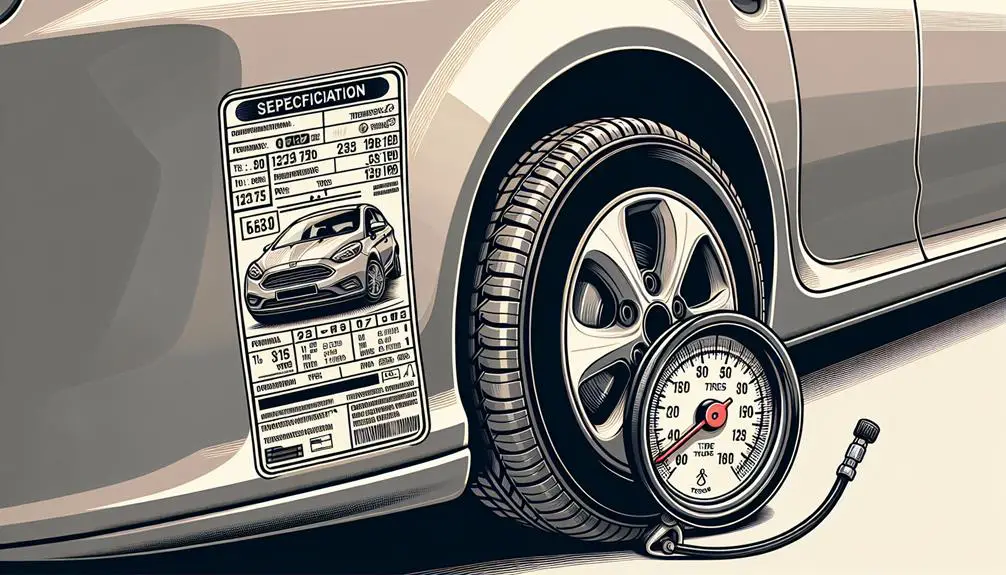
To check tire pressure on a Toyota Corolla, the first step is to locate the tire specifications for your vehicle. This information can usually be found in the owner's manual or on a sticker inside the driver's side door jamb.
Next, it's important to use a reliable tire pressure gauge to measure the air pressure in each tire. Digital gauges are recommended for accuracy, but analog gauges can also work well if properly calibrated.
Measure the pressure in each tire when they are cold, as driving can cause the tires to heat up and give a false reading. Compare the measured pressure to the recommended pressure stated in the owner's manual or on the sticker in the door jamb.
Checking tire pressure is a simple yet crucial maintenance task that should be done at least once a month. Proper tire pressure not only ensures your safety on the road but also contributes to fuel efficiency and tire longevity.
Locate Your Tire Specifications
Before checking your Toyota Corolla's tire pressure, find the specific tire specifications. These can be found inside the driver's side door or in the owner's manual. Knowing the correct tire pressure is important for fuel efficiency and tire life.
The information on the driver's side door frame includes the recommended tire pressure for both front and rear tires, which varies by Corolla model and year. The owner's manual also provides the correct tire pressure and maintenance tips.
Correct tire pressure is crucial because it affects tire wear, fuel economy, and the car's handling and braking. Inflating tires to the recommended pressure saves money on fuel and tires and ensures safety on the road.
Gather Necessary Tools
To check the tire pressure of your Toyota Corolla, you need the following tools:
Tire pressure gauge: Choose from digital, dial, or stick. Digital gauges are easier to read. Ensure the gauge works well for accurate measurements.
Notebook and pen or a phone's note-taking app: Record the pressure of each tire to track any differences or issues.
Flashlight or phone's flashlight: Helps see clearly when checking tire pressure in dim light.
Vehicle's manual: It has important information on recommended tire pressure and how to find tire valves.
Portable air compressor or location of the nearest gas station with an air pump: Useful for inflating any tires that are low on air.
Having these tools ready makes the process efficient and helps maintain your car's tires properly.
Measure Tire Pressure
ARTICLE TITLE: How to Check Tire Pressure on Toyota Corolla
PREVIOUS SUBTOPIC: 'Gather Necessary Tools'
With your tools ready, it's time to measure your Toyota Corolla's tire pressure. Correct tire pressure is key for safety, fuel efficiency, and tire life. Follow these steps for accurate measurement.
Find Recommended Pressure: First, look in your Corolla's owner's manual or on the sticker inside the driver's side door for the recommended tire pressure.
Remove Valve Cap: Pick a tire, remove the valve cap, and put it somewhere safe so you don't lose it.
Use Gauge on Valve: Place your tire pressure gauge on the valve stem firmly. You'll hear air hiss until the gauge is on correctly. Read the pressure right away for accuracy.
Do this for all four tires, including the spare if you have one. Tire pressure changes with temperature, so check when the tires are cold, or haven't been driven on for at least three hours, for the most accurate reading. Knowing your tire pressures means your Corolla is closer to being in the best driving condition.
Adjusting Tire Pressure
To adjust your Toyota Corolla's tire pressure, first find the recommended pressure on the sticker inside the driver's door or in the manual. The front and rear tires may need different pressures.
If the pressure is too low, inflate your tires by removing the valve cap, attaching the air hose, and filling the tire in short bursts. Check the pressure often until it's right. Be careful not to overinflate.
If the pressure is too high, let air out by pressing the pin in the valve stem with a tool or the valve cap edge. Release air in short bursts, checking the pressure until it's correct.
Always put the valve caps back on after adjusting the pressure to keep the valve clean and maintain the right pressure.
Regular Check-Up Schedule
To keep your Toyota Corolla's tires in good shape and safe for driving, follow this simple check-up routine:
Check Tire Pressure Weekly: Tires can lose up to 1 psi each month. Checking weekly helps find any leaks early. Use a good tire pressure gauge and check when tires are cold for an accurate measure.
Inspect Tread Monthly:Good tread is essential for grip, especially on wet roads. Every month, look for uneven wear, cuts, or objects in the tire. Use the penny test to check tread depth: insert a penny into the tread with Lincoln's head upside down. If you can see all of his head, you might need new tires.
Get Alignment Checks Seasonally: Have a professional check your car's alignment with each season change, or at least twice a year. Misalignment leads to uneven tire wear and can shorten tire life, costing you more in the long run.
Conclusion
Now that you know how to check and change the air in your Toyota Corolla's tires, remember to do it often. Try to check them every month or before you go on a big trip.
It's an easy job, but very important for staying safe, saving gas, and making your tires last longer. Don't forget to do this regular care – it helps your Corolla work well.
Keep your tools ready, so you can always make sure your tires are perfect. Stay safe and enjoy driving!
Finding the cheapest Hyundai dealership near you involves several key steps:
Using online comparison tools to compare prices and deals offered by different dealerships.
Staying aware of promotions and special offers, such as discounts or rebates, that could help lower the overall cost.
Negotiating effectively with sales representatives to secure the best possible price for your desired Hyundai model.
These strategies can help you find a Hyundai dealership that offers competitive pricing and save money on your next car purchase.
Understanding Hyundai Pricing
Why does Hyundai pricing vary so much between dealerships? You're not alone in wondering. The answer lies in a mix of market trends and dealership strategies. Dealerships adjust their prices based on local demand, inventory levels, and competition. If a dealership's in a high-demand area with limited competition, you'll likely see higher prices. Conversely, in areas with several dealerships vying for business, prices tend to be more competitive.
Furthermore, warranty options play a significant role. Hyundai offers a range of warranties, and dealerships might adjust pricing based on the warranty package included with your purchase. A more inclusive warranty might lead to a slightly higher price upfront but can offer you peace of mind and long-term savings.
Grasping these factors gives you a clearer picture of why prices vary. It's not just about finding the cheapest option; it's about understanding what influences prices. You're equipped to navigate these variations better and make more informed decisions. Remember, the best deal isn't always the lowest price, but the one that offers you the most value considering market trends and warranty options.
Research and Comparisons
To effectively navigate Hyundai's varying pricing, it's vital to engage in thorough research and comparisons. By doing so, you'll uncover not just the base costs of vehicles but also the variety of local incentives that can greatly lower your expenses. Dealerships often have different specials and promotions based on their inventory needs, regional competitions, and partnerships with Hyundai. It's essential to keep an eye out for these deals, as they can make a notable difference in the final price.
Furthermore, don't overlook the significance of a dealer's reputation. A reputable dealership isn't just about offering the lowest prices; it's also about providing quality service and a trustworthy buying experience. You can gather insights on dealer reputation by reading customer reviews and asking for recommendations from friends or family members who've recently purchased a Hyundai. They can provide firsthand accounts of their experiences, highlighting the dealers that offered exceptional value and customer service.
Utilizing Online Tools
After researching and comparing dealerships, leveraging online tools can further streamline your search for the cheapest Hyundai dealership near you. These digital platforms offer a wealth of information and features that can greatly narrow down your options and help you make an informed decision without having to leave your home.
Here are key online tools to use:
Virtual showrooms: Many dealerships now offer virtual tours of their showrooms. This feature allows you to browse the available inventory at different dealerships, compare prices, and check out new models, all from the comfort of your own home.
Dealer ratings: Websites and platforms dedicated to automotive purchases often include dealer ratings and customer reviews. These can give you insights into the customer service quality, pricing transparency, and general satisfaction levels of previous buyers.
Price comparison websites: These websites compile pricing information from different dealerships, allowing you to quickly identify which ones offer the most competitive prices for the Hyundai model you're interested in.
Negotiation Strategies
Arming yourself with effective negotiation strategies can greatly reduce the price of your next Hyundai purchase. Understanding and leveraging your trade-in value, along with examining different finance options, can provide significant advantage during negotiations. It's important to do your homework and know the value of your trade-in vehicle; this knowledge can serve as a powerful bargaining chip. Likewise, being informed about available finance options can help you negotiate better terms or rates.
Here's a concise breakdown of key negotiation strategies:
Strategy
Description
Benefit
Research Value
Know the market value of the Hyundai model and your trade-in.
Prevents overpaying and increases trade-in advantage.
Finance Options
Investigate different financing methods and rates from different sources.
Empowers bargaining for better finance terms.
Assertiveness
Be clear and firm about your budget and requirements.
Keeps negotiations focused and efficient.
Walk Away Ability
Be prepared to walk away if terms don't meet your satisfaction.
Puts pressure on the dealer to offer better deals.
Seasonal Promotions and Deals
Comprehending the right negotiation strategies sets the stage for maximizing savings, and keeping an eye on seasonal promotions and deals at Hyundai dealerships can further amplify your discounts. Dealerships often roll out special offers that are time-sensitive, designed to clear out inventory before new models arrive, during holiday sales events, or as part of end-of-financial-year clearances. Being informed and ready can help you snag a fantastic deal.
Here's how you can benefit:
Trade-in incentives: Look out for promotions offering boosted value on your trade-in vehicle. These incentives can significantly lower the cost of your new Hyundai by giving you more for your old car than you might expect.
Loyalty discounts: If you're already a Hyundai owner, dealerships may offer loyalty discounts as a thank you for sticking with the brand. This could mean extra savings on top of any negotiated price.
Seasonal sales events: Dealerships may offer special financing rates or cash-back deals during certain times of the year, such as holiday weekends or model year-end closeouts.
Staying informed about these opportunities and understanding how to utilize them can lead to substantial savings on your next Hyundai purchase.
Conclusion
After diving deep into Hyundai's pricing and comparing different dealerships, you've equipped yourself with necessary insights.
Leveraging online tools has streamlined your search, making it easier to pinpoint the cheapest Hyundai dealership near you.
Remember, negotiation is key. Approach it with confidence, armed with your research.
Keep an eye out for seasonal promotions and deals; they're golden opportunities to snag an even better bargain.
You're now well-prepared to navigate the landscape of Hyundai purchasing with savvy and assurance.