Recent Posts

How to Change Alternator 2008 Hyundai Sonata


To change the alternator in a 2008 Hyundai Sonata, you need to prepare your workspace and gather the necessary tools and safety gear. Once you have everything ready, you can proceed to remove the old alternator carefully. After removing the old alternator, the next step is to find a suitable replacement that is compatible with your vehicle. Finally, install the new alternator properly to ensure the health and performance of your vehicle.

Make sure to follow the manufacturer's instructions and guidelines when performing this task. Double-check all connections and ensure everything is securely in place before starting your vehicle. Regular maintenance and proper installation of components like the alternator can help prevent potential issues and keep your car running smoothly.

Preparing Your Workspace

Before you start replacing the alternator in your 2008 Hyundai Sonata, make sure your workspace is clean, well-lit, and free of clutter. This helps prevent losing tools or accidents. Good lighting is important to see the engine and alternator clearly, avoiding mistakes.

Gather all necessary tools and parts before starting. You'll likely need wrenches, ratchets, and possibly a screwdriver, along with a new alternator that fits your Sonata. Keeping everything organized can help the process go smoothly.

Having your vehicle's manual close by is useful. Even if you're experienced, your vehicle might've specific needs. The manual can give you detailed instructions or important specifications for installing the alternator.

Removing the Old Alternator

To remove the old alternator from a 2008 Hyundai Sonata, follow these steps:

  1. Make sure the car's engine is cool. Disconnect the battery to avoid electrical shocks, starting with the negative terminal.
  2. Find the alternator at the front of the engine compartment. Remove any parts blocking access to the alternator, like the air intake assembly or belts. Remember how to put these parts back later.
  3. Loosen the tension on the serpentine belt and remove it from the alternator's pulley.
  4. Disconnect the electrical connections from the alternator. Be careful not to damage the connectors.
  5. Unscrew the mounting bolts of the alternator. There may be two or three bolts.
  6. Lift the alternator out carefully, watching its weight and size.

Selecting the Right Alternator

choosing the correct alternator

To replace your 2008 Hyundai Sonata's alternator, match it with the correct specifications. Identify your engine type, either a 2.4L four-cylinder or a 3.3L V6, as alternator requirements vary. Ensure the new alternator has the right amperage, matching your Sonata's electrical system needs. You can find amperage information in the owner's manual or online.

Check that the new alternator's pulley system matches the old one to avoid serpentine belt issues. Bringing your old alternator when buying the new one can help with comparison.

Decide between a new or remanufactured alternator. Remanufactured alternators can be more affordable and often meet OEM standards. Ensure it has a warranty.

Selecting the correct alternator is important for your Sonata's performance.

Installing the New Alternator

To install a new alternator in a 2008 Hyundai Sonata, follow these steps:

  1. Disconnect the Battery: First, ensure the car's battery is disconnected to avoid electrical issues.
  2. Install the Alternator: Lift the new alternator into its position, aligning it with the brackets. It should fit without forcing it.
  3. Secure the Alternator: Hand-tighten the bolts on the mounting brackets, then use a wrench to securely tighten them without overdoing it.
  4. Connect Wiring Harness: Attach the electrical connectors or wiring harness to the alternator, making sure the connections are secure and correct.
  5. Install Drive Belt: Place the drive belt over the alternator pulley. You may need to adjust the tensioner pulley to fit the belt. Ensure the belt is correctly positioned and tensioned.

After these steps, the new alternator is installed in the car.

Testing and Troubleshooting

analyzing system bugs diligently

To ensure your 2008 Hyundai Sonata's new alternator works well, test it after installation. Start the car; if it starts well, check the alternator's output. Use a multimeter set to voltage mode and measure the battery terminals with the car running. A correct alternator output is between 13.8 and 14.2 volts.

If there are problems or the voltage is wrong, here's a guide to troubleshoot:

  • If the car won't start, check for loose or corroded battery terminals.
  • If the battery warning light is on, the alternator belt might be faulty.
  • If lights are dim or there are electrical issues, the alternator may not be charging.
  • Unusual noises could mean the alternator's bearings are worn.

Conclusion

You've just finished putting a new alternator in your 2008 Hyundai Sonata, so you're ready to drive with no worries. Make sure you set up your work area well and pick the right alternator before you start.

With the old alternator out and the new one in, you've done a big job. Good for you! Remember to check if everything works right before you go anywhere.

Enjoy your drive and feel good about the work you did.

Mazda Cx 5 Vs Hyundai Tucson


Choosing between the Mazda CX-5 and the Hyundai Tucson comes down to prioritizing performance and interior luxury (CX-5) versus tech features and value (Tucson).

The Mazda CX-5 excels in delivering a more engaging driving experience and a premium interior feel, while the Hyundai Tucson stands out with its cutting-edge technology and better value proposition.

Both SUVs have commendable safety scores, but your decision should hinge on whether you value a sportier ride and upscale ambiance or a tech-rich environment and cost-effectiveness.

Performance Comparison

great for data analysis

The Mazda CX-5 is more agile and sporty, offering precise steering and responsive handling, making it feel like a sports car. Its turbocharged engines provide strong acceleration, ideal for highway driving and overtaking.

The Hyundai Tucson, however, prioritizes comfort with a smooth ride that absorbs bumps well, suitable for long drives and daily commutes. Its engines are reliable but not as exciting as the CX-5's.

Choose the CX-5 for a sporty drive or the Tucson for comfort and a quiet ride.

Interior Comfort and Design

Inside the Mazda CX-5, the focus is on a premium, driver-centered interior with high-quality materials and an elegant design. The Hyundai Tucson, however, offers a futuristic and roomy interior that emphasizes comfort and practicality for everyone.

Here are the main differences:

  • Materials and Finish: The CX-5 uses soft materials and metal accents, making it feel luxurious. The Tucson uses more plastic but has a modern look.
  • Seating Comfort: The CX-5 has comfortable seats that are great for long drives. Both cars have supportive seats.
  • Cabin Space: The Tucson has more room in the back, with lots of legroom and headroom, which is good for families.
  • Noise Insulation: The CX-5 is better at keeping road noise out, making for a quieter ride.

Technology and Features

innovative software and tools

In terms of technology, the Mazda CX-5 and Hyundai Tucson both have advanced infotainment systems and safety features. The CX-5's infotainment system is easy to use, has a clear display, quick controls, and supports Apple CarPlay and Android Auto. It also has a high-quality sound system.

The Hyundai Tucson also has a good infotainment system with a bigger touchscreen that's easy to use and fast. It also supports smartphone integration and includes a wireless charging pad for devices.

Both cars have Bluetooth and several USB ports, but the Tucson has a bit more modern technology.

Choosing between them might depend on which interface you prefer or if you want specific features like wireless charging.

Safety Ratings and Equipment

The Mazda CX-5 and Hyundai Tucson have advanced safety features and high safety ratings. They offer:

  • Automatic Emergency Braking: Automatically applies the brakes to avoid or lessen a collision.
  • Lane Keeping Assist: Helps steer you back into your lane if you start to drift.
  • Adaptive Cruise Control: Keeps a set distance from the car in front, adjusting speed as needed.
  • Blind Spot Monitoring: Warns you of vehicles in your blind spot.

These cars are designed for safety, with features to prevent accidents and structures that protect you in a crash. They provide safety for everyday driving.

Pricing and Value

pricing and customer satisfaction

When comparing the Mazda CX-5 and Hyundai Tucson in terms of price and value, both cars are competitively priced. The Mazda CX-5 offers a premium feel and tends to maintain its value better over time, which could lead to lower overall costs.

The Hyundai Tucson stands out for its excellent warranty and more standard features at lower prices, providing great value. Your decision between the two may depend on whether you prefer the Mazda's premium feel and resale value or the Hyundai's warranty and features.

Conclusion

When you compare the Mazda CX-5 and Hyundai Tucson, both cars are good but in different ways. The CX-5 is fun to drive and has a fancy inside, making it feel special.

The Tucson, though, has the latest technology and the best safety features, keeping you safe and up-to-date.

The prices of both cars are similar, so it really depends on what you like more: a fun drive or a car with cool tech and safety.

How To Turn Off Hyundai Consider Taking A Break Warning


To turn off the 'Consider Taking A Break' warning in your Hyundai, follow these steps:

  1. Go directly to your vehicle's settings menu.
  2. Navigate to the Driver Assistance section.
  3. Find the option related to Driver Attention Warning (DAW) or similar.
  4. Here, you can disable the alert.

This process may vary slightly by model, so consult your vehicle's manual for exact steps.

Understanding Your Hyundai's Alert System

hyundai alert system guide

To manage your vehicle's alerts effectively, it's important to understand how your Hyundai's alert system works. This system, including features like the 'Consider Taking a Break' warning, is designed to monitor your driving and suggest breaks for your safety. These alerts are part of Hyundai's SmartSense features and are meant to assist you.

The reason you receive these notifications is that your Hyundai uses sensors and algorithms to notice if you're driving in a way that suggests you might be tired or distracted. For example, if you've been driving for a long time without stopping, or if you're making sudden steering changes or drifting out of your lane, the car will recommend taking a break.

These warnings aren't random; they're based on how you're driving at the moment. This alert system is aimed at reducing accidents caused by driver fatigue. It's an advanced safety feature designed to protect you.

Accessing the Vehicle Settings Menu

To turn off the 'Consider Taking A Break' warning in your Hyundai, first make sure your car is in park or neutral with the engine on or in accessory mode. This lets you access all settings.

Find the infotainment screen in the middle of your dashboard. This is where you adjust settings like alerts. Use the touchscreen or the buttons and knobs around the screen to open the main menu.

Look for a 'Settings' icon or a gear symbol. If your car has voice recognition, you can also press the voice command button and say 'Settings' to go to this menu.

Navigating to Driver Assistance Features

utilizing vehicle safety technology

To adjust your Hyundai's safety and driving aids, go to 'Settings' and then select 'Driver Assistance'. Here, you can customize alerts and features for a safer driving experience.

This menu lets you change settings for monitoring driving patterns, lane departure alerts, and collision-avoidance sensitivity. It's easy to navigate and allows you to set how you want to receive notifications, either through sound or visuals.

Disabling the Break Alert Function

To turn off the 'Consider Taking A Break' alert in your Hyundai, follow these steps:

  1. Go to 'Driver Assistance' settings in your car.
  2. Find the 'Driver Attention Warning' (DAW) option.
  3. Click on 'Driver Attention Warning' to see its settings.
  4. Turn off the feature by finding and using the toggle switch or disable option.

This will stop the break alerts.

Confirming and Saving Your Preferences

updating user preferences securely

After you turn off the 'Consider Taking A Break' alert in your Hyundai, make sure to save the change. Hyundai cars let you change alerts, but if not saved, the alert might come back.

Look for a message or sound that shows your changes are saved. This can be a visual sign on your dashboard or screen. If unsure, check your car's manual for help.

To save the settings, press a 'Save', 'Confirm', or 'OK' button on the screen or control panel. Make sure to go through the steps carefully to ensure the settings are saved correctly.

Conclusion

You've learned how to turn off the break alert in your Hyundai.

You did this by changing the settings for the driver help features in your car.

It's good to make your car work the way you like, but remember, taking breaks on long drives is still important for your safety.

Now that you've set it up your way, enjoy your drive.

But remember, you can always change these settings again if you need to.

Drive safely in your Hyundai that's just right for you.

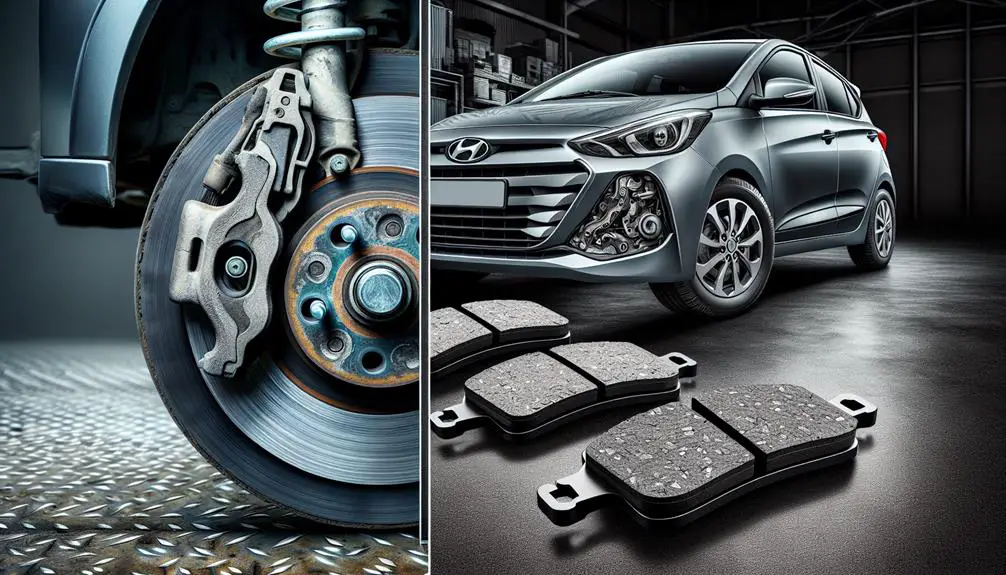
How to Change Hyundai I10 Brake Pads


Changing Hyundai i10 brake pads involves several steps that should be followed carefully. First, you need to identify the wear signs on the brake pads. Once you have done that, gather all the necessary tools before proceeding.

Next, lift the vehicle using a jack and secure it properly to ensure safety while working underneath. After lifting the vehicle, you can start removing the old brake pads by loosening the caliper bolts and sliding them out.

Finally, install the new brake pads with precision, making sure they are fitted correctly. This process is crucial for enhancing the safety and performance of your Hyundai i10.

Identifying Worn Brake Pads

inspecting brake pads condition

Recognizing when your Hyundai I10's brake pads need replacement is significant for maintaining your vehicle's safety. You don't want to wait until you're hearing a grinding noise every time you press the brake pedal. That's a clear sign you've waited too long. Instead, let's explore how you can identify worn brake pads before reaching that point.

To start, listen for a squealing or screeching sound while braking. Manufacturers design brake pads with wear indicators that make a high-pitched noise when the pad material wears down to a critical level. It's your initial clue that it's time for a checkup.

Next, pay attention to the feel of the brake pedal. If braking starts to feel spongy or if the pedal sinks closer to the floor than usual, it could indicate that your brake pads are thinning out. This change in pedal feel is because there's less material on the pad to create friction with the rotors.

Another indication is reduced braking efficiency. If you find yourself pressing down harder on the brake pedal to achieve the same stopping power, your brake pads could be wearing down. It's a subtle change at first, but it's important not to ignore it.

Lastly, don't overlook visual checks. If you're up for it, take a peek at your brake pads through the wheel spokes. Most pads have a minimum thickness indicator. If the pad looks thinner than the indicator or less than a quarter inch thick, it's time to plan for a replacement.

Necessary Tools and Materials

Before you commence on changing your Hyundai I10's brake pads, you'll need to gather a few important tools and materials.

First, you'll require a car jack and jack stands to safely lift and support your car. It's important to make sure your vehicle is securely propped up before you start working on it. A lug wrench will be necessary for removing the wheels, giving you access to the brake calipers.

You'll also need a set of wrenches or a socket set. Most often, a ratchet with a socket set that includes sizes for your car's lug nuts and brake caliper bolts will suffice. A C-clamp or a brake caliper tool is needed for retracting the piston within the brake caliper. This step is important for fitting the new brake pads.

Don't forget to purchase the correct brake pads for your Hyundai I10. It's important to get the right fit for your model to ensure top performance and safety. While you're at it, consider picking up some brake parts cleaner. It'll help you clean the brake components, removing any dirt or grease that could affect the new brake pads' efficiency.

Lastly, protective gear like gloves and safety glasses is recommended. They'll protect your hands and eyes from dirt, debris, and any hazardous materials you might encounter during the process.

Gathering these tools and materials before you start will make the process smoother and quicker. You'll be better prepared to tackle the job efficiently, ensuring your Hyundai I10's brakes are in top condition.

Preparing Your Hyundai I10

hyundai i10 preparation guide

To properly prepare your Hyundai I10 for the brake pad change, make sure the car is parked on a level surface and the parking brake is engaged. This initial step is important for your safety and ensures that your vehicle won't move unexpectedly while you're working on it.

Next, you'll want to loosen the lug nuts on the wheels where you'll be changing the brake pads. It's easier to do this while the car's weight is still on the wheels, as it prevents them from spinning freely. However, don't remove the lug nuts completely at this stage. Just loosen them enough so that they can be easily removed once the car is lifted.

After the lug nuts are loosened, it's time to safely lift your car. Using a jack, lift the car from the designated lift points — these are usually indicated in your Hyundai I10's owner manual. Make sure the jack is securely positioned and raises the car steadily. Once the car is lifted, place jack stands under the car for added safety. Never rely solely on the jack to support the car's weight while you're working.

With the car securely lifted and supported, you can now remove the wheels. Take off the lug nuts you previously loosened, and carefully remove the wheel. This will give you clear access to the brake assembly where you'll soon be working to remove the old brake pads.

Removing the Old Brake Pads

Now that your Hyundai I10 is securely lifted and the wheels are removed, it's time to focus on removing the old brake pads. This step is important for ensuring your vehicle's braking system is up to par. Here's how you can smoothly accomplish this task:

  1. Locate the Brake Caliper: The brake caliper houses the brake pads and is usually located over the rotor. You'll need to locate it to access the pads. It's typically held in place by a couple of bolts.
  2. Remove Caliper Bolts: Use a wrench to loosen and remove the bolts holding the caliper. It's a good idea to have a piece of wire or a bungee cord handy to hang the caliper once it's loose. Be careful not to strain or damage the brake hose.
  3. Slide Out the Old Pads: With the caliper safely out of the way, the brake pads can usually be slid out. Some models might've clips holding them in place, so be ready to unclip them if necessary. Inspect the old pads for wear patterns, as this can indicate if there are other issues with your braking system.
  4. Compress the Caliper Piston: Before inserting new pads, you'll need to make room for them by compressing the caliper piston back into its housing. Use a caliper piston tool or a C-clamp for this task. Be gentle to avoid any damage.

Installing New Brake Pads

brake pad replacement process

With the old brake pads removed, it's time to install the new ones in your Hyundai I10. Initially, check that you've got the right brake pads for your model. It's important because using the wrong ones can lead to brake failure. Once you're sure, let's get to work.

Start by applying a thin layer of brake grease on the back of the new brake pads. This helps prevent annoying squeaking sounds when you apply the brakes. However, be careful not to get grease on the front surface that contacts the disc.

Next, it's time to fit the new pads into the caliper. Depending on your I10's brake system, this might require sliding them in from the top or snapping them into place. Make sure they're seated properly. The pads should fit snugly without any force. If you're struggling, double-check you've got the orientation right.

Now, you'll need to retract the caliper piston. It has likely extended from wear on the old pads. Use a caliper piston tool or a C-clamp gently to push it back into its housing. This step is important; otherwise, the caliper won't fit over the new, thicker pads.

Once the piston is retracted, carefully place the caliper back over the new brake pads. Secure it with the bolts you removed earlier. Tighten these bolts to the specified torque to avoid any issues.

Testing Your New Brakes

After installing your new brake pads, it's important to test them to make sure they're working correctly. This step is essential for your safety and to make sure that the brake pads are properly installed. Here's a simple guide to test your Hyundai i10's new brakes:

  1. Start Slowly: Begin by driving your car in a safe, traffic-free area. Start with slow speeds, around 10-15 mph, and gently apply the brakes. Notice if the car stops smoothly or if there are any unusual noises or sensations. This initial test helps you get a feel for the new brake pads and ensures there's no immediate issue.
  2. Increase Speed Gradually: Once you're confident the brakes are working at lower speeds, gradually increase your speed and test the brakes again. This time, try speeds of around 30-40 mph. It's important to make sure that the braking performance is consistent and reliable, even as you increase speed.
  3. Check for Vibrations or Noises: Pay attention to any vibrations or noises when you apply the brakes. These could be signs that the brake pads aren't installed correctly or that there are other issues. If you notice anything unusual, it's best to inspect the brakes again or consult a professional.
  4. Perform Several Stops: Finally, perform several stops from different speeds to make sure the brakes are consistently working as expected. This will help you become accustomed to the feel of the new brake pads and give you peace of mind that your car is safe to drive.

Testing your new brakes is an important step after installation. It ensures your safety and the proper functioning of your vehicle's braking system.

Conclusion

So, there you have it! You've successfully changed your Hyundai i10's brake pads.

Remember, it's vital to have the right tools, follow each step carefully, and guarantee everything's secure before hitting the road.

Always test your new brakes in a safe area to make sure they're working perfectly.

With your new pads installed, you can drive confidently, knowing your car's stopping power is excellent.

Great job on taking this essential step in maintaining your vehicle's safety and performance!

Comparing The 2023 Hyundai Sonata And The 2024 Toyota Camry


The 2023 Hyundai Sonata and the 2024 Toyota Camry are both exceptional sedans.

The Sonata excels in technological features, while the Camry is renowned for its reliability and refreshed design.

Choosing the superior driving experience depends on one's preference for cutting-edge technology or proven dependability and style.

Exterior Design and Style

exterior aesthetic and details

The Hyundai Sonata and Toyota Camry have different exterior designs. The Sonata has a bold and modern look with curves and a unique front grille. It also has LED daytime running lights.

The Camry looks more traditional but elegant, with sharp lines and a big grille. Both cars come in different colors, with the Sonata offering more vibrant options. Your choice may depend on if you like the Sonata's bold style or the Camry's classic elegance. Each design shows what to expect from the car.

Interior Comfort and Technology

The Hyundai Sonata and Toyota Camry have great interiors that are comfortable and full of technology. They make sure you enjoy your drive by keeping you connected and entertained.

Here's a quick comparison:

  • The Hyundai Sonata has a bigger infotainment screen at 10.25 inches, compared to the Toyota Camry's 9-inch screen.
  • Both cars come with Apple CarPlay and Android Auto. The Camry also has Amazon Alexa.
  • You can choose cloth or leather seats in both cars.

Performance and Efficiency

optimizing performance and efficiency

When comparing the Hyundai Sonata and Toyota Camry in terms of performance and efficiency, both cars offer different engine options including efficient hybrids. The Sonata provides a good balance of power for everyday driving and a comfortable ride.

The Camry has efficient engines too, with a V6 option for more power and a hybrid that might be more efficient than the Sonata's. Both cars allow you to choose between power and fuel efficiency without losing performance. They have responsive handling and quick acceleration.

Your choice might depend on if you prefer the Camry's sportier feel or the Sonata's all-around performance.

Safety Features and Ratings

Safety features and ratings are important when choosing between the Hyundai Sonata and Toyota Camry. Both cars have strong safety features.

The 2023 Hyundai Sonata has safety features like forward collision-avoidance assist, lane keeping assist, and adaptive cruise control. It also has high safety ratings from the National Highway Traffic Safety Administration (NHTSA) and the Insurance Institute for Highway Safety (IIHS).

The 2024 Toyota Camry also focuses on safety with Toyota's Safety Sense 2.5+. This includes features like automatic emergency braking with pedestrian detection, lane departure alerts with steering assist, and adaptive cruise control. The Camry has received top safety ratings from the NHTSA and IIHS as well.

Both the Sonata and Camry offer advanced safety features and good safety ratings, making them good options for those who prioritize safety.

Price and Value Comparison

analyzing cost and worth

The Hyundai Sonata is usually cheaper than the Toyota Camry and comes with more features in its base model, offering better initial value.

However, the Toyota Camry tends to maintain its value over time better, potentially giving you more money back if you sell it later.

The Camry also has a hybrid option that could save on fuel costs, despite its higher initial price.

Conclusion

When comparing the 2023 Hyundai Sonata and the 2024 Toyota Camry, both cars are really good in their own special ways.

The Sonata looks very modern and has cool technology inside.

The Camry is great because it drives well, saves on gas, and is safe.

They both are good deals for the money, but what you choose depends on what you like more in a car.

If you want the latest tech, go for the Sonata.

If you care more about how the car drives and its safety, the Camry might be better for you.

Hyundai Elantra Won't Start After Alarm


The Hyundai Elantra is equipped with a security alarm system to prevent theft. If the alarm system is malfunctioning, it can prevent the car from starting. Common issues that can cause this problem include a faulty alarm module, a drained car battery, or a problem with the key fob.

To troubleshoot this issue, try replacing the battery in the key fob, reprogramming the key fob, or disconnecting the car battery for a few minutes to reset the alarm system. If the problem persists, it may be necessary to take the car to a Hyundai dealership or a qualified mechanic for further diagnosis and repair.

Understanding the Issue

capture the specific details

Hyundai Elantra owners have reported their car alarms going off unexpectedly, causing inconvenience. This issue isn't only annoying but also raises concerns about the car's security. When the alarm activates without reason, it can be confusing and embarrassing, especially in public places.

Understanding this problem is essential for finding a solution. It's a common issue among Hyundai Elantra owners, and knowing this can be reassuring. The next steps involve figuring out why this happens and how to fix it.

Common Causes

The alarm on a Hyundai Elantra might go off unexpectedly because of a few reasons:

  1. The hood latch sensor mightn't be working right. It can make the car think someone is trying to break in when they're not, which might stop the car from starting.
  2. A low car battery can also cause problems. If the battery is weak, it mightn't send the right signals, leading to false alarms or the car not starting.
  3. Broken door locks or sensors can trigger the alarm. If the car thinks a door is open when it's not, or if it doesn't get the correct signal from the door locks, it mightn't start.
  4. Aftermarket alarms or accessories that aren't installed properly can mess with the car's original settings, causing the alarm to go off or the car to not start.

It's important to check these areas if your Elantra's alarm keeps going off or if the car won't start.

Troubleshooting Steps

solving technical issues methodically

To fix your Hyundai Elantra's alarm problems, follow these steps. First, check the car battery. If the battery is weak or dead, it could cause the alarm to go off by mistake and stop the car from starting. Make sure the battery terminals are clean and tight. If the battery is old or has a voltage below 12.4 volts, replace it.

Next, look at the key fob battery. A dead battery in the key fob might stop it from talking to the car's alarm system right, causing problems. You can easily replace the key fob battery at home with just a few tools.

Finally, try resetting the alarm system. This can fix small errors or problems in how the car's systems talk to each other. To reset, you might need to look at your owner's manual for steps specific to your model. Usually, this means turning the ignition on and off a few times or disconnecting and reconnecting the car battery.

Here's a table showing how each step might make you feel:

Emotion Troubleshooting Step
Relief Check and replace the car battery if needed
Satisfaction Replace the key fob battery
Hopefulness Reset the alarm system

Professional Solutions

If your Hyundai Elantra's alarm doesn't stop causing problems even after you've tried fixing it yourself, it's important to get a professional mechanic to look at it. Here's what you should do when you see a mechanic:

  1. Describe the Issue: Tell the mechanic exactly what's wrong with the alarm, what you've tried to fix it, and how the car responded. This helps the mechanic understand the problem better.
  2. Okay Diagnostic Tests: Let the mechanic do thorough tests to find out what's wrong, whether it's the alarm system, the car's wiring, or something else.
  3. Talk About Fixes: After finding the problem, talk about what can be done to fix it. This might mean replacing parts, fixing wiring, or getting a new alarm system.
  4. Agree on the Cost: Make sure you know how much it will cost before the mechanic starts working. This includes the price of parts and labor. Also, ask if there's a warranty or guarantee on the repair work.

Choosing a mechanic who knows a lot about Hyundai cars or alarm systems can help solve your Elantra's alarm problems faster. Fixing the issue quickly can help you save both time and money.

Preventive Measures

preventing covid 19 transmission

To prevent alarm problems in your Hyundai Elantra, follow these steps:

  1. Check the car's battery regularly. If it's weak or more than three years old, replace it. This prevents many alarm issues.
  2. Replace the key fob battery every one to two years to ensure good communication with the car's alarm system.
  3. Be careful with aftermarket alarms or stereo systems. They can cause problems with the original alarm. Always get these installed by professionals and check they work with your Elantra.
  4. Drive your car regularly. Cars that aren't used often can develop electrical and alarm problems. A short drive weekly can help.
  5. Pay attention to Hyundai's recalls or service bulletins. Following their maintenance advice can prevent future issues.

Conclusion

If your Hyundai Elantra doesn't start after the alarm sounds, it might be because of a security system problem or a dead battery. First, check the battery.

Then, try to reset the alarm system. If these steps don't fix it, you should get help from an expert.

To stop this from happening again, keep your car well-maintained and quickly fix any alarm issues. Remember, stopping problems before they start is the best plan.