Recent Posts

Why Is My Hyundai Beeping While Driving


Your Hyundai's beeping while driving is a warning system for various issues such as:

  • Unbuckled seatbelts
  • Safety feature activations
  • Low fuel
  • Door ajar
  • Tire pressure problems
  • Mechanical malfunctions

Identifying the cause of these beeps is essential for your vehicle's maintenance and safety.

Safety Feature Alerts

safety feature notifications provided

Hyundai cars can beep while driving mainly due to safety feature alerts. These features, like Lane Departure Warning, alert you with beeps if you drift out of your lane without signaling.

The Forward Collision Warning system beeps if you're too close to another vehicle, suggesting you slow down or stop.

The Blind Spot Detection system warns you with a beep if there's a car in your blind spot and you try to change lanes, indicating it's unsafe to do so.

Low Fuel Warning

Your Hyundai car beeps to warn you when the fuel level is very low, indicating you need to refuel soon. This beep means the car might soon run out of fuel. If you ignore this beep, you might end up stranded.

Here's how people typically react to the low fuel warning:

Stage Emotion Action
1 Surprise Look at the fuel gauge
2 Concern Think about where the nearest gas station is
3 Anxiety Worry about making it to the station
4 Relief See a gas station ahead
5 Gratitude Fill up the car and keep going

This beep is important for your safety. It helps you avoid running out of fuel. When you hear this beep, it's a reminder to refuel. Your car is helping you stay safe and avoid getting stranded.

Door Ajar Notifications

monitor open doors easily

Your Hyundai has a door ajar alert to tell you if a door isn't completely closed. This helps keep you safe and your car secure by warning you of problems before driving. If you hear this beep, check all doors, including the trunk or hatch, to make sure they're shut tight.

A partially closed door can open while driving, which is dangerous for you, your passengers, and others on the road. It can also cause your car's interior lights to stay on, draining the battery.

The system uses sensors in each door's frame to detect if a door is open. If a sensor finds an open door, it beeps. Sometimes, something small blocking the door can cause this. Check the door frame and latch for any debris.

Tire Pressure Issues

While managing safety alerts like the door ajar notification, it's important to monitor your Hyundai's tire pressure. Incorrect tire pressure can cause beeping while driving. If your Hyundai beeps, it could indicate incorrect tire pressure, a safety concern.

The Tire Pressure Monitoring System (TPMS) alerts you if tire pressure is too low or too high. A beep and a warning light on your dashboard mean you should check your tires.

Here's a guide to what the beeps from your Hyundai mean regarding tire pressure:

  • Continuous Beep: Pressure is significantly low.
  • Intermittent Beep: Pressure is slightly off.
  • Beep at Start: System check or low pressure.
  • No Beep: Pressure is fine.
  • Beep with Warning Light: Needs immediate attention.

Correct tire pressure is important for your car's performance and safety. If you're not sure how to adjust tire pressure, see your Hyundai's manual or get professional help. Pay attention to your car's beeps; they're important messages.

Mechanical Malfunctions

mechanical issues on spacecraft

Beeping sounds in your Hyundai mean it needs immediate attention, signaling a mechanical issue. The car's computer system checks many parts, and beeps or chimes when there's a problem. For example, beeping can indicate engine issues like overheating or low oil pressure, or transmission problems like trouble shifting gears, possibly due to low fluid or internal issues.

Don't ignore these beeps. They're your car's way of telling you something's wrong. If you hear them, stop safely and look for any dashboard warning lights. Then, take your car to a certified mechanic or dealership service center to find and fix the problem. Ignoring these sounds can lead to expensive repairs later.

Conclusion

Your Hyundai car might beep while you're driving for several reasons. It's usually trying to keep you safe by alerting you about things like safety features, if you're low on fuel, if a door is open, if there's a problem with tire pressure, or if there's a mechanical issue.

It's important to listen to these beeps because they help you know what's going on with your car and keep you safe. Always check what the beeps mean right away to avoid any problems.

How To Change Windshield Wipers On A Hyundai Elantra 2020


  • To change the windshield wipers on a Hyundai Elantra 2020, first, lift the wiper arms off the windshield.
  • Press the small tab or release mechanism where the wiper blade connects to the arm, then slide the old wiper blade out.
  • Align the new blade with the arm, and slide it in until it clicks into place. Ensure it's securely attached before lowering the arm back onto the windshield.
  • Repeat for the other side. No special tools are required, but patience and care are essential to avoid damaging the windshield or wiper arms.

Gathering Necessary Tools

preparing for the task

To change the windshield wipers on a 2020 Hyundai Elantra, gather these tools first:

  • A flat-head screwdriver
  • A tape measure or ruler
  • Gloves
  • A clean cloth or paper towels

Use the screwdriver to remove old wipers if they're stuck. Measure the old wipers to buy the right size replacements. Wear gloves to protect your hands from sharp metal parts. Use the cloth or towels to clean the windshield and wiper area before installing new wipers. Having these tools ready makes the wiper change easier and prevents problems.

Removing the Old Wipers

First, lift the wiper arms from the windshield of your 2020 Hyundai Elantra until they stay upright. Be careful to avoid damage.

Find the small tab or button where the wiper blade and arm connect. Press or slide this to release the wiper blade. You might need to gently move the blade to detach it. Be cautious to prevent the arm from snapping back.

After removing the blade, lower the arm to the windshield gently. Do the same for the other blade.

You have now removed the old wipers.

Selecting New Wiper Blades

choosing the right wipers

To replace the old wipers on your 2020 Hyundai Elantra, you need to know the correct size. Usually, the Elantra needs a 26-inch blade for the driver's side and a 14-inch blade for the passenger side. Always check your car's manual or measure the old blades to be sure.

For new wiper blades, you have options. Rubber blades are common and cheap. Silicone blades last longer and work better in bad weather but cost more. Hybrid blades are a mix of both and could be a good option for your Elantra.

Make sure the new blades fit your Elantra's connector. Check the package for the right type of connector or for a list of compatible vehicles.

Installing New Wipers

To install new wipers on a 2020 Hyundai Elantra, follow these steps:

  1. Lift the wiper arms from the windshield. They lock to prevent snapping back.
  2. Remove old wipers.
  3. Align the new wiper blade with the arm. Match the hook on the arm with the adapter on the blade for a secure fit.
  4. Press the wiper blade into the arm's hook until it clicks, indicating it's attached.
  5. Carefully lower the wiper arm to the windshield to avoid damage.
  6. Do the same for the other wiper. Replace both for even performance.

Final Checks and Adjustments

final adjustments before completion

Before you drive, make sure your new wipers are set up right and work well. First, lift each wiper arm from the windshield to check if they snap back properly. If they feel too loose or too tight, you might need to fix their installation.

Turn on your car and the wipers to watch how they move. They should move smoothly over the windshield. If they don't, turn off the car and adjust the wipers so they fit the windshield shape better.

Conclusion

You've just successfully changed the windshield wipers on your 2020 Hyundai Elantra. By getting the right tools, carefully taking off the old wipers, choosing the right new ones, and putting them on the right way, you've made sure you can see clearly while driving, which is safer.

Make sure to check at the end that they're on tight and working right. It's important to regularly check and change your wipers to keep driving safely.

Good job on completing this task.

How to Replace Hyundai Elantra Cabin Air Filter


To replace the cabin air filter in a Hyundai Elantra:

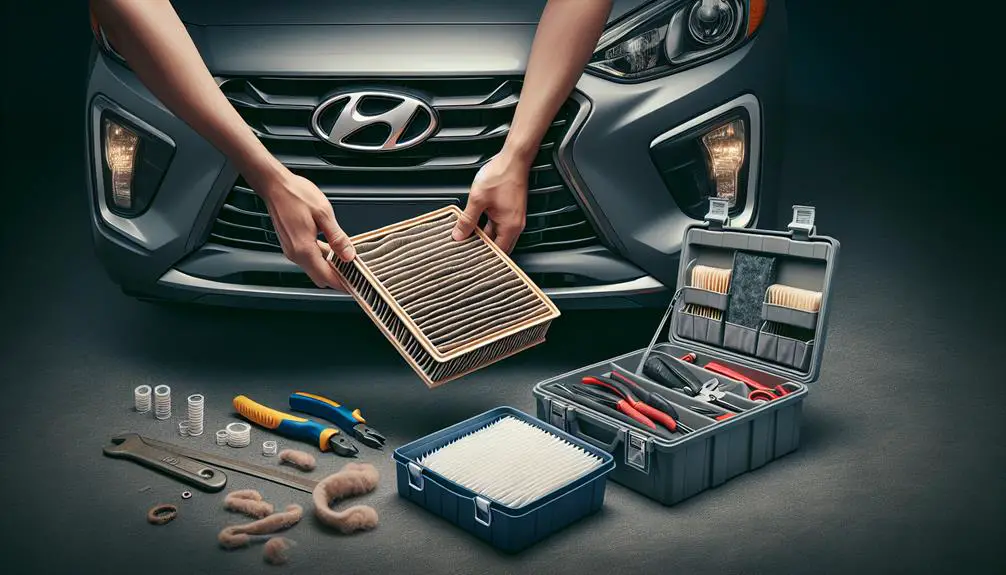
  1. Gather basic tools.
  2. Locate the filter behind the glove box.
  3. Remove the old filter.
  4. Install a new one, ensuring proper fit and function to maintain interior air quality.

Gather Necessary Tools

prepare for efficient work

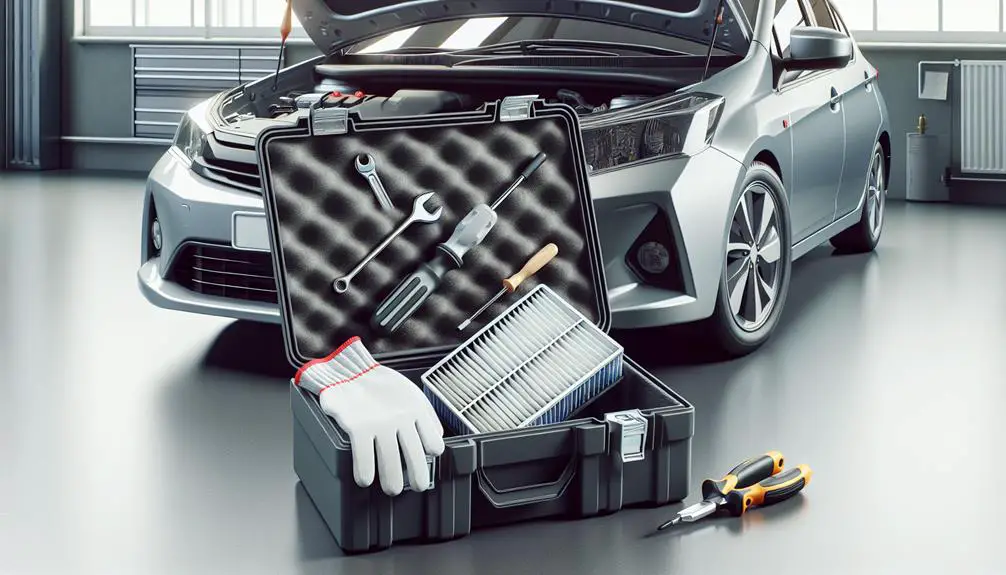
To replace your Hyundai Elantra's cabin air filter, you need a few tools.

First, a Phillips-head screwdriver is essential, and a flat-head screwdriver might also be useful for removing screws or fasteners.

Wear gloves to keep your hands clean from dirt and protect them from sharp edges.

Use a flashlight or headlamp for better visibility in dim areas.

Finally, ensure you have the correct new cabin air filter for your car model and year ready before starting.

This preparation will make the replacement process smoother and quicker.

Locate the Cabin Air Filter

To find the cabin air filter in a Hyundai Elantra, follow these steps:

  1. Empty the glove box to make sure nothing falls out.
  2. Open the glove box fully by pressing the stoppers towards the center. This will let the glove box hang down and show the area behind it.
  3. Look for a rectangular plastic cover behind the glove box. This is where the filter is. The cover might have clips or tabs.
  4. Remember how the filter cover is placed. This is important for putting it back correctly later.

Remove the Old Filter

replace outdated air filters

To remove the old cabin air filter in a Hyundai Elantra, follow these steps:

  1. Make sure the car is off and open the glove box completely. You may need to empty it for better access.
  2. Remove any fasteners or clips holding the glove box by using your hands or a screwdriver. Then, lower or remove the glove box to see the filter housing.
  3. Find the cover of the cabin air filter housing. It's usually a rectangular plastic lid with tabs or clips. Open it by pressing down or sliding these tabs.
  4. Before removing the old filter, remember its placement direction for later.
  5. Take out the old filter carefully. It might be tight, so gently wiggle it out. Expect some dust or debris to fall.
  6. Before putting in a new filter, check the housing for debris or leaves. Clean it with a vacuum cleaner using a soft brush attachment.

This ensures the new filter works well and improves air quality in the car.

Install the New Filter

To install the new cabin air filter correctly in your Hyundai Elantra, follow these simple steps:

  1. Check Filter Direction: Look for the airflow direction arrow on the filter. It should point towards the car's back. This matches the airflow system direction.
  2. Insert the Filter: Slide the new filter into its housing without leaving any gaps. If it doesn't fit right, it might be the wrong way around.
  3. Ensure Good Fit: Press the filter edges down after inserting it. This prevents unfiltered air from getting through.
  4. Reattach Clips or Cover: If there were any clips or a cover, put them back to secure the filter and stop any noise or movement while driving.

Final Checks and Testing

final quality assurance procedures

After installing the new cabin air filter in your Hyundai Elantra, check it works well. Do these steps:

  1. Turn on the ignition but don't start the engine. Put the air system on high and see if the air is stronger or smells better. If not, the filter might be in wrong or not all the way in.
  2. Listen for weird noises like rattling or whistling. If you hear any, turn off the system and check the filter again.

Here's a summary of what to check:

  • Airflow: Look for stronger and fresher air.
  • Noise: There shouldn't be any strange sounds.
  • Odor: The bad smell should be gone, showing the filter is clean.
  • Visual Inspection: Make sure the filter is in right.

Make sure everything is correct before finishing.

Conclusion

You did a great job changing the cabin air filter in your Hyundai Elantra! You found the right tools, took out the old filter, and put in a new one. This helps the air in your car stay clean. Always check to make sure everything is done right.

Changing the filter makes the air better and helps your car run well. Keep taking good care of your Elantra to make driving it nicer.

How to Disable Alarm on Hyundai Elantra


To disable the alarm on a Hyundai Elantra, there are a few methods you can try:

  1. Use the key fob: If you have the key fob for your Hyundai Elantra, you can usually disarm the alarm by pressing the unlock button.
  2. Disconnect the battery: Another way to disable the alarm is to disconnect the car's battery. This will reset the electrical system and may reset the alarm as well.
  3. Reset the alarm system: If the above methods don't work, you may need to reset the alarm system. This usually involves turning the ignition on and off a few times or using a specific sequence of actions to reset the alarm.

Remember to consult your Hyundai Elantra's owner's manual for specific instructions on how to disable the alarm system.

Understanding Your Elantra's Alarm

car alarm system explained

To turn off the alarm on your Hyundai Elantra, you need to know what makes it go off and how it works. The alarm is there to prevent theft or someone getting into your car without permission. It watches the doors, trunk, and hood. If these are opened wrongly, the alarm thinks someone is breaking in and goes off. It also senses big movements or impacts with its sensors. If the car is messed with or moved wrongly, the alarm will sound.

The alarm can be very sensitive. Sometimes, it might go off because of strong wind or loud noises nearby. You can change how sensitive it is, but be careful doing this so the alarm still works well.

Knowing this helps you turn off the alarm the right way without causing problems or making your car less secure. The aim is to stop the alarm sound while keeping your car safe.

Utilizing the Key Fob

Your key fob turns off your Hyundai Elantra's alarm quickly. It helps avoid unwanted alarms from small mistakes or bumps.

Here's how to use your key fob effectively:

  • Lock and Unlock: Press the lock button to set the alarm. Press unlock to stop the alarm if it starts by mistake.
  • Panic Button: Use the panic button to find your car in a busy parking lot. Press it again to stop the alarm.
  • Battery Check: Make sure the key fob's battery is good. A low battery might stop it from working.
  • Distance: Stay close to your car when using the key fob. It works best without too much distance or interference.

Disconnecting the Battery

preventing car battery drainage

To turn off your Hyundai Elantra's alarm by disconnecting the battery, first make sure the car is off and the keys aren't in the ignition.

Find the battery in the engine compartment. Use a wrench or pliers to loosen the nut on the negative (black) battery terminal. Disconnect the negative cable carefully, keeping it away from metal and the positive terminal.

Wait a few minutes to let the car's electrical system discharge. This resets the alarm system.

To reconnect, attach the negative cable to its terminal and tighten the nut. This should turn off the alarm, allowing you to start your car without noise.

Resetting the Alarm System

To reset your Hyundai Elantra's alarm system, follow these steps:

  1. Find the alarm fuse in the fuse box. Check your car's manual for its location and the fuse that corresponds to the alarm system.
  2. Use needle-nose pliers or a fuse puller to remove the alarm fuse. This disconnects the alarm system's power.
  3. Wait about one to two minutes to let the system reset.
  4. Put the fuse back in its slot in the fuse box. Make sure it fits well and is in the right spot.
  5. Use the key fob to lock and unlock your Elantra to test the alarm. If the reset worked, the alarm won't go off.

Seeking Professional Help

navigating mental health issues

If resetting the alarm system in your Hyundai Elantra doesn't fix the issue, it's important to get help from a professional. Trying to fix car alarms on your own can be difficult and might cause more problems with the car's electrical system if you're not sure what you're doing.

A trained technician can check your car's alarm system, find out what's wrong, and fix it properly. Hyundai dealerships have technicians trained to work on Elantras. They've the right tools and knowledge to solve your alarm system problem efficiently.

When you take your car for repair, ask questions to understand the problem and the solution. This helps you learn about your car and ensures you're not paying for services you don't need.

Addressing car alarm issues early can save you time and money. Trying to fix the problem yourself without the right knowledge can make it worse and lead to higher repair costs.

Also, take your car's service history and warranty information with you to the technician. If your Elantra is under warranty, the repair might be covered, which can save you money. Getting professional help not only solves the issue but also gives you peace of mind.

Conclusion

To turn off the alarm in your Hyundai Elantra, you have a few options. You can use the remote control that came with your car, disconnect the car's battery, or reset the alarm system.

If you find these steps hard, it's okay to ask for help from someone who knows more about cars. Knowing how to manage your car's alarm makes your life easier and keeps your car safe.

So, learn how to do it and enjoy the calm and safety your Elantra gives you.

How to Change Hyundai I10 Brake Light


Changing the brake light on a Hyundai i10 involves identifying the correct bulb type.

Removing the old bulb properly is essential for safety.

Installing the new one correctly is crucial to ensure safety on the road.

Identifying the Correct Bulb

choosing the right lightbulb

Before you can substitute the brake light on your Hyundai I10, it's crucial to pinpoint the correct bulb type. Hyundai models, including your I10, often utilize specific bulbs for their brake lights, which can vary by the car's year and model. You don't want to end up with the incorrect bulb, as it won't fit or function properly.

Initially, check your Hyundai I10's owner's manual. It's your go-to guide for detailed specifications about the bulb you need. The manual typically lists the bulb type, model number, and sometimes even the wattage. If you've misplaced your manual, don't worry. You can find this information online on Hyundai's official website or by visiting auto parts stores that have databases for vehicle parts.

Keep in mind, the brake light bulb isn't one-size-fits-all. Your I10 could require one of several common types, like the 1157, 2057, or LED bulbs, depending on its manufacturing year. For instance, newer models might use LED bulbs, which are different from the traditional halogen bulbs found in older models. LEDs last longer and are more energy-efficient but are typically more expensive.

You also need to take into account the bulb's brightness. Your brake lights need to be clearly visible to drivers behind you, especially at night or during bad weather. Opting for a bulb that's too dim could put you and others at risk, while one that's too bright could blind drivers and lead to accidents.

Identifying the correct bulb ensures you're prepared and makes the replacement process smoother. With the right bulb in hand, you're ready to move on to the next step.

Gathering Necessary Tools

Once you've identified the correct bulb for your Hyundai I10's brake light, you'll need to gather a few vital tools to perform the replacement. This step is necessary to guarantee a smooth and safe process. You don't want to be halfway through the job only to realize you're missing something essential. So, let's make sure you're fully prepared before diving into the task.

Here's what you'll need:

  1. Screwdriver Set: Most likely, you'll need a Phillips head screwdriver to remove the brake light cover. However, having a set ensures you're prepared for any screws you might encounter.
  2. Plastic Trim Tool (Optional): This tool is handy for gently prying off any plastic covers without causing damage. If you don't have one, a flathead screwdriver can work in a pinch, but be extra careful to avoid scratching your car.
  3. Gloves: It's wise to wear a pair of gloves to protect your hands from dirt and to prevent the oils on your skin from getting on the new bulb. This is particularly crucial for halogen bulbs, as oil can shorten their lifespan significantly.

Gathering these tools beforehand will make the replacement process much smoother. It's not just about having the right tools; it's about ensuring you can perform the task efficiently and safely. With these items ready, you'll be well-prepared to tackle the brake light replacement without any unnecessary interruptions or damage to your Hyundai I10.

Removing the Old Bulb

installing a new lightbulb

Having gathered all the necessary tools, you're now ready to remove the old brake light bulb from your Hyundai I10. The process is straightforward, but it requires careful handling to avoid damaging the bulb socket or the light assembly.

First, ensure your car's engine is off and the keys are removed from the ignition. Open the trunk to access the brake light assembly from the inside. You'll see a cover that protects the back of the brake light; you need to remove this cover. Depending on your I10 model, it might either snap off or require unscrewing. Once the cover is off, you'll have access to the bulb.

Here's a quick table to guide you through the next steps:

Step Action Tip
1 Locate the faulty bulb It's usually the one that doesn't light up when the brake is applied.
2 Twist the bulb socket counterclockwise This releases the bulb from the assembly.
3 Pull the bulb out gently Avoid shaking or using excessive force.

With the bulb out, you're halfway through the task. It's important not to touch the new bulb with your bare fingers, as oils from your skin can shorten its lifespan. Use a clean cloth or gloves when handling the new bulb.

Installing the New Bulb

With the old bulb now removed, it's time to install the new one in your Hyundai I10 brake light assembly. This step is straightforward, but it's important to handle the bulb correctly to ensure longevity and proper functionality. Here's how you can do it with ease:

  1. Prepare the New Bulb: Before touching the new bulb, make sure your hands are clean and dry. Oils from your skin can shorten the bulb's lifespan. If you accidentally touch the glass part, clean it gently with rubbing alcohol and a soft cloth. This will help prevent any hot spots that could cause the bulb to burn out prematurely.
  2. Insert the Bulb: Carefully insert the new bulb into the socket. For the Hyundai I10, the brake light bulb typically has a bayonet mount, meaning you'll need to push it in and twist it slightly until it locks into place. Be gentle to avoid damaging the bulb or socket. It's important that the bulb is securely fitted to ensure it works correctly and doesn't come loose over time.
  3. Reattach the Socket: Once the new bulb is in place, you need to reattach the socket to the brake light assembly. Align the socket correctly and twist it to the right (clockwise) until it's firmly secured. This will ensure that the connection between the bulb and the vehicle's electrical system is solid, preventing any flickering or failure of the light.

Testing the Brake Light

testing brake light function

After installing the new bulb, it's key to test the brake light to make sure it functions correctly. Testing isn't just about peace of mind; it's a safety measure to make sure that other drivers can see when you're stopping. Here's how you can do it without needing any special tools or another person's help.

First, find a reflective surface like a garage door or a large window. You'll want to park your Hyundai i10 so that the rear of the vehicle faces the reflective surface. Make sure you're doing this in a safe, private area to avoid any accidents.

Next, with the car in park and the ignition turned on, press the brake pedal and glance in your rearview mirror. You should be able to see the brake light reflection. If you're unsure or it's daylight and hard to see the reflection, here's another method.

Step What to Look For
1 Reflection in the Mirror: The brake light should clearly reflect on the surface behind you.
2 Consistency: The light should be bright and not flicker or dim.
3 Coverage: Both brake lights should illuminate evenly, and no parts should be dimmer than others.

If you notice any issues like flickering, dimness, or one of the lights not working at all, you may need to recheck your installation or consider if there's a deeper electrical issue. Remember, working brake lights are essential for your safety and the safety of others on the road.

Conclusion

So, you've successfully changed your Hyundai i10's brake light! By identifying the right bulb, gathering your tools, and carefully removing the old bulb, you're halfway there.

Installing the new bulb and testing the brake light were the final steps to make sure your safety on the road. Remember, maintaining your car's brake lights isn't just about compliance; it's about keeping you and other road users safe.

Great job on getting it done!

Is The Hyundai Veloster A Sports Car


The Hyundai Veloster is not a traditional sports car but rather a sporty hatchback. Its distinctive three-door design and aggressive look make it unique, but its performance specs, while impressive, align more with sporty hatchbacks than with the high-performance metrics typically associated with true sports cars.

Despite its sporty handling and dynamics, the Veloster bridges the gap between everyday functionality and the desire for a sportier driving experience, rather than fully embodying the sports car category.

Defining a Sports Car

characteristics of sports cars

To decide if the Hyundai Veloster is a sports car, we need to know what makes a sports car.

A sports car is made for fast driving and good handling. It looks sleek and is built for fun driving, not just getting from point A to point B.

Sports cars are usually light, have strong engines, and often have rear-wheel drive. They're meant to be fast, accelerate quickly, and give the driver a strong feel of the road.

They often have two seats, are low to the ground, and focus more on driving well than being practical.

Veloster's Performance Specs

Let's look at the Hyundai Veloster's performance to see if it fits the sports car category. It offers different engines:

  • 2.0L 4-cylinder: 147 hp & 132 lb-ft
  • 1.6L Turbo 4-cylinder: 201 hp & 195 lb-ft
  • 2.0L Turbo 4-cylinder (N model): 275 hp & 260 lb-ft

The Veloster has a base engine with decent power. However, the turbocharged engines provide more power, making the car more enjoyable to drive.

The 2.0L Turbo in the N model offers the highest power, making it comparable to sports cars in performance.

The Veloster's engines offer a fun driving experience.

Handling and Dynamics

four word phrase captured

The Hyundai Veloster handles well and responds quickly, making it stand out. It performs great on sharp turns and winding roads, sticking closely to the path. This performance isn't just due to its engine power, but how that power is used to move the car, which is a strong point for the Veloster.

The car's suspension system is designed to be both comfortable and sporty, so it feels smooth on rough roads but still connected when driving fast. The steering is precise, helping you feel confident in traffic or on narrow roads.

The Veloster's light frame makes it agile, enhancing the driving experience by making acceleration and braking feel exciting but controlled. Overall, the Veloster provides a fun and engaging drive, making you feel connected to the car.

Comparison With Traditional Sports Cars

When comparing the Hyundai Veloster with traditional sports cars, we consider performance and driving dynamics. The Veloster has a turbocharged 4-cylinder engine, up to 275 horsepower, and is lighter than average sedans. It's known for being agile with a sport-tuned suspension and is more affordable than many sports cars.

On the other hand, traditional sports cars usually have larger engines (V6 or V8), with horsepower generally over 300. They're also designed to be very light and focus on speed and precision handling, often featuring rear-wheel drive. While traditional sports cars are geared more towards speed and handling, the Veloster offers a mix of performance and practicality, making it a good choice for those who want a sports car feel without a high price.

Final Verdict: Sports Car or Not?

sports car evaluation decision

After comparing the Hyundai Veloster with traditional sports cars, we need to decide if it's a sports car. The Veloster is unique, mixing sporty features with practicality. But is it a sports car?

The Turbo and N models have better performance, making them feel more like sports cars. They've more power and are designed for better driving performance. The Veloster's three-door design also makes it look sportier than most hatchbacks or sedans.

But, if you strictly define sports cars, the Veloster mightn't fit. Sports cars usually have rear-wheel drive and are more focused on performance, which the Veloster doesn't fully match. It's between a hot hatch and a sports car, not fully one or the other.

Conclusion

At first, you mightn't think the Hyundai Veloster is a sports car. But when you look at how fast it goes, how well it turns, and how it drives, you'll see it's actually like a sports car.

It's fast, fun to drive, and looks different from other sports cars. So, yes, the Veloster is a sports car, but in a special and unique way. It's for people who want to stand out.