Recent Posts

How to Replace Brake Pads Hyundai Elantra


Replacing Hyundai Elantra brake pads involves several steps:

  • Safety first: Lift the car using a jack and secure it with jack stands to create a safe working environment.
  • Remove the wheel: Loosen the lug nuts, lift the wheel off, and set it aside in a safe place.
  • Replace the brake pads: Locate the brake caliper, remove the old brake pads, and install the new ones in the brake assembly.

Identifying Worn Brake Pads

checking for worn brake pads

Listening for a high-pitched squeal while braking can signal it's time to check your Hyundai Elantra's brake pads for wear. This sound is a telltale sign that the pads have thinned out and are reaching their end of life. But don't just rely on your ears! It's important to visually inspect the pads for a more accurate assessment.

When you take a look, you're aiming to find pads that have less than 1/4 inch of material left. Anything less and it's definitely time for a replacement. Remember, the brake pads are vital for creating the friction that slows down your car, so don't take chances with worn-out pads.

You might notice uneven wear on the pads. This can be a sign of other issues with the brake system, but it still means the pads need to go. Uneven wear often points to sticking caliper pistons or problems with the brake hardware, so keep an eye out for these symptoms.

Another sign of wear is deep grooves or scoring on the brake pad surface. If you see these, it means the pads have been grinding against the rotors, potentially damaging them as well. This kind of wear can greatly impact your braking performance and safety.

Important, if your Hyundai Elantra pulls to one side when braking, it could mean one set of brake pads is wearing down faster than the other. This uneven braking can cause your car to handle unpredictably, especially in emergency braking situations. Always address any signs of wear immediately to guarantee your safety on the road.

Gathering Necessary Tools

What tools do you need to successfully replace the brake pads on your Hyundai Elantra?

First things first, you'll need a car jack and jack stands to safely lift and support your vehicle. Don't rely solely on the car jack for safety; jack stands are essential for ensuring the car stays securely elevated while you work.

Next, grab a lug wrench. You'll use this to initially loosen the lug nuts. Although we're not delving into removing the wheel here, it's important to know that loosening them while the car is on the ground makes the process easier.

You'll also need a socket set. The most common sizes for Hyundai Elantras are 14mm and 17mm sockets, but it's wise to have a range on hand. These sockets will be used to remove the caliper bolts.

Don't forget a C-clamp or a brake caliper tool. This is essential for compressing the brake caliper piston back into its housing, making room for your new brake pads.

A torque wrench is another must-have. This ensures that you re-tighten the caliper bolts to the manufacturer's specified torque setting, which is essential for your safety.

Lastly, consider having some brake cleaner, a wire brush, and an old rag at your disposal. These will help you clean the caliper and surrounding area before installing new pads, ensuring a smoother and more reliable brake pad replacement.

Gathering these tools before you start ensures that the brake pad replacement process goes smoothly, keeping you safe and saving time.

Removing the Wheel

updating the bicycle tire

Now that you've gathered all the necessary tools, it's time to remove the wheel from your Hyundai Elantra. This step is important before you can get to the brake pads. It might seem intimidating if you've never done it before, but with a few simple steps, you'll have that wheel off in no time. Let's break it down.

  1. Park on a Level Surface and Loosen the Lug Nuts: Before you jack up your Elantra, make sure it's parked on a flat surface. Then, using your lug wrench, slightly loosen the lug nuts on the wheel you're working on. Don't remove them completely just yet; just break the initial resistance.
  2. Jack Up Your Car: Depending on where you're working on your car, you'll want to place the jack under the vehicle at the recommended lift points. These are usually indicated in your car's manual. Pump the jack handle until the wheel is off the ground, giving you enough clearance to work comfortably.
  3. Remove the Lug Nuts and Wheel: Now that your car is securely jacked up, it's time to remove the lug nuts you previously loosened. Keep them in a safe place—you'll need them to secure the wheel back on. With the lug nuts removed, the wheel should come off easily. If it doesn't, give it a gentle tap from behind or wiggle it slightly to loosen it.
  4. Set the Wheel Aside: Place the removed wheel in a safe location where it won't roll away or obstruct your working area.

And just like that, you're ready to move on to the next step. Remember, safety ensure—ensure your car is securely lifted before you start working on it.

Replacing the Brake Pads

With the wheel successfully removed, it's time to focus on replacing the brake pads on your Hyundai Elantra.

Initially, you'll need to locate the brake caliper. It's the component that houses the brake pads and presses them against the rotor to slow your car. Use a wrench to loosen and remove the bolts securing the caliper. Be cautious; the caliper will still be connected to the brake line, so don't attempt to completely detach it. Instead, gently slide the caliper off the rotor and support it with a wire or a bungee cord to avoid strain on the brake hose.

Next, you'll see the old brake pads inside the caliper bracket. Observe how they're positioned; taking a photo can be helpful for reference. Remove the old pads, noting any clips or shims that might need to be transferred to the new pads. If your Elantra's brake pads came with new hardware, it's a good idea to replace these components as well.

Before installing the new brake pads, check the rotor for signs of wear or damage. If the rotor is severely worn or damaged, it may need to be replaced or resurfaced. Assuming the rotor is in good condition, you can proceed to install the new pads. Place them into the caliper bracket, ensuring they're properly seated and aligned. If your model requires, reinstall any clips or shims.

Testing Your New Brakes

brake performance test drive

After replacing your Hyundai Elantra's brake pads, it's vital to test your new brakes to make sure they're functioning correctly. Proper testing guarantees that your brake system is safe and responsive, preventing any potential issues while driving. Here's how to test your new brakes effectively:

  1. Start Slowly

Begin by driving your Elantra at a low speed in an area without traffic, such as an empty parking lot. Gently apply the brakes several times at slow speeds. This process helps the new brake pads to settle in properly.

  1. Listen for Noise

Pay close attention to any unusual noises. Squeaking or grinding sounds can indicate that the brake pads aren't installed correctly or there might be an issue with the brake rotors. No noise is a good sign that your brakes are functioning as they should.

  1. Perform a Brake Test at Higher Speeds

Once you're confident that the brakes are working correctly at low speeds, gradually increase your speed and test the brakes again. It's essential to confirm that your car stops smoothly and promptly without pulling to one side.

  1. Check the Brake Pedal Feel

Lastly, pay attention to how the brake pedal feels when you apply pressure. It should feel firm, not spongy or overly hard. A firm pedal indicates that the brake system is properly pressurized and the brake pads are correctly seated.

Testing your new brakes guarantees that your Hyundai Elantra is safe to drive. If you notice any issues during these tests, it's vital to address them immediately to maintain your vehicle's safety.

Conclusion

You've successfully swapped out your Hyundai Elantra's brake pads, taking a critical step towards ensuring your car's safety. Remember, regularly checking and replacing worn pads is key.

With the right tools and a bit of patience, you've tackled this task smoothly. Now that you've tested your new brakes, you can drive with confidence, knowing your vehicle is in top shape.

Keep up the good work, and your Elantra will thank you with reliable performance on the road.

Is Nissan Better Than Hyundai Which Brand Is Better For You


Choosing between Nissan and Hyundai depends on your priorities. Nissan boasts a rich history, diverse vehicle lineup, and is known for its performance and innovation.

Hyundai, on the other hand, is celebrated for its technological advancements, value for money, and strong warranty offers. Ultimately, your decision should align with your preferences for vehicle performance, technology, value, and brand history.

Brand History and Evolution

brand story and growth

Nissan started in Japan in 1933 and has become well-known for electric vehicles and sports cars, including the Nissan Leaf.

Hyundai began in South Korea in 1967 and is now the world's third-largest car maker. It has moved from focusing on affordable cars to emphasizing technology and design, also launching the luxury Genesis brand.

Both companies have adapted to changes in the market and consumer needs, marking their growth in the global car industry.

Vehicle Lineup Comparison

When comparing Nissan and Hyundai, it's important to look at their vehicle offerings to see which brand fits your needs better.

Nissan has a variety of models including the compact Versa and Sentra, the family-friendly Rogue and Pathfinder SUVs, and sports cars like the 370Z and GT-R. For electric vehicles, Nissan offers the Leaf.

Hyundai also offers a diverse lineup with compact cars like the Accent and Elantra, and popular SUVs like the Tucson and Santa Fe. They've eco-friendly options like the Ioniq, available as a hybrid, plug-in hybrid, or electric, and the Kona Electric.

Both brands have sedans, SUVs, and environmentally friendly vehicles. Nissan is known for sports and electric vehicles. Hyundai focuses on eco-friendly technology and offers good value. Your choice might depend on whether you want performance, environmental friendliness, or a mix of both.

Performance and Reliability

efficient and dependable technology

When comparing Nissan and Hyundai in terms of performance and reliability:

Nissan has sporty models like the 370Z and GT-R that are powerful and exciting to drive. However, the rest of their cars focus more on comfort and saving fuel, so the overall performance varies. Nissan has had reliability issues with some models in the past, but they've been working on improving this and have gotten better in recent years.

Hyundai has been improving their cars' performance and reliability. Their cars offer a good mix of power, efficiency, and smooth driving. Hyundai is known for being reliable, scoring well in many surveys and studies. This means Hyundai cars generally require fewer repairs.

Technology and Innovation

In technology and innovation, Nissan and Hyundai have improved their vehicles with new features. Here are the main technological advances in both brands:

  1. Infotainment Systems: Nissan and Hyundai have advanced infotainment systems. Hyundai's system is easier to use and more intuitive.
  2. Safety Features: Both brands focus on safety. Nissan has ProPILOT Assist and Hyundai has SmartSense. These systems include features like adaptive cruise control, lane-keeping assist, and automatic emergency braking. Hyundai's base models might have more safety features.
  3. Electric Vehicles (EVs): Both brands are investing in electric vehicles. Nissan has the Leaf, and Hyundai has the Ioniq and Kona Electric, known for their range and efficiency.

Choosing between Nissan and Hyundai depends on what you value more in technology and innovation. Both offer good options, but there are small differences.

Price and Value Proposition

price and quality comparison

When deciding between Nissan and Hyundai, your budget is important. Both brands offer good value but in different areas. Nissan focuses on performance and innovation. Hyundai offers better warranties and more features.

Here's a simple comparison:

  • Starting Price: Nissan is usually cheaper.
  • Warranty: Hyundai's warranty is better.
  • Features: Hyundai has more standard features.
  • Fuel Efficiency: Hyundai is better.
  • Resale Value: Hyundai's is higher.

Hyundai generally provides a better warranty, more features, and better fuel efficiency, which could save money over time. Nissan might be more appealing if you care more about driving performance and lower initial costs. Choose based on what's most important to you: cost, features, efficiency, or resale value.

Conclusion

Are you trying to decide between Nissan and Hyundai? What you like most is important.

Nissan is known for being sporty and has a long history. Hyundai is known for new ideas and has a really good warranty.

Both brands have great cars, but if you really like the latest technology and getting a good deal, Hyundai might be better. But, if you like cars that are fun to drive and have a cool history, Nissan might be the one for you.

The best choice depends on what you think is most important in a car.

Why Does My Hyundai Elantra Alarm Keeps Going off


Your Hyundai Elantra's alarm may keep going off due to faulty door latches, sensitive shock sensors, low battery issues, malfunctioning key fobs, or a corroded hood latch sensor.

Uncovering the root cause involves examining these common factors to ensure peace of mind and uninterrupted tranquility.

Faulty Door Latches

faulty car door latches

Hyundai Elantra's alarm may go off unexpectedly due to faulty door latches. This happens when the door latch doesn't work properly, making the car's security system think a door is open or tampered with. Weather changes can make this problem worse because materials expand or contract.

To fix this, first check the door latches for wear or damage. Cleaning or lubricating them might help. If not, the latch may need more complex repairs or replacement, as it involves springs, catches, and sensors.

If unsure about fixing it yourself, contact a professional mechanic. Ignoring this issue can lead to more problems, like being locked out or the car not being secure. Fixing it ensures the alarm works correctly.

Sensitive Shock Sensors

Your Hyundai Elantra's alarm might go off by mistake if the shock sensors are too sensitive. These sensors detect impacts or vibrations to prevent break-ins but can be triggered by small disturbances like nearby heavy vehicles or strong winds.

To fix this, first look at the Elantra's user manual for instructions on adjusting the sensor sensitivity. If the manual doesn't help or it seems complicated, a Hyundai dealership or auto repair shop can adjust it for you. They know how to set it properly to avoid false alarms without reducing your car's security.

Also, think about where you park. If the alarm often goes off in certain places, try parking somewhere with less traffic or vibrations. This isn't a complete solution but can be useful while you're adjusting the sensors.

Low Battery Issues

low battery power problems

A low battery in a Hyundai Elantra can make the alarm go off when it shouldn't. This is because the alarm needs a bit of power all the time. If the battery is weak, the alarm might think something is wrong and start sounding.

To see if it's a battery issue, check if the car is hard to start or if the lights inside and on the dashboard are dim. You can also use a multimeter to check the battery's voltage. A good battery should show about 12.6 volts when the car isn't running. If it's much lower, the battery might be the problem.

You might need to charge or change the battery. Not using the car for a long time or very cold weather can make the battery weak. If charging doesn't fix it, or if the battery is old, you might need a new one. Keeping the battery in good shape is important for the car to work well, not just to stop the alarm from going off by mistake.

Malfunctioning Key Fob

Your Hyundai Elantra's alarm mightn't work right if there's a problem with the key fob. This small device lets you lock, unlock, and start your car from far away. But, it can have issues. A broken key fob might send wrong signals to your car's alarm, making it go off for no reason.

A common problem is a low battery in the key fob. A weak battery means a weak signal, which can confuse the car's alarm system. Changing the battery is an easy way to fix this and stop the alarm from going off randomly.

The key fob can also get damaged from dropping it, getting it wet, or just using it a lot. This can make it work badly, including making the alarm go off by itself. You might need to fix or replace the key fob if this happens.

Other devices with strong radio signals can also mess with your key fob's signal to the car, making the alarm go off.

To check if the key fob is the problem, try using a spare one if you have it. If the alarm still goes off, the key fob is probably not the issue. But if it stops, then the key fob was the problem. It's important to fix a broken key fob to keep your car secure and avoid alarm issues.

Corroded Hood Latch Sensor

corrosion affects hood latch

If your Hyundai Elantra's alarm goes off randomly, it might be due to a corroded hood latch sensor. This sensor tells your car if the hood is closed. Over time, moisture and road salt can cause corrosion, making the car think the hood is open. This can trigger the alarm unexpectedly.

Here's what you can do:

  • If the alarm sounds for no reason, check the hood latch sensor for corrosion.
  • If the security system incorrectly indicates the hood is open, clean the sensor with a corrosion remover or replace it if necessary.
  • To prevent extra wear on the alarm system, regularly inspect and maintain the hood latch sensor.
  • To avoid stress, have the issue fixed quickly.

Fixing a corroded hood latch sensor helps keep your car's security system working correctly. Regular checks can stop the problem from getting worse. If you're not sure how to check the sensor, ask a professional for help. They can fix the problem so that your alarm works right.

Conclusion

When your Hyundai Elantra's alarm keeps going off, it might be because of a few different problems. These can include doors that don't close right, an alarm that's too easy to set off, a battery that's not charged enough, a broken car key remote, or a rusty sensor on the hood.

You'll have to check each possible problem to find out what's wrong. Once you know what's causing the issue, fixing or replacing the broken part should make your car's alarm work right again. This will help keep your car safe and give you peace of mind.

How to Replace Hyundai Sonata Brake Light


Replacing your Hyundai Sonata's brake light involves a few steps:

  • Identifying the correct bulb.
  • Gathering necessary tools.
  • Carefully removing the old bulb and installing the new one to ensure safety and compliance with road regulations.

Identifying the Correct Bulb

choosing the right lightbulb

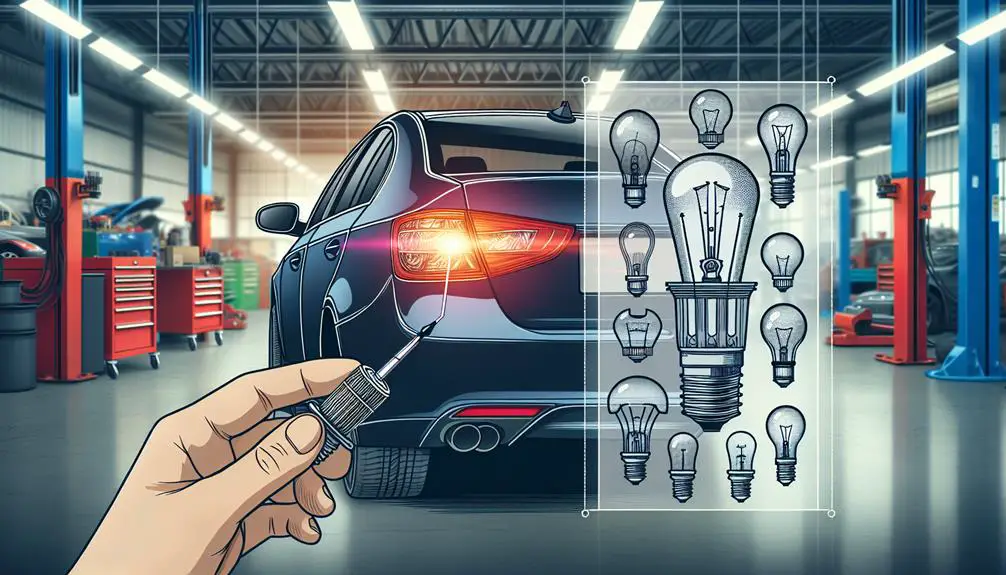
Before you start the replacement process, it's crucial to identify the correct bulb for your Hyundai Sonata's brake light. Your vehicle's manual is your best friend in this endeavor. It'll list the exact specifications of the bulb you need, including type and wattage. If you've misplaced your manual, don't worry. You can still find this information online, either on Hyundai's official website or through a quick search on automotive forums.

Remember, using the wrong bulb can lead to malfunctions or even damage your car's electrical system. So, you've got to make sure you're picking the right one. Brake lights typically use a specific type of bulb known as a 'dual filament' because it serves both the tail light and brake light functions. However, the exact model can vary depending on the year and trim of your Sonata.

Once you've got the specifications, you might feel tempted to just grab any bulb that matches. But here's a pro tip: go for quality. Opting for a reputable brand can save you a lot of hassle down the road. Cheaper bulbs might fit your budget better now, but they often have a shorter lifespan and could end up costing you more in replacements.

Gathering Necessary Tools

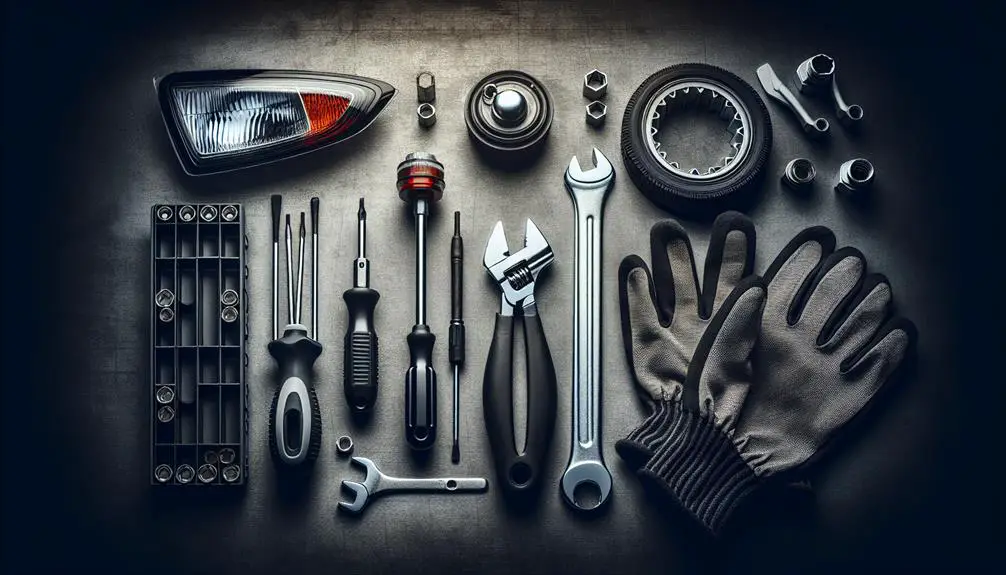
To substitute your Hyundai Sonata's brake light effectively, you'll need to gather a few necessary tools. This step is important to make sure a smooth and hassle-free replacement process. By having everything ready beforehand, you'll not only save time but avoid any mid-repair runs to the hardware store. Let's plunge into the necessary tools you'll need for the job.

  • Screwdriver Set: Most Hyundai Sonata models require a Phillips or flathead screwdriver to remove the tail light assembly or access panel. Make sure you have both types on hand, as some models may use different screws.
  • Replacement Brake Light Bulb: While this is more of a part than a tool, having the correct bulb is vital. You've already identified the correct bulb in the previous step, so now is the time to make sure it's within reach.
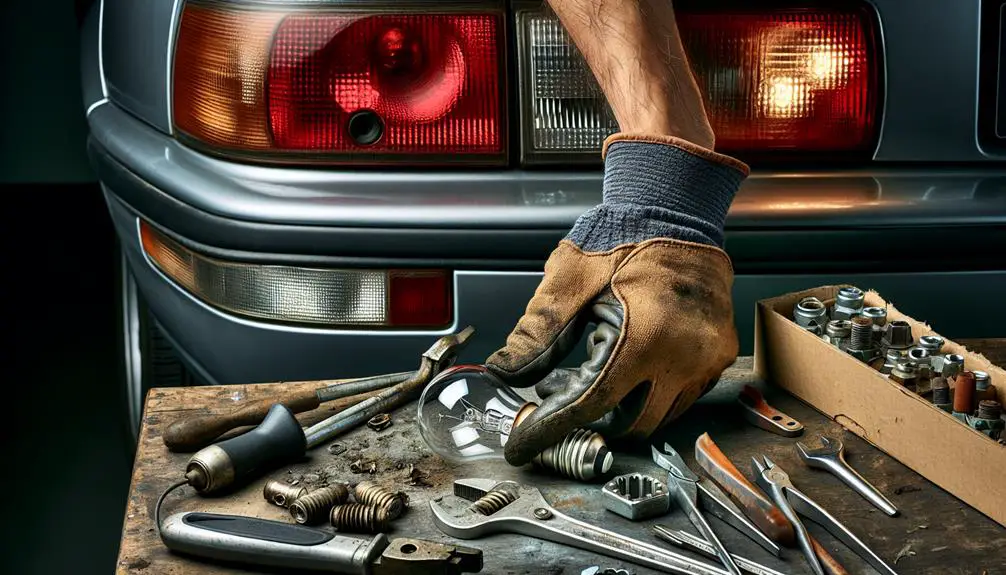
  • Gloves: To keep your hands clean and protect the new bulb from oils on your skin, which can reduce its lifespan, it's wise to use a pair of clean gloves. These can be either mechanic's gloves or disposable latex gloves, depending on your preference.

Having these tools and materials ready will streamline the replacement process. Remember, the goal here is to prepare adequately so that when it comes time to remove the old bulb and install the new one, you're not scrambling to find the necessary items. By following this guide, you're setting yourself up for a successful and efficient brake light replacement on your Hyundai Sonata.

Removing the Old Bulb

installing a new light

With your necessary tools in hand, you'll next need to carefully remove the old brake light bulb from your Hyundai Sonata. The process isn't tough, but it requires your full attention to avoid damaging any parts. Initially, make sure your Sonata is turned off and the lights are not engaged. This is critical for your safety and the integrity of the vehicle's electrical system.

After confirming safety, access the brake light compartment from the trunk of your car. You might need to remove some interior panels or covers. Typically, these are held in place by clips or screws. Gently pry them open or unscrew them, and keep them safely aside.

Here's a quick reference table for the steps you'll take next:

Step Action
1 Locate the brake light socket.
2 Turn the socket counterclockwise to open it.
3 Pull the socket out gently to expose the bulb.

Once you have the socket out, you'll see the old bulb. Hold the base of the bulb and turn it counterclockwise if it's a bayonet-type, or pull it straight out if it's a wedge-type. Be gentle to avoid breaking the bulb. If it's stuck, wiggling it slightly while pulling out can help.

Now that you've successfully removed the old bulb, inspect the socket for any signs of damage or corrosion. If everything looks good, you're ready to proceed. However, don't jump ahead to installing the new bulb just yet. Make sure to check the compatibility of the new bulb with your Hyundai Sonata's specifications to ensure a perfect fit.

Installing the New Bulb

Having removed the old bulb, you're now ready to install the new one in your Hyundai Sonata's brake light. It's a straightforward process, but paying close attention to the details guarantees a smooth installation.

Start by taking your new bulb out of its packaging. Be sure to handle it by the base or with a clean cloth to avoid getting oils from your skin on the glass, which can affect its lifespan.

Next, align the new bulb with the socket. You'll notice that it should fit in a specific way – don't force it. Gently push and twist the bulb clockwise until it locks into place. This step is critical; a properly seated bulb guarantees functionality and prevents future issues.

To guarantee a successful installation, follow these key points:

  • Avoid touching the glass of the new bulb with your bare hands. Oils and dirt can shorten the bulb's life.
  • Check the bulb's orientation before inserting it. It should fit naturally without resistance.
  • Guarantee a firm connection between the bulb and socket. A loose bulb can lead to intermittent brake light function.

Once the new bulb is securely installed, you can proceed to reattach any components you'd to remove during the removal process. This typically involves snapping the brake light assembly back into place and securing it with any screws or clips you initially removed.

Congratulations! You've successfully installed a new brake light bulb in your Hyundai Sonata. Remember, this guide ensures you're equipped to handle the task confidently and efficiently, without needing professional help.

Safety and Testing

safety and accuracy paramount

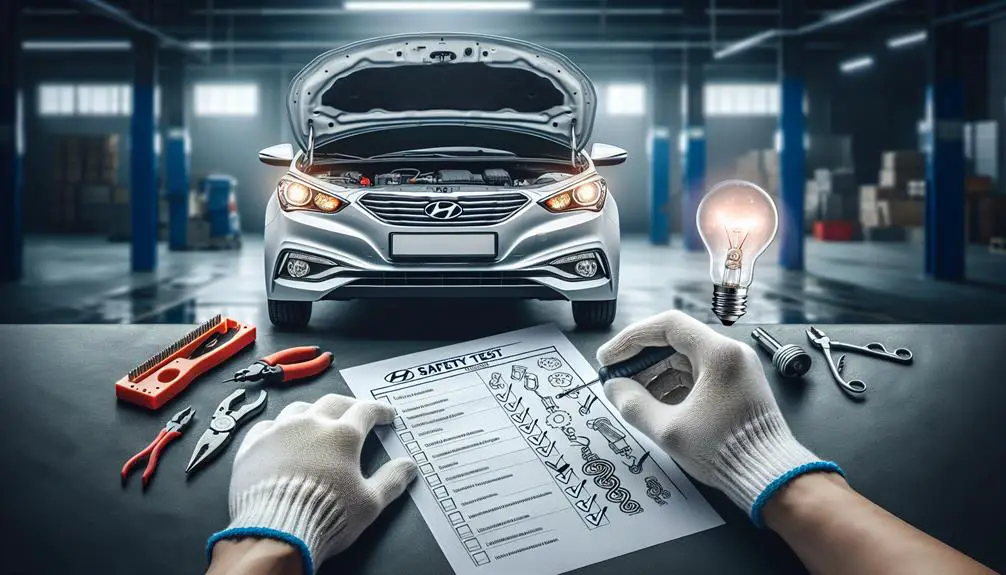
Before hitting the road again, it's critical you test the newly installed brake light to guarantee your safety and that of other drivers. Testing isn't just a precaution; it's a necessary step to make sure everything's working as it should. You don't want to find out the hard way that your brake light isn't functioning properly.

Start by turning on your Hyundai Sonata's ignition, but there's no need to start the engine. Next, press the brake pedal and ask someone to check if the light illuminates. No buddy around? No problem. You can position your car near a reflective surface like a garage door or a large window. When you press the brake, you should be able to see the light reflected.

If the brake light doesn't light up, double-check your installation. Make sure the bulb is correctly inserted and fully seated in its socket. Also, check the fuse related to the brake lights. A blown fuse could be the culprit.

Once you've confirmed the brake light works, don't forget to test the other lights as well. Turn signals, reverse lights, and parking lights are all integral to safe driving. Confirming they're all in working order gives you peace of mind.

Conclusion

You've successfully replaced your Hyundai Sonata's brake light by following these steps:

  • Identify the right bulb
  • Gather the necessary tools
  • Remove the old bulb
  • Install the new one

Remember, safety comes foremost, so always confirm your car is parked on a flat surface and the ignition is off before starting.

At last, don't forget to test the new brake light to confirm it's working properly.

This straightforward process not only improves your safety but keeps your Sonata in compliance with traffic laws.

How to Replace Toyota Corolla Tail Light Cover


To replace a Toyota Corolla tail light cover, follow these steps:

  • Access the tail light assembly
  • Remove the old cover
  • Install a new one

This simple process enhances safety and ensures compliance with traffic laws. Tools and patience are required for success.

Gather Required Tools

prepare for diy project

Before you start replacing the tail light cover on your Toyota Corolla, make sure you have the necessary tools. This will help you save time and avoid frustration.

You'll likely need a set of screwdrivers (both flat-head and Phillips), a pair of pliers, some masking tape, and a soft cloth. The screwdrivers are needed because the tail light cover might be secured with different types of screws. Pliers can help remove tight fasteners or clips.

Masking tape can protect your car's paint, and a soft cloth can be used for cleaning and to place the tail light cover on. Having these tools ready will make the replacement process easier and prevent damage to your car.

Accessing the Tail Light Assembly

To access the tail light assembly on a Toyota Corolla, start by opening the car's trunk. Inside, you'll find a panel or liner covering the tail lights, which you may need to remove. This can involve unscrewing or pulling away the panel, often held in place by clips or fasteners. Use a flathead screwdriver or your hands to carefully remove these, avoiding damage.

Next, locate the electrical connectors at the back of the tail light assembly. Disconnect these by pressing down on the tab and pulling out the connector. Handle gently to avoid breaking them.

With the electrical connectors off, the tail light assembly is accessible. You can now proceed with replacing the tail light cover or any other tasks, ensuring nothing is obstructing your work. Take your time to avoid any damage.

Removing the Old Cover

revealing a fresh start

To take off the old tail light cover, first carefully use a screwdriver to remove the clips or screws. Make sure you don't damage anything around it. After removing them, gently take off the cover, remembering how it was positioned for when you put the new one on.

Then, if the tail light bulb is connected to the cover, you need to disconnect it. Do this by turning the bulb holder to the left and pulling it out. Be careful with the bulb because it can break easily.

Check the area for any damage like cracks or corrosion before putting on the new cover. This ensures the new cover fits well and works right.

Here's a guide for removing the cover:

Step Tool Needed Note
1. Remove clips or screws Screwdriver Don't damage surroundings
2. Take off the cover Hands Remember how it was placed
3. Disconnect the bulb Hands Turn left and pull out

Installing the New Cover

Having taken off the old tail light cover, you're set to put on the new one. Here's how to do it correctly:

  1. Check the new tail light cover for any damage. If it's fine, you can proceed.
  2. Clean the area where the cover will go with a clean cloth. This ensures a good fit and prevents scratches.
  3. Align the new cover with the tail light assembly. It should have tabs or hooks that match slots on the assembly. Press it into place until it secures.
  4. Reattach any screws or bolts you removed earlier. Tighten them just enough to hold the cover in place without gaps. Avoid over-tightening to prevent damage.

Your new tail light cover is now installed on your Toyota Corolla.

Final Checks and Testing

final stage of development

After you install the new tail light cover on your Toyota Corolla, follow these steps to make sure it's correctly installed and working:

  1. Check that the tail light cover is firmly attached. It shouldn't move when pressed. If it does, recheck your installation to ensure all clips or screws are secure.
  2. Test the tail light by:
  • Turning on the headlights to see if the tail lights light up.
  • Using the turn signals to make sure they work with the new cover.
  • Having someone press the brake pedal to check that the brake lights get brighter as expected.

These steps help confirm the tail light works properly with the new cover and meets safety standards.

Conclusion

You did a great job changing the tail light cover on your Toyota Corolla. First, you got all the tools you needed. Then, you got to the light, took off the old cover, and put on the new one. You were like a pro.

Don't forget to check everything and make sure the lights work right. Fixing it yourself saved you money and made you feel good about handling car fixes. Good job!

Why Hyundai Cars Are A Target For Thieves


Hyundai cars have become prime targets for theft due to technological vulnerabilities.

The influence of social media exposing security flaws also contributes to the increased risk.

Specific weaknesses in older models further add to the appeal for thieves.

Understanding these risks and taking protective measures is essential for vehicle safety and investment protection.

Technological Vulnerabilities

technological weak points identified

Hyundai cars are often targeted by thieves due to their technological weaknesses, which are easy to exploit. These cars can be stolen from driveways because of security flaws. Thieves have learned to bypass digital security by exploiting software weaknesses.

A common method involves the key fob. Some Hyundai models have weak key fob encryption, allowing thieves to copy the signal and unlock the car without the physical key.

Additionally, failing to update the car's software can leave it vulnerable. Once a security flaw is found, it needs to be fixed quickly. Owners must update their car's software to protect against theft.

It's important to stay alert and keep the car's software current to ensure the car's safety.

Growing Popularity

Hyundai cars are becoming more popular, and this makes them a target for thieves. People like their designs, technology, and prices, which also attracts criminals. More Hyundais on the road means they're more likely to be stolen.

Here's why Hyundai's popularity is a problem:

  • There are many Hyundai cars available, making them easy for thieves to find.
  • Hyundai cars have a high resale value, so stolen cars can be sold easily.
  • The demand for Hyundai parts is high, making them valuable to thieves.

It's important to know that as Hyundai gets more popular, the risk of theft increases.

Social Media Influence

impact of social media

Hyundai cars are more popular both on the roads and on social media. Videos and posts on platforms like TikTok and Instagram show off Hyundai cars, making them attractive to thieves. Social media not only makes these cars more desirable but also sometimes shows their weaknesses, making them easier targets for theft.

Here's how social media affects this:

  • TikTok: High visibility and high risk of unintended consequences.
  • Instagram: Moderate visibility and moderate risk.
  • YouTube: Low visibility and low risk.

Every like, share, or comment on these posts contributes to the problem. It's important to be aware of the impact of social media on car theft. Remember, what you post can influence real-world actions, including theft.

Security Flaws in Older Models

Old Hyundai models have a big security problem because they use old security systems. This makes them easy targets for theft. These older cars don't have the advanced security features found in newer models, like engine immobilizers and alarm systems. Instead, they just have simple locks and keys, which aren't very effective against thieves.

Here's what makes these older models vulnerable:

  • No engine immobilizers: It's easy for thieves to start the car without the key and steal it.
  • Simple key designs: The keys are easy to copy or tamper with, allowing thieves quick access.
  • Basic or no alarm systems: Without a strong alarm system, there's little to stop thieves or alert others to a break-in.

Implications for Car Owners

potential repercussions for drivers

Understanding the security issues in older Hyundai models shows that car owners now face a higher chance of their car being stolen. This can cause insurance prices to go up since insurance companies often change rates based on how likely a car is to be stolen. If your Hyundai is seen as an easy target, your insurance costs might increase.

Also, the value of your car could drop. People mightn't want to buy a car that's known for being easy to steal, leading to a lower selling price. This is a problem if you're thinking about selling or trading in your Hyundai.

You'll need to consider extra steps for security, like buying additional anti-theft devices or better security systems. This means you'll spend more money and time to keep your car safe, besides regular maintenance.

It's important to know about your car's security and any weaknesses it may have. This helps protect your investment and avoid extra costs or losses.

Conclusion

Hyundai cars are being stolen a lot. This is happening because some older Hyundai cars have weak spots that thieves know how to use.

Also, people are talking about how to steal these cars on the internet. If you have a Hyundai, it's important to know about this problem. You should do what you can to keep your car safe so thieves can't steal it.