
Recent Posts

Best Brake Pads for Hyundai Elantra


The best brake pads for a Hyundai Elantra vary depending on driving style, but ceramic pads are often a top choice for their balance of performance, noise level, and durability.

Exploring the world of brake pads for your Hyundai Elantra is crucial, akin to selecting the ideal pair of shoes for a marathon, emphasizing the necessity of finding the perfect match for both performance and comfort.

When searching for new brake pads, you're likely to come across ceramic, semi-metallic, and organic variants, each with unique advantages and disadvantages that affect aspects such as longevity, noise, and cost.

In the ensuing discussions, we aim to elucidate these distinctions, offering insights on premier options that not only meet your vehicle's requirements but also align with your driving preferences.

We shall delve into what distinguishes these choices, underscoring the importance of a prudent selection to conserve both time and resources in the future.

Understanding Brake Pad Types
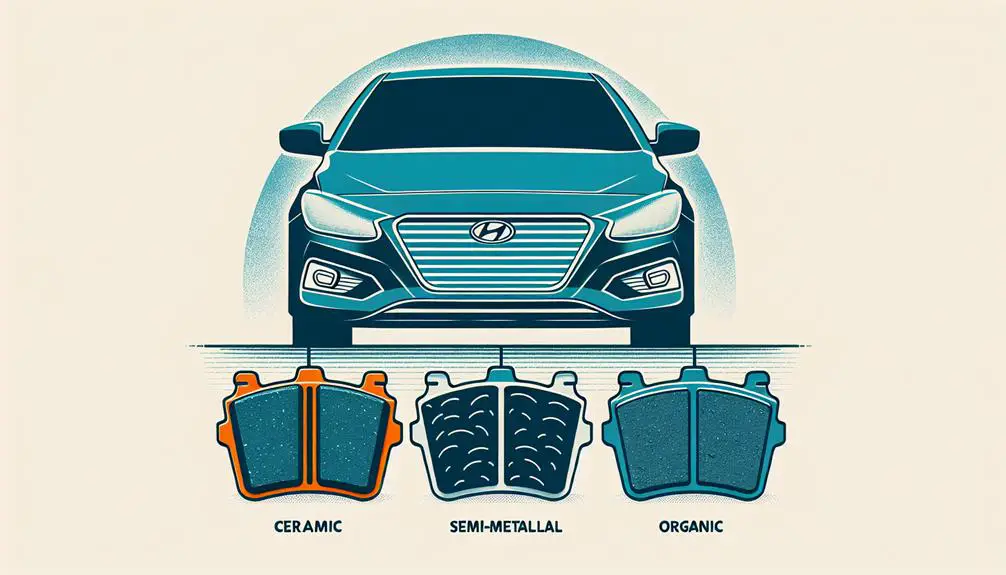
exploring brake pad varieties

To guarantee your Hyundai Elantra stops safely, it's crucial to understand the three main types of brake pads: ceramic, semi-metallic, and organic. Each type offers distinct advantages and fits different driving styles and environments.

Initially, let's discuss semi-metallic brake pads. They're crafted from a mixture of metals like steel and iron, blended with fillers and a binding agent. They're excellent for performance driving since they handle high temperatures well, making them less prone to fading during heavy use. However, they're a bit noisier and can wear down your rotors faster than other types.

Following up are organic brake pads, alternatively known as non-asbestos organic (NAO) pads. These are crafted from a blend of fibers and materials like rubber, glass, and carbon, bound together with a resin. Organic pads are quieter and softer, resulting in less stress on your Elantra's rotors. They're most effective for everyday driving but tend to wear out quicker and aren't as effective in extreme driving conditions or in wet weather.

Ceramic brake pads, which we'll explore more deeply another time, offer a middle ground between durability and performance. They're made from ceramic fibers, nonferrous filler materials, and sometimes small amounts of metal. These pads deliver excellent braking performance, generate less dust and noise, and are more durable than organic pads. However, they're typically the most expensive option.

Selecting the appropriate brake pads depends on your driving requirements, budget, and preferences. Consider these factors carefully to ensure you're making the best decision for your Hyundai Elantra.

Top Ceramic Brake Pads

Several high-quality ceramic brake pads stand out for your Hyundai Elantra, offering unmatched durability and performance. When you're in the market for brake pads, you'll find that ceramic options provide a quieter, cleaner driving experience. They produce less brake dust compared to other types, keeping your wheels cleaner for longer.

One of the best ceramic brake pads for the Elantra is the Akebono ProACT Ultra-Premium Ceramic Brake Pad Set. Known for its environmentally friendly design, this set ensures reduced brake noise and minimal dust production. You'll appreciate the smooth, responsive braking, which significantly enhances your driving safety and comfort.

Another excellent choice is the Bosch QuietCast Premium Ceramic Brake Pads. Bosch incorporates advanced aerospace alloy into their ceramic formula, offering superior stopping power without the sacrifice of noise or longevity. These pads come with a rubber core multilayer shim that provides increased strength and insulation against noise, making your rides as quiet as they're safe.

Finally, the Wagner ThermoQuiet Ceramic Brake Pads stand out for their unique one-piece design, which helps in reducing vibration and noise. Additionally, their proprietary ceramic formulations extend pad life and improve stopping performance, ensuring you're getting a high-quality product that's built to last.

Choosing the right ceramic brake pads can dramatically improve your Hyundai Elantra's braking performance. Not only do you get a quieter, cleaner ride, but you also benefit from the durability and safety that these high-quality products provide. So, consider these options to make sure you're making the best choice for your vehicle.

Best Semi-Metallic Options
great choice for brakes

While ceramic brake pads offer numerous benefits for your Hyundai Elantra, exploring semi-metallic options might better suit your needs for durability and heat dissipation. Semi-metallic brake pads, made with a blend of metals and fillers, excel in performance, especially under strenuous conditions. They're designed not only to last longer but also to handle high temperatures without fading, making them an ideal choice for drivers who demand a bit more from their vehicle.

When you're on the lookout for the best semi-metallic brake pads for your Hyundai Elantra, consider the following aspects to make sure you're getting the most out of your selection:

  • Heat Dissipation: Semi-metallic pads are superior in shedding heat away from the brake system, reducing the risk of brake fade during intense use.
  • Durability: These pads are hardy, offering longer life compared to their ceramic counterparts, especially in demanding driving conditions.
  • Performance: They provide excellent braking performance, giving you that much-needed confidence on the road, irrespective of the weather.
  • Cost-Effectiveness: Generally, semi-metallic brake pads tend to be more affordable than ceramic options, offering good value for drivers who prioritize performance and durability without overspending.

Choosing the right brake pads is important for your safety and driving experience. If you often find yourself in situations that demand more from your brakes, such as frequent driving on steep terrains or in heavy traffic, semi-metallic brake pads could be the perfect match for your Hyundai Elantra. They strike a balance between performance, durability, and cost, making them a worthwhile consideration for many drivers.

Optimal Organic Pads

If you're seeking a quieter, more environmentally friendly option for your Hyundai Elantra, organic brake pads could be your best bet. Unlike their semi-metallic counterparts, organic pads are made from natural materials like rubber, glass, and fiber. This composition not only makes them gentler on your car's rotors but reduces noise during braking too.

You'll appreciate the smooth and reliable braking performance they provide, especially in everyday driving conditions. Organic pads excel in urban settings where frequent stopping is the norm. They offer a softer brake feel, which many drivers prefer for a more comfortable ride.

However, it's worth noting that organic pads tend to wear out faster than semi-metallic or ceramic options. This means you might find yourself replacing them more often, depending on your driving habits. But for those who prioritize a quieter ride and less rotor wear, this trade-off is well worth it.

Another advantage is their cost-effectiveness. Generally, organic pads are less expensive upfront than other types of brake pads. This makes them an attractive option if you're looking to save money on maintenance without sacrificing performance.

Performance Vs. Durability

performance over durability preference

When choosing brake pads for your Hyundai Elantra, you must weigh the trade-offs between performance and durability. High-performance brake pads can provide you with exceptional stopping power, perfect for spirited driving or occasional track days. However, these pads often wear out faster than their more durable counterparts. On the other hand, brake pads designed for durability last longer, saving you money and time on replacements, but they mightn't offer the same level of responsiveness as performance-oriented options.

Here are key points to take into account:

  • Stopping Power: High-performance pads typically offer better stopping power, which can be critical in emergency situations or for sporty driving. However, this increased performance can lead to quicker wear.
  • Wear Rate: Durable brake pads are engineered to last longer, making them a cost-effective choice for daily drivers. The trade-off, though, might be slightly less responsiveness compared to performance pads.
  • Material Composition: The material of the brake pads plays a significant role. For example, ceramic pads are known for their longevity and quiet operation, while metallic pads might offer better performance but at the cost of more noise and dust.
  • Driving Conditions: Take into consideration your typical driving conditions. If you frequently drive in busy city traffic or enjoy pushing your Elantra to its limits on winding roads, performance pads might be the way to go. For regular commuting or long-distance travels, durability-focused pads could be more beneficial.

Deciding between performance and durability ultimately comes down to your driving habits and preferences. Each option has its advantages, so it's crucial to prioritize what matters most to you in your Hyundai Elantra's brake system.

Maintenance and Replacement Tips

Regular maintenance of your Hyundai Elantra's brake pads guarantees their peak performance and durability. It's important to keep an eye on them and know when they're due for a checkup or replacement. Here's how to make sure they always remain in excellent condition.

Initially, listen for any unusual sounds when you brake. A high-pitched squeal or grinding noise often indicates that your brake pads are wearing thin and need attention. Don't ignore these signs; worn-out pads can damage your rotors, leading to more expensive repairs.

You should pay attention to your car's braking behavior. If you're experiencing longer stopping distances or if the brake pedal feels spongy, it's time to have your brakes checked. These could be signs that your brake pads are worn out or that there's another issue with your braking system.

Regularly checking the thickness of your brake pads is a proactive step you can take. Most brake pads need replacing once they're worn down to about a quarter of an inch. Don't wait until they're completely worn out; it's unsafe and can put unnecessary strain on your Hyundai Elantra's braking system.

Conclusion

You've explored the best brake pads for your Hyundai Elantra, from high-quality ceramic options to the most reliable semi-metallic and organic pads. Understanding the balance between performance and durability is key.

Now, it's important to keep up with regular maintenance and timely replacements to ensure your safety on the road. Remember, choosing the right brake pads not only enhances your driving experience but also protects you and your loved ones.

Drive safe!

Hyundai I10 Brake Light Not Working


To fix a non-working Hyundai i10 brake light, follow these steps:

  • Start by checking the bulbs and the fuse.
  • Next, inspect the brake light switch.
  • Finally, examine the vehicle's wiring.

Identifying the Problem

addressing the root cause

To determine if your Hyundai i10 has a brake light issue, start by checking if the lights illuminate when you press the brake pedal. This initial step is straightforward but critical. You'll need someone to help you with this; have them stand behind your car while you press the brake. If they don't see the lights come on, you've got a problem that needs further investigation.

Next, it's significant to understand that brake lights not working could stem from a variety of issues beyond just the bulbs. Since we're not diving into bulb checks here, let's focus on other potential culprits. One common source of trouble is the fuse. Your i10 has a fuse box; if the brake light fuse is blown, it'll prevent the lights from working. Locating the fuse box and checking the fuse related to the brake lights should be your next step.

Another area to think about is the brake light switch. This switch activates your brake lights when you press the pedal. If it's faulty, your lights won't signal. This isn't something you can easily check without some knowledge of car electronics, but it's good to be aware of it as a potential issue.

Checking the Bulbs

If your Hyundai i10's brake lights still aren't lighting up, it's time to check the bulbs themselves for any signs of damage or wear. This step is important because a burnt-out bulb is the most straightforward issue to fix but can cause significant inconvenience and safety risks if overlooked. You'll want to make sure you're working in a safe area and have turned off your vehicle before proceeding.

Initially, access the brake light housing by opening your car's trunk or hatchback. You might need a screwdriver to remove the housing cover gently. Once you've got access, carefully remove the bulb by twisting it counterclockwise and pulling it out. Now, inspect the bulb closely.

Here's a quick guide to help you understand what you're looking for:

Sign Meaning Emotion
Dark spot Burnt-out bulb Frustration
Filament broken Definitely dead Disappointment
Bulb looks okay Might be another issue Curiosity
Corrosion on contacts Poor connection Annoyance

If you spot a dark spot or a broken filament, it's time for a replacement. Finding no visible issues might evoke curiosity, hinting at deeper electrical problems, but let's not jump ahead. Corrosion can be cleaned with a bit of fine sandpaper, but it's annoying to find such preventable wear.

Inspecting the Fuse

close examination of electrical component

Having checked the bulbs without finding a clear culprit, it's time to inspect the fuse for any issues that might be affecting your Hyundai i10's brake lights.

To begin with, you'll need to locate the fuse box. In most Hyundai i10 models, it's situated under the dashboard on the driver's side or near the engine compartment. Your car's manual can provide the exact location and additionally help you identify the specific fuse related to the brake lights.

Once you've found the fuse box, look for the brake light fuse. It's typically labeled clearly, but if you're unsure, check the diagram on the fuse box cover or refer back to your manual. You're looking for a small, plastic piece, often colored or with a transparent top that allows you to see the metal wire inside.

Gently pull the fuse out using a fuse puller or a pair of needle-nose pliers if necessary. Inspect the wire inside the fuse. If it's broken or appears burned out, you've likely found the issue. A broken wire inside the fuse means it's blown and no longer functioning, preventing power from reaching your brake lights.

Replace the blown fuse with a new one of the same amperage. Fuses are rated differently, and using the correct rating is essential to avoid further electrical issues. After replacing it, test your brake lights. If they're working, you've successfully solved the problem. If not, the issue might lie elsewhere in the system, but you've at least ruled out a simple fuse problem.

Evaluating the Brake Light Switch

After checking the fuse, you'll next want to assess the brake light switch for any potential issues that could be affecting your Hyundai i10's brake lights. This switch is important as it activates your car's brake lights when you press down on the brake pedal. It's typically located near the top of the brake pedal arm.

Initially, you'll need to locate the brake light switch. You might've to remove some panels or covers to get a clear view. Once you've found it, check for any visible signs of damage or wear. If it looks physically damaged, it's likely you've found your culprit.

Next, you'll want to test the switch's functionality. You can do this with a multimeter set to the continuity setting. Disconnect the switch and touch the multimeter's probes to the switch's terminals. Press down on the pedal, and if the multimeter doesn't show continuity, the switch isn't working as it should.

If you're not comfortable using a multimeter, another quick test is to bypass the switch. You can do this by disconnecting the switch and then connecting the two wires that lead to it. If your brake lights turn on after doing this, your switch is definitely the problem.

Troubleshooting Wiring Issues

identifying and fixing problems

Once you've ruled out the brake light switch as the cause of your Hyundai i10's brake light issues, it's time to examine the wiring for potential problems. Wiring issues can be a bit trickier to diagnose than a simple bulb or switch replacement, but don't worry, you've got this. Here's how to troubleshoot wiring issues effectively:

  • Check for Visible Damage: Begin by visually inspecting the wiring leading to the brake lights. Look for any signs of wear, tear, or damage. Sometimes, wires can get pinched or frayed, leading to intermittent or complete loss of function.
  • Test for Continuity: Using a multimeter, check for continuity in the wires. If there's a break in the wire, the multimeter won't show continuity, which means it's time to repair or replace the damaged section.
  • Inspect Connectors: Don't overlook the connectors. Corrosion or loose connections can disrupt the electrical flow. Clean any corroded connectors with electrical contact cleaner and ensure they're securely fastened.
  • Trace the Ground Wire: A faulty ground connection can cause all sorts of electrical issues. Make sure the ground wire is properly connected and free of corrosion. A bad ground can often mimic more complicated electrical problems.
  • Consult the Wiring Diagram: If you're still stuck, consulting your Hyundai i10's wiring diagram can provide clarity. It'll help you understand the path the current should take, allowing you to pinpoint where the issue might be.

Conclusion

You've now tackled the common culprits behind a malfunctioning Hyundai i10 brake light: checking bulbs, inspecting the fuse, evaluating the brake light switch, and troubleshooting wiring issues.

If after these steps your brake light still isn't shining, it might be time to consult a professional.

Remember, functioning brake lights are important for your safety and that of others on the road. Don't hesitate to seek expert help to make sure your vehicle remains safe and compliant with road regulations.

How to Remove Hyundai I10 Alternator


To remove a Hyundai i10 alternator:

  1. Disconnect the battery.
  2. Remove the alternator belt.
  3. Unbolt the alternator from its bracket.
  4. Disconnect the electrical connections to fully extract it.

Remember to use the right tools and follow safety precautions throughout the process.

Gather Necessary Tools

prepare and gather supplies

To remove your Hyundai I10's alternator, collect these tools first:

  1. Wrenches: Get multiple sizes, especially 10mm and 12mm.
  2. Socket set: Useful for tough bolts. Include a ratchet and extension.
  3. Screwdrivers: Both flathead and Phillips are needed for clamps and connectors.
  4. Pliers: Needle-nose pliers help remove pins or clips.
  5. Multimeter: Checks the alternator's condition before removal.
  6. Safety gear: Wear gloves and safety glasses.

These tools help remove the alternator safely and efficiently.

Prepare Your Vehicle

Prepare your Hyundai I10 for alternator removal by following these steps:

  1. Park on a level surface and engage the parking brake to prevent the car from moving.
  2. If the car was recently driven, wait for the engine to cool down to avoid burns.
  3. Ensure good lighting to see clearly, using natural or artificial light.
  4. Clear the area around the car to avoid tripping hazards and maintain a clean workspace.

Disconnect the Battery

securely disconnect the car s battery

Before working on your Hyundai i10's alternator, first turn off the car and park it on a level surface. Remove the keys from the ignition. Find the battery in the engine compartment, which has a positive (+) and a negative (-) terminal.

To safely disconnect the battery, follow these steps:

  1. Wear gloves and eye protection.
  2. Use a wrench to loosen the negative terminal's bolt. You don't have to take the bolt out, just loosen it so you can remove the cable clamp.
  3. Take off the negative cable and keep it away from the battery. Wrap the cable end with electrical tape.

Now, the car's electrical system is off, and you can safely remove the alternator without causing electrical damage. The positive terminal is still connected, so be careful.

Remove Alternator Belt

To remove the alternator belt from a Hyundai i10, follow these steps:

  1. Find the alternator belt tensioner. This part keeps the belt tight.
  2. Use a wrench or a ratchet to loosen the tensioner bolt. This will reduce the belt's tension.
  3. With the tension reduced, remove the belt from the pulleys.

Here's a simple table to guide you:

Step Action
1 Find the tensioner
2 Loosen tensioner bolt
3 Reduce belt tension
4 Remove belt from pulleys

Before removing the belt, take a photo of its routing for easy reinstallation. Check the belt for wear or damage and replace if necessary. Keeping the belt and other parts clean and safe for reinstallation is important.

Extract the Alternator

remove the car s alternator

To remove the alternator from your Hyundai i10, start by finding the alternator's mounting bolts on the bracket. There are usually two or three. Use a wrench or socket set to loosen these bolts but don't remove them completely yet.

Next, disconnect the electrical connections on the alternator. There's a plug and a terminal. Remove the plug by pressing the clip and pulling. Use a wrench to loosen the nut on the terminal. Remember where each connection goes, taking a photo can help.

Now, fully remove the mounting bolts you loosened. The alternator should then be free but might need some maneuvering to remove from its compartment. Be careful not to damage any nearby parts.

Tips:

  • Wear gloves to protect your hands.
  • Keep your workspace tidy.
  • Label your electrical connections if you didn't take a photo.

Following these steps will help you remove the alternator from your Hyundai i10.

Conclusion

You did it! You took out the alternator from your Hyundai i10. You made sure you had all the tools you needed, got your car ready, unhooked the battery, took off the belt from the alternator, and then pulled the alternator out.

Remember, being safe is very important, so it's good you followed each step carefully. If something didn't go right, it's okay to ask for help from someone who knows more.

Now that you've taken the alternator out, you can fix it, put in a new one, or just look at it to see what's going on. Good job on doing this work!

Does Hyundai Warranty Cover Rental Car Hyundai


Hyundai's warranty may cover rental car expenses while your vehicle is under repair, subject to specific conditions. This benefit is part of Hyundai's commitment to customer service, but it's essential to understand the eligibility criteria, claim process, and how it compares with other automakers' warranties.

Knowing these details ensures you are well-informed and can make the most of your Hyundai warranty, minimizing disruptions during repair times.

Understanding Hyundai Warranty

hyundai warranty coverage details

Hyundai's warranty is comprehensive and includes three main parts: a 10-year/100,000-mile powertrain warranty, a 5-year/60,000-mile new vehicle limited warranty, and a 7-year/unlimited miles anti-perforation warranty. These warranties cover many parts and defects, offering protection from repair costs due to manufacturing issues.

However, the warranty doesn't cover routine maintenance like oil changes, tire rotations, and brake pads. Also, it doesn't cover damage from accidents, misuse, or alterations. Knowing what isn't covered is important for maintaining the warranty and avoiding unexpected costs.

Rental Car Coverage Details

To know about Hyundai's rental car policy during warranty repairs, here are the main points:

  • Who Can Get It: If your Hyundai needs repairs under warranty and it takes more than a day, you can get a rental car.
  • Cost Limit: Hyundai will pay for the rental car, but there's a daily and total money limit.
  • Choosing a Rental Car: Hyundai may suggest specific rental car companies to use.
  • Getting Permission: You need to get approval from Hyundai or the dealership before the rental costs are covered.
  • Keeping Records: Save all rental car receipts and paperwork for reimbursement or billing.

This summary gives you the basic information on getting a rental car while your Hyundai is being fixed under warranty.

Claiming Your Rental Benefit

exploiting rental assistance programs

When your Hyundai needs warranty repairs, you can get a rental car. Here's what to do:

  1. Check if you qualify: Talk to your service advisor to see if your repair is covered for a rental car.
  2. Learn about getting a rental: Ask if the dealership has rental cars or where you can get one.
  3. Follow instructions: Do what your service advisor tells you to get your rental car.

Remember to keep your warranty information ready, ask if there's a rental service at the dealership, and take notes to help you remember the steps.

Hyundai Vs. Industry Standards

Hyundai's warranty for rental cars is better than what many other companies offer. It gives you extra benefits. Here's why Hyundai's warranty is good:

  • Longer Warranty: Hyundai gives you a longer warranty, so you're covered for more time.
  • More Coverage: Hyundai covers more things, including when you need a rental car.
  • Lower Costs: You pay less or nothing extra for rental car coverage with Hyundai's warranty.
  • Easy to Use: It's easier to get rental car benefits with Hyundai's warranty.
  • Good Support: Hyundai has strong customer service to help you with rental car benefits.

Knowing these benefits can help you choose a car that gives you less worry and more value.

Tips for Hassle-Free Claims

navigating insurance claims smoothly

To make claiming your Hyundai rental car benefits easy, follow these steps.

Keep your warranty documents ready. Know what your warranty covers, especially about rental car benefits. If confused, ask Hyundai customer service.

Report any problems needing a rental car quickly. When claiming, give Hyundai or the dealership all the needed information clearly.

Save all records, like emails and receipts, related to your rental car claim. This helps if there are any issues later.

Conclusion

You've learned about Hyundai's warranty and how it can help pay for a rental car when your car is being fixed. This is only if the repair meets certain rules. Hyundai's warranty is good when you compare it to other companies.

To make sure you can use this benefit easily, keep all your papers organized and follow their steps carefully.

With these tips and what you know now, you're ready to use your Hyundai warranty without any trouble.

Hyundai Sonata Brake Pads and Rotors


Maintaining your Hyundai Sonata's braking system involves several key steps:

Identifying when brake pads and rotors need replacement is crucial. This can be done by listening for squeaking or grinding noises when braking, feeling vibrations or pulsations through the brake pedal, or noticing reduced braking performance.

Selecting the best components is important for optimal braking performance. High-quality brake pads and rotors will provide better stopping power, durability, and overall safety for your vehicle.

Understanding the replacement process is essential to ensure safety and enhance performance. Whether you choose to do it yourself or have a professional mechanic handle the job, knowing the steps involved can help you make informed decisions and maintain your Sonata's braking system effectively.

Signs of Wear and Tear

capturing the wear signs

Identifying signs of wear and tear on your Hyundai Sonata's brake pads and rotors is vital for maintaining top braking performance. You don't want to let these essential components degrade too much, as they're integral to your safety on the road. Here's how you can spot the warning signs that it's time for a check-up or replacement.

To start with, listen for any unusual noises when you apply the brakes. A high-pitched squealing sound is a common indicator that your brake pads are wearing thin. This noise is actually designed to alert you, as many pads have built-in wear indicators that make this sound when they've reached a certain level of wear.

Another sign is a grinding noise, which usually suggests that the pads have worn down completely, and the metal parts are rubbing directly against the rotors. This can cause significant damage if not addressed quickly.

You should also pay attention to how your car feels when you brake. If you notice a vibration or pulsating sensation through the brake pedal or steering wheel, it's likely that your rotors are warped. Warped rotors can greatly reduce braking efficiency and should be checked out as soon as possible.

Lastly, don't ignore any changes in your braking performance. If your Sonata takes longer to stop than it used to, or if the brake pedal feels spongy or too hard to press down, these could be signs of wear on your brake pads and rotors.

Keeping an eye out for these symptoms and acting promptly can help guarantee your Hyundai Sonata remains safe and responsive on the road.

Choosing the Right Components

Having recognized the signs of wear on your Hyundai Sonata's brake pads and rotors, it's now time to focus on selecting the right replacements to guarantee peak performance and safety. Making the right choice isn't just about ensuring your car stops effectively; it's about connecting with your vehicle on a deeper level, ensuring every trip is as safe and enjoyable as the last.

When choosing brake pads and rotors, consider these three critical aspects:

  1. Material Matters: Your Sonata deserves the best. Opt for ceramic brake pads for quieter stops and less wear on your rotors. For rotors, high-quality cast iron or steel offers durability and performance. Remember, the right material not only extends the life of your brake components but also enhances your driving experience.
  2. Compatibility Is Key: Not all parts are created equal. Ensure the components you select are specifically designed for your Sonata's model year. Incorrect parts can lead to ineffective braking, putting you and your passengers at risk.
  3. Brand Reputation: Trust in brands that are renowned for quality and reliability. While it might be tempting to go for cheaper alternatives, investing in reputable brands means peace of mind, knowing your vehicle's braking system won't let you down when you need it most.

Choosing the right brake pads and rotors is a crucial step in maintaining your Hyundai Sonata's safety and performance. Don't compromise on quality; your life and the lives of those you share the road with depend on it.

Step-by-Step Replacement Guide

dismantling and replacing components

Once you've chosen the right brake pads and rotors for your Hyundai Sonata, it's time to tackle the replacement process step by step.

Initially, make sure your Sonata is securely parked on a flat surface and you've got your tools ready. You'll need a jack, jack stands, a lug wrench, and the appropriate socket set. Start by loosening the lug nuts on the wheel before jacking up your car. Once lifted, support it with jack stands and remove the wheel entirely.

Next, locate the brake caliper, which houses the brake pads. You'll need to remove the caliper bolts using your socket set. Carefully lift the caliper off the rotor and support it so it doesn't dangle by the brake line. This exposes the brake pads for easy removal. Slide out the old pads, noting how they fit in place for a smoother installation of the new ones.

Before installing the new brake pads, check the caliper piston. It might need to be compressed back into the caliper housing to fit the new, thicker pads. You can use a C-clamp or a dedicated tool for this task.

Now, it's time for the rotor. If it's held by screws, remove them. Take the old rotor off, replace it with the new one, and secure it if necessary.

Install the new brake pads, reattach the caliper, and bolt it securely. To conclude, reattach the wheel, lower your car, and tighten the lug nuts. Remember, it's important to pump your brakes a few times before driving to make certain the brake pads are properly seated.

Maintenance Tips

To keep your Hyundai Sonata's brakes in top condition, it's vital to follow a regular maintenance routine. This not only guarantees your safety on the road but also saves you money in the long run by preventing costly repairs. Proper care of your brake pads and rotors is vital. Here's how you can maintain them effectively:

  1. Regularly Check Brake Pads and Rotors: It's necessary to inspect your brake pads and rotors for wear and tear regularly. Look for signs of thinning brake pads or grooves and warping on the rotors. Catching these issues early can prevent more significant problems down the line and ensure your vehicle stops when you need it to.
  2. Clean Your Brakes: Over time, brake components can accumulate dust, debris, and rust, which can affect performance. Make it a point to clean your brakes periodically. This involves removing the wheels and using a brake cleaner to remove any build-up. This not only prolongs the life of your brake pads and rotors but also maintains optimal braking performance.
  3. Avoid Harsh Braking: Whenever possible, try to avoid sudden, harsh braking. Hard stops can cause excessive wear on your brake pads and rotors. Instead, aim for smooth, gradual stops. This practice not only extends the life of your brake components but also contributes to a more pleasant driving experience.

Following these maintenance tips will keep your Hyundai Sonata's brakes functioning smoothly and reliably, ensuring your peace of mind on the road.

Common Issues and Solutions

identifying problems providing answers

Even with regular maintenance, you might still encounter common issues with your Hyundai Sonata's brake pads and rotors; however, there are straightforward solutions to these problems.

One frequent concern is the wearing down of brake pads. You'll know it's time for a change if you hear a squealing noise or if your car takes longer than usual to stop. Don't worry; replacing brake pads is a routine procedure that any reputable mechanic can handle efficiently.

Another common issue involves the rotors. If your steering wheel shakes when you brake, it's likely because of warped rotors. This can happen from excessive heat during prolonged braking. The solution is either to have your rotors resurfaced, which evens out their surface, or to replace them if they're too worn down.

You might notice a grinding noise, which usually indicates that the brake pads have worn down completely, allowing metal to rub against metal. This is a serious issue that requires immediate attention, as it can compromise your vehicle's safety. Replacing both the brake pads and the damaged rotors is the best course of action in this scenario.

Enhancing Performance

After addressing common issues with your Hyundai Sonata's brake pads and rotors, you might wonder how to further improve your vehicle's braking performance. Enhancing this important aspect of your car can't only increase safety but also enhance your driving experience, giving you the confidence to handle your Sonata like a pro.

Here's how you can lift your brake system to the next level:

  1. Upgrade to High-Performance Brake Pads and Rotors: High-performance materials can greatly reduce stopping distances, providing a sharper, more responsive braking experience. This upgrade can make a world of difference, especially in emergency situations where every moment counts.
  2. Invest in Better Brake Fluid: Switching to a high-quality brake fluid can improve the efficiency of your braking system. Higher quality fluids have a higher boiling point, reducing the risk of brake fade during intense use. This means you'll maintain top braking power, even under tough conditions.
  3. Regular Maintenance and Inspections: Regular checks are your best defense against brake failure. Make certain your brake system is free from air, the pads aren't worn down, and the rotors are in good condition. This vigilance not only improves performance but also extends the lifespan of your braking system.

Conclusion

So, you've tackled replacing your Hyundai Sonata's brake pads and rotors like a pro. Remember, choosing quality components and following our step-by-step guide ensures your brakes are in top condition.

Don't forget regular maintenance to avoid common issues down the road. If you're aiming for enhanced performance, consider upgrading.

With these tips and a bit of elbow grease, you'll keep your Sonata stopping smoothly and safely. Drive confidently, knowing you've got this ensure maintenance task well in hand.

What Is The Most Popular Hyundai Model In The Us


The most popular Hyundai model in the U.S. is the Hyundai Tucson, an SUV that has won over American drivers with its compelling combination of style, efficiency, and technology.

As the automotive market shifts towards a preference for SUVs, the Tucson leads Hyundai's charge, showcasing the brand's strength in this competitive segment.

Understanding Popularity Metrics

analyzing online popularity trends

To understand why a Hyundai model is very popular in the US, it's important to look at different measures of success. These measures include not just how many are sold, but also how satisfied customers are, how reliable the car is, and whether it offers good value for money. Popularity also comes from recommendations from experts and users, awards won, and good ratings in safety and fuel efficiency.

Reliability is about how well a car works over time without needing major repairs. This is important for people who want to keep their car for a long time. Resale value shows how much money you can get back when you sell the car. A high resale value means the car is still in demand and seen as good quality.

Customer satisfaction covers the driving experience, comfort, technology features, and whether the car meets the buyer's needs and expectations. This offers a full view that goes beyond just buying the car. Understanding these measures helps explain why a Hyundai model might be more popular in the US.

The Rise of SUVs

Hyundai models are popular in the US partly because Americans like SUVs. SUVs are popular because they offer more space, versatility, and safety. People in the US want cars that can be used in cities and rural areas, and SUVs are good for that. They're useful for daily use, road trips, and outdoor activities.

SUVs are also becoming more fuel-efficient and eco-friendly, which appeals to people who care about the environment. This has made SUVs even more popular.

The demand for SUVs has changed the car market. Hyundai has responded by making a variety of SUVs that meet people's needs and preferences.

Hyundai's Best-Selling Model

popular hyundai vehicle choice

The Hyundai Tucson is Hyundai's top-selling model in the US. It stands out in the competitive SUV market because of its design, performance, safety, and value. The Tucson is popular due to its roomy interior and advanced safety features. It's suitable for both daily use and long trips.

Here are the main reasons the Tucson is popular:

  • Design: It has a modern look and a spacious interior with lots of technology.
  • Performance: The engines are efficient and provide a smooth ride.
  • Safety: It has high safety ratings and comes with advanced safety technology.
  • Value: The price is competitive, and it comes with many standard features.

Hyundai focuses on quality and customer satisfaction with the Tucson. It offers a good driving experience for both experienced and first-time buyers, making it Hyundai's top seller in the US.

Customer Satisfaction Insights

The Hyundai Tucson is popular and gets high customer satisfaction ratings. When looking for a new vehicle, it's helpful to know why owners like it. The Tucson is known for its reliability, comfort, features, and fuel efficiency.

  • Reliability: Owners say the Tucson is reliable and doesn't break down often. This reliability is a big reason why people are satisfied with it.
  • Comfort and Features: The Tucson is comfortable, has a lot of space, an easy-to-use infotainment system, and many safety features, all at a good price.
  • Fuel Efficiency: With fuel costs going up, the Tucson's good fuel economy is important for both city and long-distance driving.

These points help explain why the Tucson might be a good choice for you.

Future Trends and Predictions

analyzing future technological advancements

Hyundai plans to innovate the Tucson, focusing on eco-friendly options like hybrid and electric models to meet the demands of environmentally conscious consumers.

The company will also enhance the Tucson with advanced safety features, connectivity, and autonomous driving capabilities, making it more convenient for drivers during heavy traffic or long trips.

Additionally, Hyundai aims to improve the Tucson's design, making it more stylish and visually appealing.

Conclusion

SUVs are really popular now, and the Hyundai Elantra is the top choice in the US. People really like its cool look, how well it works, and its good price. Everyone who's one seems happy, and they say lots of good things about it.

Hyundai plans to keep making the Elantra better, along with their other SUVs, so they keep matching what people want as times change.