Recent Posts

Hyundai Santa Fe Vs Subaru Forester


The Hyundai Santa Fe and Subaru Forester are both standout SUVs, offering distinct advantages. The Santa Fe excels with its luxurious space and strong engine options, while the Forester boasts superior off-road capabilities and safety features.

Both offer competitive fuel efficiency, environmental consideration, and value, but your choice should align with your specific needs, whether it's for luxury and power or for safety and off-road prowess.

Performance and Handling

dynamic driving and handling

The Hyundai Santa Fe and Subaru Forester both offer unique performance and handling features. The Santa Fe has a stronger engine, making it faster on highways and smoother in cities. It offers turbocharged engines in higher trims for even more power.

The Subaru Forester has all-wheel drive as a standard feature, which provides better traction and stability in all conditions. This makes it suitable for off-road driving or areas with bad weather. The Forester handles well, especially in turns and on winding roads.

If you want a car with more engine power and options, consider the Santa Fe. If you need a car that's good for all weather and off-road driving, the Forester might be better.

Interior Comfort and Space

The Hyundai Santa Fe and Subaru Forester both have large, comfortable interiors. The Santa Fe has soft seats and a lot of space for legs, aiming for a luxury feel at an affordable price. Its cabin is quiet and uses high-quality materials.

The Subaru Forester, on the other hand, focuses on being durable and functional. Its seats are made for long drives, and it has excellent visibility due to big windows and a higher seat position. The Forester also has a bit more space for luggage than the Santa Fe, making it good for families and people who like outdoor activities.

Both cars offer plenty of room for people sitting in the back. The choice between them depends on what you prefer: a fancier interior (Santa Fe) or a more practical and functional space (Forester).

Safety and Technology Features

safety and technology integration

Comparing the Hyundai Santa Fe and Subaru Forester, both cars have advanced safety and technology features, but they differ in specific areas.

Here's a simple comparison:

  • Safety Features: Hyundai Santa Fe has SmartSense, and Subaru Forester has EyeSight.
  • Infotainment Screen: Santa Fe's screen is up to 10.25 inches, larger than Forester's 8 inches.
  • Both cars support Apple CarPlay and Android Auto for connectivity.
  • Unique Features: Santa Fe offers Remote Smart Parking Assist, while Forester has a DriverFocus Distraction Mitigation System focusing on safety.

The Santa Fe is more tech-focused with a larger screen and parking assist. The Forester prioritizes safety with its distraction mitigation system. Consider these differences and your preferences when choosing.

Fuel Efficiency and Environmental Impact

Considering fuel efficiency and environmental impact, the Hyundai Santa Fe and Subaru Forester differ significantly. When choosing your next car, think about its effect on both your fuel costs and the environment.

Here are the key points for these two cars regarding eco-friendliness and fuel efficiency:

  • Fuel Economy: The Subaru Forester usually has better fuel economy than the Hyundai Santa Fe, making it a more efficient choice for long drives.
  • Emissions: The Forester produces fewer emissions than the Santa Fe, which is better for reducing environmental impact.
  • Hybrid Options: Only the Santa Fe has a hybrid model, offering a way to lower fuel use and emissions.
  • Eco-Friendly Features: Both cars have eco-friendly technologies, but the Forester is slightly ahead in terms of sustainability and efficient design.

Pricing and Value Comparison

effective price and worth

Comparing the Hyundai Santa Fe and Subaru Forester, we look at their prices and overall value. Both cars have good points, but we want to know which is better for the money.

Feature Hyundai Santa Fe Subaru Forester
Starting MSRP $27,000 $25,000
Top Trim MSRP $42,000 $35,000
Standard Safety Features High Very High
Warranty 5 years/60,000 miles 3 years/36,000 miles
Resale Value Moderate High

The Forester is cheaper to start with, which might make it a better choice if money is tight. The Santa Fe costs more initially but has more luxury features and a longer warranty for more security over time. The Forester has a higher resale value, making it a better long-term investment. The decision between them depends on whether you prefer saving money now and getting better safety, or if you want more luxury and benefits for the future.

Conclusion

When picking between the Hyundai Santa Fe and the Subaru Forester, both cars have good points.

The Santa Fe has strong performance and lots of room inside.

The Forester is great for safety and saving fuel.

But, if you want a car that gives you a lot for your money with comfort, technology, and good value, the Santa Fe is slightly better.

In the end, what you like most in a car will help you decide which one to choose.

How to Install Android Auto in Toyota Corolla 2020


To install Android Auto in a Toyota Corolla 2020:

  • Ensure vehicle compatibility.
  • Download the Android Auto app on your smartphone.
  • Connect it to your car's system following specific setup instructions for seamless music, navigation, and messaging.

Check Compatibility

understand compatibility before purchasing

Make sure your 2020 Toyota Corolla works with Android Auto. Not all cars or systems have this feature. First, check your car's manual for Android Auto info. If lost, visit Toyota's website or contact a Toyota dealership for help. They can tell you if Android Auto is supported.

Also, check your Corolla's system software version for Android Auto compatibility. This is found in the infotainment system's settings under 'About' or 'System Information.' Compare this version to the latest on Toyota's website or ask Toyota directly. If needed, update the software with a USB drive or visit a dealership.

Download Android Auto

To get Android Auto on your smartphone for your 2020 Toyota Corolla, follow these steps:

  1. Check your phone's compatibility: Your phone needs Android 6.0 (Marshmallow) or newer.
  2. Use Wi-Fi: Connect your phone to Wi-Fi to download Android Auto without using mobile data.
  3. Search in Google Play Store: Look for 'Android Auto' in Google Play Store. Make sure it's by Google LLC.
  4. Download and Install: Press 'Install' to download and install Android Auto. After installation, you'll find it in your phone's app drawer.

Connect Your Smartphone

stay organized with technology

Install Android Auto on your smartphone to connect it to your Toyota Corolla 2020.

Turn on your Corolla's ignition to activate the car's electrical systems. Use a high-quality USB cable that supports data transfer for a stable connection.

Unlock your smartphone. If it's your first time, allow permissions for Android Auto to access phone features for notifications, music, and navigation.

Plug the USB cable into the Toyota Corolla 2020's USB port, found in the center console or dashboard area, then connect the other end to your smartphone. Your car should recognize the device and may automatically launch Android Auto. If not, select the Android Auto icon on your car's display.

The first connection may take time as the car and smartphone establish communication. Follow any prompts on your car's display or smartphone to confirm the connection.

Configure Android Auto

To set up Android Auto in your 2020 Toyota Corolla, follow these steps:

  1. Choose Your Apps: On your car's display, open Android Auto and pick the apps you want on the home screen by tapping 'Customize'. This makes it easier to access your favorite apps while driving.
  2. Turn On Notifications: In Android Auto's settings on your car's screen, find 'Notifications' and turn them on. This lets you hear important messages and alerts through your car's speakers or see them on the display.
  3. Adjust Audio Settings: Go to Android Auto's main menu to change sound settings to your liking. Here, you can alter the bass, treble, and volume for music, navigation, and calls.
  4. Activate Voice Commands: In the settings menu, choose 'Voice Commands' to enable voice control. This allows you to use Android Auto without your hands, making it safer to navigate, call, or text while driving.

Troubleshooting Tips

troubleshooting tips and techniques

If you have problems with Android Auto in your 2020 Toyota Corolla, here are some quick fixes. These steps can help you fix issues and use your music, maps, and apps again.

  • If Android Auto won't start, update the Android Auto app on your smartphone. Then, try connecting again.
  • If the connection keeps dropping, use a high-quality USB cable that's in good condition. Changing the cable often fixes this.
  • For audio problems like crackling or no sound, restart your smartphone and your car's infotainment system. This can fix the connection and solve audio issues.
  • If the screen freezes or doesn't respond, clear Android Auto's cache and data on your smartphone. This can fix temporary glitches.
  • If maps aren't showing correctly, make sure your phone's GPS is on and working. If the problem continues, reinstall Android Auto.

Conclusion

You now know how to make Android Auto work in your 2020 Toyota Corolla.

First, make sure it will work with your car, then download the app, connect your phone, and set it up the way you like.

If you run into any problems, don't worry. The tips for fixing issues should help you sort them out.

Now, you can easily use your phone's apps and features safely while you drive.

Happy driving!

How Much Are Brake Pads for Hyundai Santa Fe


The cost of brake pads for a Hyundai Santa Fe can vary widely based on several factors.

Just as you've started noticing that your Hyundai Santa Fe's brakes aren't as responsive as they once were, you're now faced with the task of figuring out how much new brake pads will cost you.

It's not as straightforward as you might think; several factors come into play, such as the quality of the pads you're aiming for and where you're planning to have them installed.

You'll find that prices can vary greatly.

Before you make a decision that could potentially impact your safety and wallet, let's investigate what influences the cost of brake pads and how you can navigate this landscape to find the best deal for your vehicle.

Understanding Brake Pad Costs

comparing brake pad prices

Comprehending the cost of brake pads for your Hyundai Santa Fe is crucial, as prices can vary widely based on several factors. You're looking at a range that can start from as low as $30 for a set and shoot up to over $100, depending on what you're after. This fluctuation in price isn't just about picking the cheapest option; it's about finding the right balance between cost and quality for your driving needs.

When you're budgeting for new brake pads, you've got to ponder not just the initial outlay but also the longevity and performance they offer. Cheaper pads might save you money upfront, but if they wear out faster or don't provide the stopping power you need, you could end up paying more in the long run, both concerning replacement costs and potential safety issues.

It's also worth contemplating that while the brake pads themselves have a price tag, the total cost of getting them replaced includes labor if you're not doing it yourself. This labor cost can vary considerably depending on where you go. Some places might offer a flat rate for brake pad replacement, while others charge based on the time it takes to complete the job.

Fundamentally, grasping the cost of brake pads for your Hyundai Santa Fe involves looking beyond the sticker price. You're investing in the safety and performance of your vehicle, so taking the time to choose wisely can save you money and headaches down the road.

Factors Influencing Prices

Several factors can greatly influence the price of brake pads for your Hyundai Santa Fe, ranging from material quality to brand reputation. When you're out shopping for new brake pads, you'll find that prices can vary widely, and it's not just about picking the cheapest option. Comprehending what drives these costs can help you make an informed decision, ensuring you get the best value for your money. Here's a closer look at what affects brake pad prices:

  • Material Quality: Brake pads are made from a variety of materials, including ceramic, semi-metallic, and organic compounds. High-quality materials often command higher prices enhance their durability and performance benefits.
  • Brand Reputation: Well-known brands often charge more for their products. Their reputation for reliability and quality can lead to a premium price tag.
  • Vehicle Compatibility: Some brake pads are designed specifically for certain models and makes, including your Hyundai Santa Fe. Specialized designs can affect the price.
  • Performance Features: Brake pads offering enhanced performance features, such as reduced dust or noise or improved stopping power, may cost more than standard pads.
  • Warranty and Support: Products that come with extensive warranties or customer support services might be priced higher, reflecting the added value of these benefits.

Average Price Range

affordable housing market data

When shopping for Hyundai Santa Fe brake pads, you'll find that prices typically range from $30 to $150, depending on different factors. This broad price range reflects the variety of brake pads available in the market, including those from aftermarket brands and OEM (Original Equipment Manufacturer) parts. It's important to understand that while price is a significant consideration, it shouldn't be the sole factor in your decision-making process.

The lower end of the price spectrum, around $30 to $50, usually includes basic brake pads that are suitable for everyday driving conditions. These are often made from organic materials, which are softer and quieter but wear out faster. They're a solid choice if you're looking for an economical solution and don't drive aggressively or in harsh conditions.

Mid-range options, priced between $60 and $100, typically offer a balance between performance and durability. These brake pads might be made from ceramic or a blend of materials, offering better heat resistance and longer life. They're a great option if you use your Hyundai Santa Fe for a mix of city driving and occasional road trips, providing a good compromise between cost and quality.

On the higher end, from $100 to $150, you'll find premium brake pads designed for excellent performance and durability. These might be made from advanced ceramics or high-performance materials, offering excellent stopping power, minimal dust, and noise, and long-term durability. They're ideal if you often drive in demanding conditions or simply want the best for your vehicle.

Tips for Cost Savings

To save money on Hyundai Santa Fe brake pads, consider exploring different shopping strategies and maintenance tips. While the initial cost may seem fixed, you've got several avenues to minimize expenses without compromising on safety or quality. Here's how you can keep your costs down and still make sure your vehicle runs smoothly.

  • Compare prices across retailers: Don't just settle for the primary price you see. Online retailers, auto parts stores, and even dealerships can have varying prices for the same brake pads. Some may offer discounts, coupons, or sales that others don't.
  • Look for aftermarket parts: These can be much cheaper than OEM (Original Equipment Manufacturer) parts and often offer the same level of quality and reliability. Just make sure they meet your vehicle's specifications.
  • Do it yourself: If you're handy with tools, consider replacing the brake pads yourself. There's a wealth of tutorials online that can guide you step by step. This could save you labor costs charged by mechanics or dealerships.
  • Maintain your brakes: Regularly cleaning and maintaining your brake system can extend the life of your brake pads. Avoid hard braking and try to drive smoothly to reduce wear and tear.
  • Join a rewards program: Some auto parts stores offer rewards programs that can save you money in the long run. Points earned from purchases can be used for discounts on future buys, including brake pads.

Choosing the Right Pads

selecting the right menstrual pads

Selecting the right brake pads for your Hyundai Santa Fe is vital for both safety and performance. With the market flooded with options, it's essential to understand which type suits your driving needs best.

You've got a few main types to contemplate: organic, ceramic, and metallic. Organic pads, made from different fibers mixed with binding resins, are quiet and work well for everyday driving. However, they wear out faster than the others. Ceramic pads, on the other hand, are durable and provide excellent performance without much dust or noise. They're perfect if you're looking for a balance between longevity and quiet operation. Metallic pads, known for their high durability and performance, are ideal for heavy-duty use, even if they can be noisier and produce more brake dust.

Think about your driving habits. If you're mostly driving in city streets and engaging in stop-and-go traffic, ceramic pads might be your best bet. They'll give you the stopping power you need without the excessive wear. For those who venture off-road or tow regularly, metallic pads could offer the durability and performance needed under those demanding conditions.

Don't forget to take into account the manufacturer's recommendations. Hyundai may specify a certain type of pad to guarantee excellent performance and safety for your Santa Fe. Sticking to these guidelines can also prevent warranty issues down the line.

Ultimately, choosing the right brake pads involves balancing your driving needs with the characteristics of each pad type. Taking the time to make an informed decision can lead to safer, more enjoyable driving experiences in your Hyundai Santa Fe.

Conclusion

So, you've got all the info you need to decide on brake pads for your Hyundai Santa Fe. Remember, prices vary based on factors like material and brand. On average, you're looking at spending between $50 to $250.

To save some cash, don't shy away from comparing prices and considering aftermarket options. Most notably, choose pads that match your driving style and your car's needs.

Safe driving starts with the right decisions, and you're all set to make them.

Is There A Recall On Hyundai Paint


As of my last update in April 2023, there is no official recall specifically targeting paint issues on Hyundai vehicles.

However, numerous Hyundai owners have reported problems with their vehicle's paint quality, including peeling, bubbling, and premature fading. These issues have sparked discussions on forums and among consumer groups.

If you're experiencing paint problems with your Hyundai, it's recommended to contact a Hyundai dealership or the manufacturer directly to report the issue and inquire about potential remedies, which may include repairs under warranty if applicable.

Understanding Hyundai Paint Issues

addressing hyundai paint problems

Many Hyundai cars have paint problems like peeling, fading, or chipping. This can make the car look bad, reduce its value, and cause rust, which might make it last for a shorter time.

The paint issues can be because of the paint quality, how it was applied, and the environment. Cars in places with extreme weather or a lot of road salt might be more affected.

Many people have complained about this to Hyundai. The company is trying to fix these problems for future cars. To help protect your car's paint, it's important to wash it regularly, use protective coatings, and park in shaded places.

Official Hyundai Recalls Explained

Hyundai has issued recalls for paint problems on their cars. These recalls are important because they fix not just the paint, but also prevent possible damage like corrosion.

If your car is affected, Hyundai will contact you. You should then go to an authorized dealer where they'll fix the issue for free.

This process aims to make sure your car is in good condition without causing you hassle.

Affected Hyundai Models

recall on hyundai vehicles

Some Hyundai models have a paint recall issue because their paint can degrade over time. This can make the car look bad and lower its resale value. Hyundai has recognized this issue and listed specific models that may have paint problems. These models include:

  • 2013-2016 Elantra
  • 2013-2017 Santa Fe
  • 2015-2017 Sonata

Owners of these models might see their car's paint peeling, cracking, or bubbling, which can cause rust. It's important to regularly check your car's paint and contact a Hyundai dealer if you see any problems. They can check your car and fix the paint issue under the recall. Taking care of this problem early can help avoid further issues.

Owner Experiences and Complaints

Hyundai owners have mixed feelings about the paint recall. They're frustrated about the paint issues like peeling, fading, and chipping that affect their car's look and value. Many share their stories on forums and social media, showing how these problems have negatively impacted their experience.

Owners feel validated by the recall, as it shows their paint problems are due to a manufacturing mistake, not their fault. However, this doesn't completely remove the disappointment or inconvenience, especially if they've already paid for repairs.

There is a strong demand for Hyundai to fix the recall issues quickly and to improve their quality checks to avoid similar problems in the future. Owners are concerned about the recall and what it means for Hyundai's overall vehicle quality and reliability.

Steps for Concerned Hyundai Owners

hyundai recall information guide

If your Hyundai car is affected by a paint recall, here's what you need to do:

  1. Check Your VIN: Go to Hyundai's website and put your Vehicle Identification Number (VIN) in the recall area. This will tell you if your car is part of the recall and give you information about the paint problems and how Hyundai plans to fix them.
  2. Contact Your Dealer: If your car is part of the recall, call your local Hyundai dealer to arrange a repair. Do this soon because each dealer's schedule and capacity can differ. They'll explain how the repair works, how long it will take, and if there are any services they offer while your car is being fixed.
  3. Prepare Your Vehicle: Take out all personal items from your car before you bring it in. This is to keep your things safe and to make it easier for the technicians to work on the paint repairs.

Conclusion

If you have a Hyundai car and see problems with the paint, you're not the only one. Hyundai has had to call back cars for different reasons before, and many people have complained about the paint.

If this is happening to your car, don't worry. Go talk to the Hyundai dealer near you, look at what can be done, and you might find a way to fix it. You have rights when you buy something, and speaking up can help fix the problem.

So, don't be afraid to ask for help.

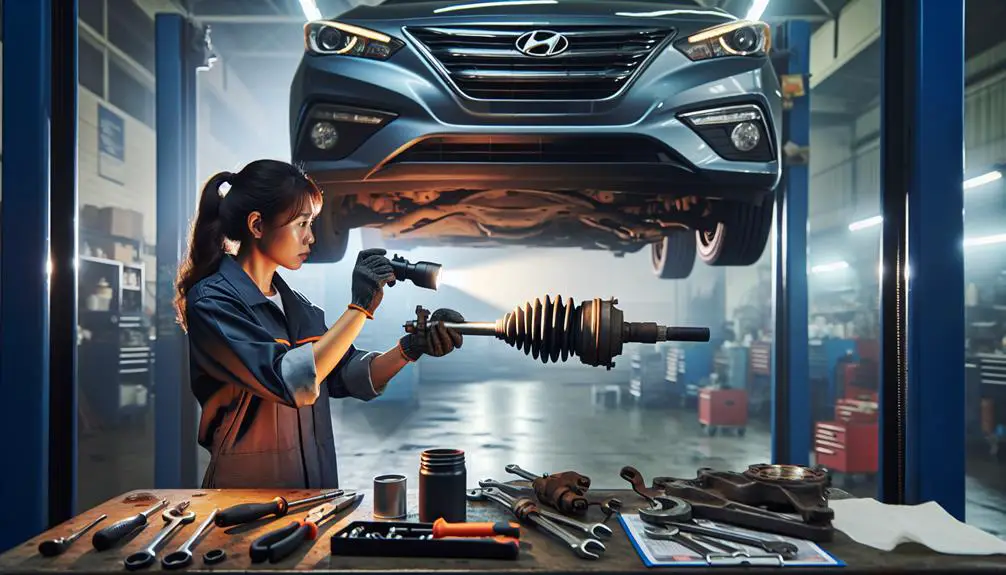
How to Replace Cv Axle Hyundai Sonata


  • To replace the CV axle on a Hyundai Sonata, you need to follow a series of steps.
  • First, safely lift the car using a jack and secure it on jack stands.
  • Remove the wheel of the side where you will be replacing the CV axle.
  • Use a breaker bar to detach the axle nut and set it aside.
  • Next, separate the axle from the transmission by carefully pulling it out.
  • Once the old axle is removed, you can proceed to install the new one in its place.
  • Slide the new axle into the transmission housing and make sure it is fully seated.
  • Reattach the axle nut and tighten it securely.
  • Finally, reassemble all the components in the reverse order of removal.
  • Double-check that everything is properly secured and fastened before lowering the vehicle back to the ground.

Diagnosing a Faulty CV Axle

identifying cv axle problems

To identify a bad CV axle in your Hyundai Sonata, look for these signs. If you hear a clicking or popping noise when you turn or speed up, it means the CV joints might be worn or damaged. A humming or buzzing sound that gets louder with speed can also indicate a problem with the CV axle, likely due to worn bearings.

Feeling vibrations while driving on smooth roads suggests the CV axle might be damaged or worn, causing imbalance. Also, if you see grease on the inside edge of your tire or around the axle, it means the CV boot is damaged, letting grease out and dirt in, which can harm the CV joint.

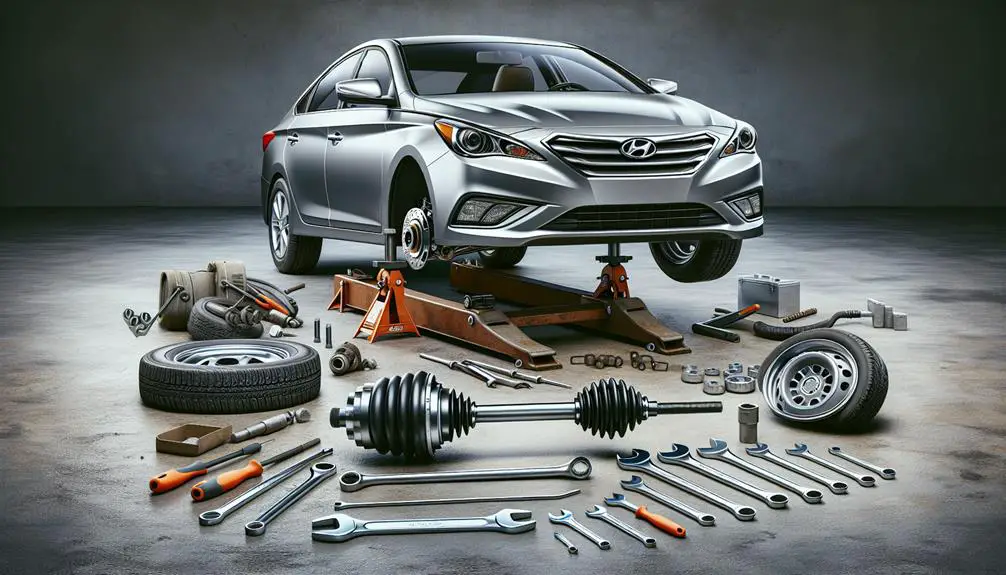
Gathering Necessary Tools

To replace a faulty CV axle in your Hyundai Sonata, gather the necessary tools first. This ensures the job goes smoothly and prevents damage to parts.

Tools needed:

  • Socket & Wrench: Use a 32mm socket for removing the axle nut. A torque wrench ensures bolts are properly tightened, and a breaker bar gives extra leverage on tough bolts.
  • Jack and Support: A floor jack lifts the car, and jack stands keep it securely raised.
  • Miscellaneous: A pry bar or large flathead screwdriver helps pry out the CV axle.
  • Gear: Safety glasses protect your eyes, and mechanic gloves protect your hands.

Work in a safe, bright area and make sure the car is stable on jack stands before starting. Check you have all tools to avoid stopping for supplies. Preparation is important for an easy CV axle replacement.

Removing the Old CV Axle

replacing a worn axle

To replace your Hyundai Sonata's CV axle, start by gathering all the tools you need. Make sure your car is lifted and securely on jack stands for clear access to the undercarriage. Remove the wheel near the CV axle you're changing by loosening the lug nuts, lifting the car, and taking off the nuts and wheel.

Next, remove the axle nut. It's easier to loosen it before lifting the car. If the car is already lifted, have someone hold the brakes to stop the wheel from turning while you loosen the nut.

Then, detach the lower ball joint to free up the wheel hub and spindle assembly. This involves removing a cotter pin and loosening the ball joint nut. Use a ball joint separator or a hammer to detach the ball joint from the control arm.

Push the CV axle through the wheel hub. If it's stuck, use a rubber mallet to gently free it. After disconnecting the axle from the hub, pry it loose from the transmission. Place a catch pan underneath to catch any leaking transmission fluid.

Installing the New CV Axle

To install a new CV axle in a Hyundai Sonata, follow these steps:

  1. Align the New CV Axle: Match the splines of the new CV axle with the hub. Carefully slide the axle into the hub until it fits well.
  2. Attach to the Transmission: Push the inner end of the CV axle into the transmission. You might need to adjust its position slightly. Ensure it's fully seated by waiting for a click sound.
  3. Reattach the Components: Put all parts back in place. Tighten the bolts on the strut and lower control arm according to the Hyundai Sonata's torque specifications.
  4. Secure the Axle Nut: Put the axle nut back and tighten it while the car is still lifted. After tightening it to the specified torque, lower the car.

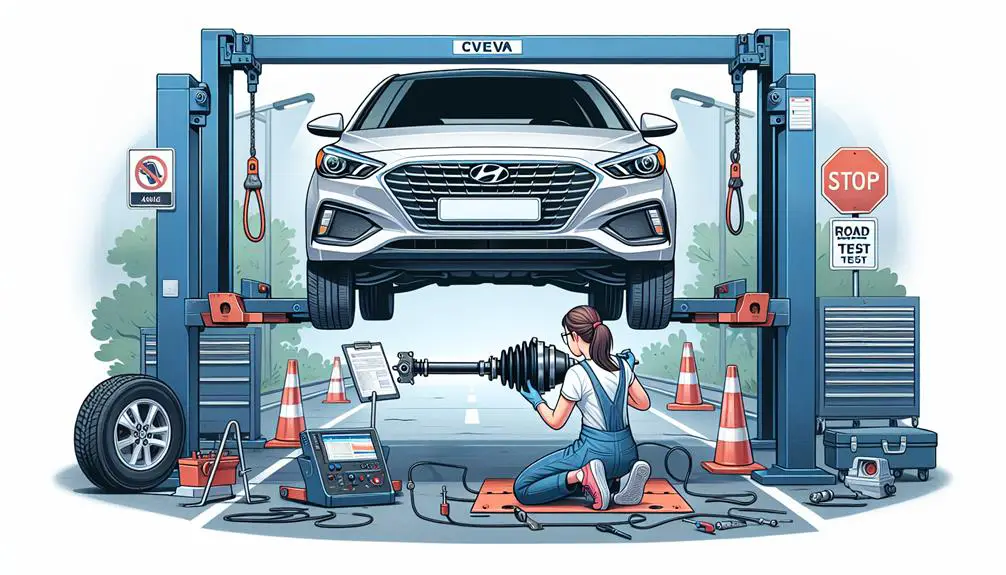
Testing After Replacement

quality assurance post repair

After replacing the CV axle on your Hyundai Sonata, first inspect the area around the new axle to make sure no tools are left under the car and everything is connected properly.

Then, check the transmission fluid level because it might've decreased during the replacement. Fill it up if needed to prevent transmission issues.

Next, take the car for a test drive. Start slowly and listen for any odd sounds like clicking or popping when turning, which might mean the CV axle isn't installed correctly.

Notice if the car vibrates or shakes, which could indicate the axle isn't balanced. If the car drives smoothly, try driving faster and making sharp turns to fully check the new axle's performance.

Conclusion

You did it! You found out the CV axle in your Hyundai Sonata was broken, collected all the tools you needed, took out the old axle, and put in a new one.

After making sure your car runs well, you can feel good about fixing it yourself. Remember to regularly check your car to spot any problems early.

Great job on fixing your car all by yourself!

How to Change 2013 Hyundai Elantra Brake Light


To change the brake light on a 2013 Hyundai Elantra, follow these steps:

  1. Gather tools.
  2. Access the brake light housing.
  3. Remove the old bulb.
  4. Install a new one.
  5. Test the light.

Gather Required Tools

prepare for home improvement

Before you start changing the brake light on your 2013 Hyundai Elantra, you'll need to gather a few necessary tools. Don't worry, you won't be depleting the bank or raiding a professional mechanic's toolbox for these items. Most likely, you've got what you need lying around. Initially, make sure you've got the correct replacement bulb. Your Elantra requires a specific type, often listed in your car's manual or you can quickly find this information online. A wrong bulb won't fit or work properly, so double-check this detail.

Next, you'll need a basic Phillips head screwdriver. It's a common tool, but make sure it's the right size to avoid damaging the screws. Moreover, grab a flat head screwdriver. You won't be using this to remove any screws, but it'll come in handy for gently prying off the brake light cover without scratching your car's paint.

It's also wise to have a pair of gloves on hand. Not only do they protect your hands, but they also prevent oils from your skin from getting on the new bulb, which can reduce its lifespan. To end, a small flashlight or headlamp can be a lifesaver, especially if you're working in dim light. Seeing what you're doing is vital to avoid any unnecessary fumbling or mistakes.

That's it! You're now ready to move on to accessing the brake light housing. But remember, the right tools not only make the job easier but also help make sure you do it right the first time.

Accessing the Brake Light Housing

Now that you've gathered all the necessary tools, let's focus on how to access the brake light housing on your 2013 Hyundai Elantra.

First off, make sure your Elantra is parked on a level surface and you've turned off the engine. Safety always comes top, so make sure you're wearing gloves to protect your hands during the process.

You'll need to open the trunk to access the brake light housing. Look for the trunk's interior lining near the brake light you're aiming to replace. You'll find it's held in place by fasteners or clips. Using a flathead screwdriver or a trim removal tool, carefully pry these open. Be gentle to avoid damaging the trim or the fasteners themselves.

Once you've removed the fasteners, pull back the lining gently to reveal the backside of the brake light housing. You'll see a few wires leading to the housing and the back part of the light assembly itself. This is where the brake light bulb is located, but remember, we're not touching the bulb just yet.

At this stage, it's important to familiarize yourself with the brake light housing's configuration. Notice how it's secured to the vehicle. Generally, it'll either clip into place or be secured with screws. Comprehending this will be key for the next steps when you're ready to remove the faulty bulb.

Removing the Faulty Bulb

fixing the broken light

With the brake light housing exposed, it's time to remove the faulty bulb from your 2013 Hyundai Elantra.

Initially, you'll need to make sure you're working safely. Make sure your Elantra is turned off, and the keys aren't in the ignition. This prevents any electrical accidents while you're handling the brake light.

Next, locate the back of the brake light housing. You'll see the socket that holds the bulb. It's vital to handle this part gently to avoid damaging it. Grasp the socket firmly and turn it counterclockwise. This action will release the socket from its position, allowing you to pull it out of the housing.

Once the socket is out, you'll see the bulb. It's held in place by a couple of small clips or a twist base, depending on the model of your Elantra. If it's a clip model, gently press the clips to release the bulb. For a twist base, turn the bulb counterclockwise until it's free from the socket.

Now, carefully remove the bulb. It's important not to use excessive force, as this could damage the socket or the housing. Hold the bulb by its base, not the glass, to minimize the risk of breaking it. If the bulb is stubborn, wiggling it gently while pulling it out can help.

With the faulty bulb out, you're halfway through the process. You've successfully navigated the removal without causing any damage to your vehicle's brake light housing or the electrical connections. This careful approach ensures a smooth shift to installing the new bulb, keeping your Elantra's brake lights functioning correctly.

Installing the New Bulb

Have you got the new bulb ready for your 2013 Hyundai Elantra's brake light? Now that you've removed the faulty one, it's time to install the new bulb. This step is important for ensuring your brake lights function properly, enhancing your safety on the road. Let's get straight to the point and make this as smooth as possible.

Here are three key steps to follow:

  1. Align the New Bulb Correctly
  • Initially, take the new bulb and align it with the socket. It's necessary to make sure that the bulb fits snugly into the socket without forcing it. Bulbs have a specific orientation; they won't fit if not aligned correctly. Gently twist the bulb into position until it's secure.
  1. Insert and Twist
  • With the bulb correctly aligned, insert it into the socket. You should feel a slight resistance as the pins or notches align. Twist the bulb clockwise (in most cases) until it locks into place. You'll know it's secure when it stops moving.
  1. Reattach the Brake Light Assembly
  • Now that the new bulb is installed, it's time to put everything back together. Carefully position the brake light assembly back onto the vehicle. Make sure all the clips or screws that hold the assembly in place are aligned properly. Fasten the assembly securely to make sure no gaps or loose parts.

Testing the Brake Light

vehicle safety inspection required

Before hitting the road again, it's crucial to test your 2013 Hyundai Elantra's brake light to make sure it's working correctly. After all, ensuring that your brake lights function properly is not just about compliance with road safety regulations; it's about keeping you and everyone else on the road safe.

To start the test, you'll need a helper. Have them stand behind your Elantra while you sit in the driver's seat. Turn the ignition to the 'ON' position, but don't start the engine. This will power up your vehicle's electrical systems, including the brake lights. Now, press the brake pedal and hold it down. Ask your helper to confirm if the brake light illuminates.

If the light comes on, you're good to go. If not, you may need to recheck your installation or consult with a professional. Remember, a non-functional brake light can lead to dangerous situations on the road.

Here's a simple table to evoke the emotions connected with each possible scenario:

Scenario Emotion Action
Light illuminates Relief Enjoy your drive, knowing you're safe
Light does not illuminate Concern Double-check your work or seek help
Light flickers Anxiety Immediate recheck or professional consultation
No response Frustration Consider professional help

Testing your brake light isn't just a step in maintenance; it's a commitment to safety. So give it the attention it deserves, ensuring peace of mind for you and your loved ones.

Conclusion

You've successfully navigated through changing your 2013 Hyundai Elantra's brake light. By gathering the necessary tools, accessing the brake light housing, removing the faulty bulb, and installing a new one, you've tackled the task efficiently.

Testing the brake light guarantees your safety and compliance on the road. Remember, maintaining your vehicle's lights is important for safe driving.

Well done on completing this DIY project, proving that with the right steps, car maintenance can be straightforward and rewarding.