Recent Posts

How Reliable Is The Hyundai Palisade 2023


The Hyundai Palisade 2023 is considered a reliable vehicle in its class, offering solid performance, high safety ratings, and positive owner satisfaction.

It requires average maintenance and repair, comparable to its competitors in the SUV market. This combination of features makes the Palisade a strong contender for those seeking a dependable family SUV.

Performance Review

effective employee evaluation process

The Hyundai Palisade 2023 has a 3.8-liter V6 engine with 291 horsepower and 262 lb-ft of torque, making it strong and fast. It has an 8-speed automatic transmission for smooth gear changes, helping the car perform well in cities and on highways.

The Palisade handles well, providing a stable and comfortable drive, even on rough roads, with little body sway during turns. It’s good for daily use and long trips.

It also has good fuel efficiency for its size and power, meaning less frequent gas station stops.

Safety Ratings Analysis

The Hyundai Palisade 2023 has high safety ratings, making it a reliable car. It’s not only stylish and performs well, but it’s also known for its focus on safety. The Palisade has received awards and high ratings for its ability to protect passengers.

Here are the key safety highlights:

  1. Top Safety Pick Award by IIHS: The 2023 Palisade got this award for doing well in crash tests and having effective systems to prevent crashes.
  2. 5-Star Overall Safety Rating by NHTSA: This is the highest rating from NHTSA, showing the Palisade did well in tests for frontal and side crashes, and rollover resistance.
  3. Advanced Safety Features: The car has modern safety technology like forward collision-avoidance assist and lane-keeping assist to help avoid accidents.
  4. Strong Build: The Palisade is made with high-strength steel and a well-made frame to offer more protection in accidents.

Owner Satisfaction Insights

helpful car shopping guide

Focusing on owner satisfaction, 2023 Hyundai Palisade drivers are happy with their vehicles. They like the mix of comfort, technology, and performance. Owners point out several good features of this SUV.

First, the inside of the Palisade is spacious and comfortable. This makes it good for driving kids to school, carrying sports gear, or going on family trips. The seats are soft, and the cabin is quiet, making it easy to talk or listen to music without outside noise.

Next, the technology in the Palisade is a big plus for owners. The infotainment system is easy to use, and the safety features are advanced. Driving a Palisade means using a vehicle that meets your needs.

Here’s a summary of what owners like:

  • Interior Space & Comfort: Owners say the Palisade is spacious and comfortable, making it great for long drives and everyday use.
  • Technology: The easy-to-use infotainment and advanced safety features are important to owners.
  • Quiet Interior: Owners appreciate the quiet cabin, which makes driving more pleasant.

Owners are very satisfied with the Palisade. It’s not just about transportation; it’s about how the journey feels, and Palisade owners are happy.

Maintenance and Repairs

Owners like the Hyundai Palisade for its comfort and technology, but it’s also important to take care of its maintenance and repair needs. Keeping your Palisade in good shape requires being proactive. Hyundai is known for making reliable cars, and the Palisade is no exception. However, there are a few important things to keep in mind.

  1. Routine Maintenance: The Palisade needs regular maintenance, such as oil changes, tire rotations, and brake checks. Hyundai provides a maintenance schedule to help keep your Palisade in good condition and avoid bigger, more expensive issues later.
  2. Warranty Coverage: Hyundai offers a strong warranty with the Palisade, including a 10-year/100,000-mile powertrain warranty and a 5-year/60,000-mile new vehicle limited warranty. This coverage can save you money on repairs, especially in the early years.
  3. Cost of Repairs: If you need repairs after the warranty has ended, the Palisade’s repair costs are usually similar to or slightly less than its competitors, making it a cost-effective option over time.
  4. Availability of Parts: Hyundai has a large network of dealerships, making parts for the Palisade easy to find. This means repairs can be done quickly, reducing the time your car isn’t usable.

Comparing Competitors

analyzing market rival companies

When comparing the Hyundai Palisade 2023 with the Kia Telluride and Honda Pilot, the Hyundai Palisade stands out in several areas such as reliability, features, and overall value. Here is a comparison:

  • Reliability: The Hyundai Palisade and Honda Pilot have high reliability, while the Kia Telluride has moderate reliability.
  • Features: The Hyundai Palisade has more standard features than the Kia Telluride and is comparable to the Honda Pilot.
  • Safety Features: The Hyundai Palisade offers advanced safety features, while the Kia Telluride and Honda Pilot offer standard safety features.
  • Warranty: The Hyundai Palisade and Kia Telluride come with a 10-year/100,000-mile warranty, which is longer than the Honda Pilot’s 5-year/60,000-mile warranty.
  • Price: The Hyundai Palisade has a competitive starting price, the Kia Telluride is slightly more expensive, and the Honda Pilot is the most expensive.

Choosing the Hyundai Palisade 2023 means getting a car that’s reliable, has more features, and offers better value compared to the Kia Telluride and Honda Pilot.

Wrapping Up

The 2023 Hyundai Palisade is a good choice if you want a car that works well and is safe. It drives smoothly, so you’ll enjoy riding in it. People who’ve this car like it a lot because it’s comfortable and has cool features.

It doesn’t cost too much to fix or keep up, which helps make it a reliable car. When you compare it to other cars like it, the Palisade gives you more for your money. This means it’s a great car for families who need something trustworthy.

How Do I Keep My Hyundai From Being Stolen


To effectively prevent your Hyundai from being stolen, combine secure parking practices, use smart anti-theft devices, upgrade your vehicle's security system, and consider keyless entry solutions.

Staying informed about theft trends and implementing these strategies can significantly reduce the risk of theft.

Use Smart Anti-Theft Devices

prevent theft with technology

Using smart anti-theft devices helps protect your Hyundai from theft. These devices include advanced alarm systems that alert you if someone tries to break into your car, immobilizers that stop the car from starting without the right key, and tracking systems that can find your car if it's stolen. These systems can be monitored through smartphone apps.

A steering wheel lock is also a good idea. It's a simple tool that makes your car less attractive to thieves because it's harder to steal.

Practice Secure Parking Habits

To protect your Hyundai from theft, follow these simple parking tips:

  1. Park in Bright Areas: Thieves like the dark. A well-lit spot is less attractive to them.
  2. Use Secure Parking: Look for parking with cameras, guards, or controlled access. This makes your car less tempting.
  3. Keep Your Car in Sight: Don't park behind big vehicles or out of view. The easier it's to see your car, the safer it is.
  4. Use Your Garage: If you have one, park your Hyundai in your garage. It's safer than parking on the street or in your driveway.

Upgrade Your Car's Security System

enhance vehicle security features

Boosting your Hyundai's security can help keep thieves away. Here's how to do it simply and affordably.

First, add a car alarm if you don't already have one. Modern alarms make loud noises and can send you alerts on your phone, letting you know of any threats right away. This can scare off thieves and alert people to any theft attempts.

Then, consider a steering wheel lock. It may look old-fashioned, but it's a clear sign for thieves to stay away. They're cheap, easy to use, and increase your car's security.

Lastly, think about getting an immobilizer system. This stops the engine from starting without the right key. If your car doesn't have this feature, it's a good investment for extra security.

Embrace Keyless Entry Wisely

To safely use keyless entry with your Hyundai, follow these steps:

  1. Keep Your Fob Safe: Avoid leaving your key fob close to doors or windows. Thieves might boost its signal to unlock your car. Place it in a pouch or box that blocks signals when not in use.
  2. Disable Keyless Entry at Night: If possible, turn off the keyless entry feature when the car is parked for a long time, especially overnight, to prevent relay attacks.
  3. Update Vehicle Software: Make sure your car's software is current. Car manufacturers release updates to fix security issues, including those with keyless entry.
  4. Use a Steering Wheel Lock: A steering wheel lock is a simple way to make your car less attractive to thieves, as it adds an extra layer of protection.

Stay Informed About Theft Trends

monitor theft trends closely

To keep your Hyundai safe from theft, it's important to know about new theft methods. Thieves keep finding ways to get past security, so knowing what they do helps you protect your car better.

If you hear that a certain model is being stolen more because of a weakness, you should quickly improve your car's security. This might mean updating the security system or using extra tools like steering wheel locks.

Use social media and online forums for the latest information. Joining a Hyundai owners' group can give you tips on avoiding theft. Also, watch for updates from local police about car theft trends in your area. This can help you know where theft is common and what to watch out for.

Conclusion

To keep your Hyundai safe from thieves, you don't only need cool gadgets. You need to be smart and careful.

Use the latest anti-theft tools, park in safe spots, make your car harder to steal, and be careful with keyless entry.

Also, keep up with how thieves are stealing cars these days. By doing all this, you're not just protecting your car; you're staying one step ahead of thieves.

Remember, it's your car – make sure it stays that way.

How Does Front Park Assist Work


Front Park Assist is a system that aids in parking by using sensors and cameras to detect obstacles.

It alerts the driver or automatically adjusts the vehicle's position to avoid collisions.

This system makes parking in tight spaces easier and safer.

Understanding Front Park Assist

front parking sensor system

Front Park Assist helps with parking by alerting you to obstacles in front of your car. It acts as an extra set of eyes, detecting hazards such as barriers or pedestrians. This feature prevents damage to your car and boosts your confidence while parking.

You receive alerts through audio beeps or visual cues on your car's display, which help you park safely and with ease. This technology is designed to reduce stress and improve your driving experience.

Key Components Explained

Front Park Assist is a technology that makes parking easier by using several key parts:

  • Ultrasonic Sensors: These sensors are located on the front bumper and detect objects in front of the car.
  • Control Module: This part processes the data from the sensors to determine how close objects are.
  • Audible Alarms: These alarms warn you when you're getting close to an object by sounding more frequently.
  • Visual Display: Some systems have a display that shows where objects are around the car.
  • Steering Input Monitoring: This monitors how you move the steering wheel to help guide the car while parking.

These parts work together to help you park more easily and with less stress. Knowing how they work can help you use Front Park Assist better.

Operational Mechanics

understanding mechanical system operations

When you use Front Park Assist, it starts scanning the front area of your vehicle with ultrasonic sensors. These sensors send out waves that bounce off objects and return, telling the system about any obstacles' presence, size, and how far away they are.

As you move forward slowly, the system uses this information to calculate how close you're to objects. It gives you visual and audio warnings that get more intense as you get closer to an obstacle. These warnings help you decide how to safely move your vehicle.

You control how fast you go, but Front Park Assist helps by giving you warnings. This is useful in small parking spaces or crowded places where it's hard to see. The system works best at low speeds, giving you time to respond to the warnings.

Benefits and Limitations

Exploring Front Park Assist's benefits and limitations helps understand its impact on parking safety and convenience. This technology has several advantages but also some drawbacks.

Benefits:

  • Lowers collision risk by warning of obstacles.
  • Increases safety for pedestrians.
  • Boosts confidence in tight parking spots, reducing stress.
  • Saves time in busy areas.
  • Makes parking easier, especially for those less confident.

Limitations:

  • Not perfect; may miss small or low objects.
  • Bad weather can make it less accurate.
  • Relying on it too much could weaken manual parking skills.
  • Costs for purchase and repairs can be high.

Knowing these points helps decide if Front Park Assist is right for you.

Tips for Effective Use

social media marketing strategies

To make the most of your Front Park Assist, first read the user manual to understand its features and limitations. This will help improve your parking. Remember, the system assists you but doesn't replace paying attention to your surroundings.

Keep the sensors clean from dirt, ice, or snow to maintain their effectiveness. Practice parking in different types of areas, like tight city spaces and open suburban ones, to learn how the system performs in various situations.

If possible, adjust the system's settings, like sensitivity levels or alert types, to suit your preferences. This can make parking easier.

Conclusion

So, we've talked about how front park assist helps make parking easier by warning you if there's something in the way. It uses special sensors and cameras that all work together well. Knowing how it works helps you see how it makes driving better but also has some things it can't do.

To get the best from it, make sure the sensors are clean and always look around you. Use this tool to help with parking without all the worry, but don't just depend on it. Trust yourself too and enjoy parking more easily.

What Is Hyundai Parking Guidance System


Hyundai's Parking Guidance System is an advanced technology designed to assist drivers in parking more efficiently and accurately. It uses sensors and cameras to measure potential parking spaces and then guides the vehicle into the spot with minimal input from the driver.

This system not only simplifies the parking process but also reduces the risk of parking-related accidents, making it a standout feature in Hyundai vehicles.

Overview of the System

system architecture and design

Hyundai's Parking Guidance System helps drivers park easily in tight spaces. It uses sensors and cameras to measure the parking space and the car's position. The system then controls the steering while the driver handles acceleration and braking.

This is especially useful in cities where parking is difficult. The system aims to prevent scratches or dents and provides clear instructions to the driver. It's helpful for both new and experienced drivers who find parking challenging, making parking safer and more convenient.

Key Features

The Parking Guidance System has key features that make parking easier. It has a real-time display that shows the parking area clearly. The system works with your Hyundai's sensors to guide you accurately into a parking spot.

It also has automatic steering help, making parking in tight spots less stressful. Plus, it gives voice instructions to help you park correctly. The system is easy to use for everyone, no matter their driving experience, making parking simpler.

How It Works

explanation of text details

The Parking Guidance System works by connecting to your car's sensors. When you need to park, it uses cameras and sensors around the car to find a spot that fits your car's size.

After finding a spot, the system shows you the best way to park with visual and audio instructions. This makes parking easier and reduces the need for guessing.

The system helps you park easily, gives you more confidence in parking in cities, saves time by reducing the need to look for parking, and lets technology assist you in parking.

Benefits for Drivers

The Parking Guidance System offers several benefits for drivers, making parking easier and improving their driving experience. This technology, available in Hyundai vehicles, decreases stress when parking. Here are the main advantages:

  • Ease of Use: The system has an easy-to-understand interface, making it simple to navigate. This reduces the time it takes to learn how to use it and makes parking more straightforward.
  • Time Savings: It helps find parking spots quickly, reducing the time spent searching for a place to park. This means drivers can save time and be more efficient.
  • Safety: With sensors and cameras, the system lowers the chance of accidents while parking. This gives drivers peace of mind, knowing they and their vehicle are safer.
  • Confidence Boost: It provides assistance in tight parking spaces, making it easier to park in difficult areas. This improves drivers' confidence, especially in busy or complicated parking environments.

Future Developments

exciting advancements on horizon

Hyundai's Parking Guidance System will improve, making parking easier with new features. This includes:

  • Better Accuracy: The system will become very accurate, reducing parking errors.
  • Autonomous Parking: The car will be able to park itself without any help from the driver.
  • Smart City Integration: The car will connect with city parking to find spots quickly.
  • Eco-Friendly: The system will use less space and reduce engine running time to help the environment.

These updates aim to make driving and parking more efficient and environmentally friendly.

Conclusion

In conclusion, Hyundai's Parking Guidance System makes parking your car much easier. It has cool features that help you fit your car into parking spots without trouble. You won't feel as stressed and you'll save time, making driving more fun.

Hyundai plans to make this system even better in the future, making parking safer and easier. Using this technology, parking will be a breeze. Welcome to the new way of parking.

What Is Hyundai Rear Parking Assist System


The Hyundai Rear Parking Assist System (RPAS) is a technology designed to reduce parking lot accidents.

It uses sensors and cameras to assist drivers in navigating tight parking spaces.

The system aims to enhance safety and driver confidence by preventing collisions and making parking easier.

Understanding RPAS Technology

exploring rpas technology intricacies

Hyundai's Rear Parking Assist System (RPAS) uses sensors and cameras to help park your car. It watches the area behind your car, measures how close you're to obstacles, and warns you if you're too close. It shows how much space you have on your car's display.

As you park, RPAS updates its warnings based on how your car moves and how close you're to things that could hit your car. It works for different parking situations like parallel parking or backing into a spot. RPAS uses ultrasonic sensors on the car's rear bumper to detect objects and send this information to the system. This helps you park safely without just relying on mirrors or looking back.

Key Features and Benefits

The Hyundai Rear Parking Assist System (RPAS) helps make parking easier. It offers features like:

  • Audio Alerts: You hear beeping sounds that get faster as you get closer to objects behind you. This helps you understand how close you're without looking.
  • Visual Cues on Display: Your car's display shows how close you're to obstacles, making it easier to park without guessing.
  • Automatic Braking Assistance: On some models, RPAS can automatically brake to prevent a collision, making parking safer.

How RPAS Enhances Parking

drone technology improves parking

The Rear Parking Assist System (RPAS) makes parking easier by using sensors on the car's rear bumper to detect obstacles and warn the driver with sounds and visuals. This helps the driver know how much space is available and adjust accordingly.

RPAS is useful in crowded parking lots and for parallel parking on busy streets, making parking safer and more precise. It acts like an extra set of eyes, helping drivers park their Hyundai car safely every time.

Installation and Compatibility

If you're checking if your Hyundai can use the Rear Parking Assist System and how to install it, here's what to know:

  • Model and Year Matter: The system fits most Hyundai cars made after 2015. Some older models can also use it.
  • How to Check Compatibility: Ask your Hyundai dealer or look on Hyundai's official website to see if your car model works with the Rear Parking Assist System.
  • Installation: Get a certified Hyundai technician to install it. This ensures it works well with your car's other safety features.

In short, check your car's model and year for compatibility, consult a professional for installation, and it should integrate well with your car's systems.

Maintenance and Troubleshooting

technical support and repairs

To keep your Hyundai's Rear Parking Assist System working well, you should regularly clean the sensors. This prevents them from getting blocked by dirt, mud, or snow, which can cause the system to give wrong readings or stop working.

If you have problems with the system, here's how to fix common issues:

  • If the system doesn't turn on, make sure it's enabled in the vehicle settings.
  • If the sensors give wrong readings, clean them to remove any blockages.
  • If there's continuous beeping, check the sensors for stuck debris.

If these steps don't solve the problem, contact a Hyundai service center for further assistance. Keeping the system in good condition helps with safe and precise parking.

Conclusion

You've learned about Hyundai's Rear Parking Assist System (RPAS). It's a cool feature that makes parking your car much easier.

This system uses some smart technology to help you fit your car into parking spots without trouble.

We talked about how it works, which cars can use it, and how to keep it working well. If you have any problems, fixing them is easy.

With this system, parking becomes a breeze. You'll wonder how you ever parked without it.

Enjoy parking your car with this helpful tool!

How Do I Activate Park Assist


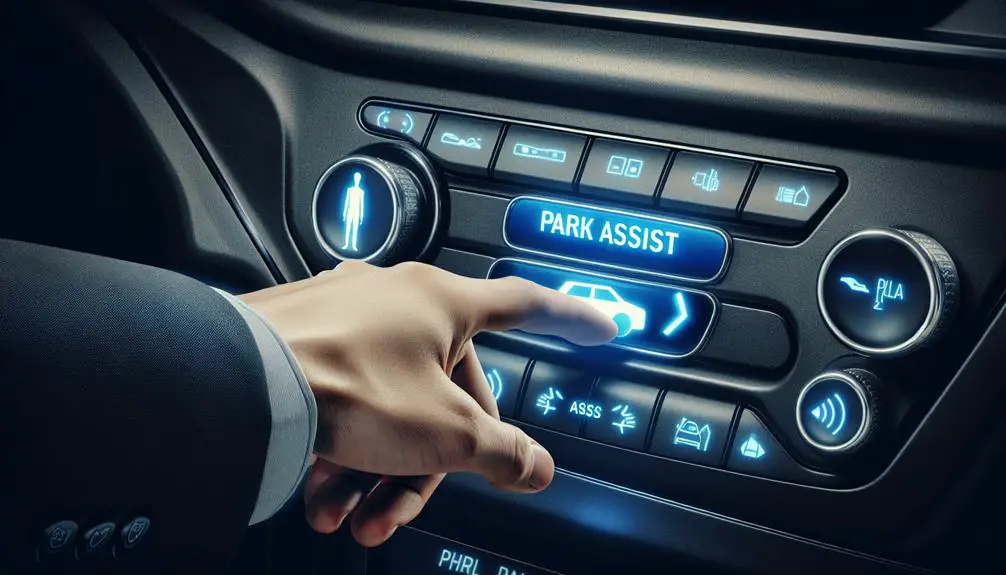
  1. To activate Park Assist, locate and press the Park Assist button in your vehicle or navigate to the Park Assist option within your car's infotainment system.
  2. The process may vary slightly depending on the make and model of your car.
  3. Ensure your vehicle is properly equipped with Park Assist before attempting to activate it.

Understanding Park Assist

navigating parking with ease

Park Assist is a feature in modern cars that helps with parking. It uses sensors to find parking spots and can steer the car into the spot for you. You need to control the speed and brakes.

When you drive slowly near parking spots, Park Assist looks for a suitable space. Once it finds one, you might just need to press a button, and the car parks itself. This feature makes parking easier.

Preparing Your Vehicle

To prepare your car for Park Assist, make sure everything works well by checking the system's settings and sensors. Clean the sensors on your car's front and rear bumpers to remove dirt, ice, or debris that could block them from detecting obstacles correctly. This could cause Park Assist to work incorrectly.

Learn how your car's Park Assist settings work. Different cars have different features and steps to activate them, so it's good to look at your car's manual. Change settings like how close you want to be alerted about obstacles.

Make sure your car's software is up to date. Car makers sometimes put out new updates that make the system work better or add new things.

Checklist for getting your car ready for Park Assist:

  • Clean sensors: This makes sure obstacles are detected correctly.
  • Check settings: Adjust Park Assist to what you like.
  • Update software: Get new features and improvements.

Doing these things will help Park Assist work smoothly.

Activation Process

that s a good summary

To activate Park Assist in your car, follow these steps:

  1. Find the Park Assist button, usually on the dashboard or in the infotainment system, marked by a P with an arrow.
  2. Press the Park Assist button to turn it on. You'll see a light or get a dashboard notification.
  3. Choose your parking type (parallel, perpendicular, or angled) using the infotainment system or buttons.
  4. Drive slowly, under 20 mph, so the system can look for parking spots.
  5. Follow the on-screen visual or auditory instructions to park.

Troubleshooting Tips

To fix Park Assist problems, follow these steps:

  1. Sensor Blockage: If Park Assist doesn't work, clean the sensors. Dirt or snow can block them.
  2. System Deactivation: If you see a 'Park Assist Off' message, turn the system back on in your car's settings.
  3. Electrical Interference: If Park Assist works unpredictably, check if new car accessories like LED lights are causing interference.

Clean your car's sensors if they're dirty. Make sure Park Assist is turned on in the settings. Remove or adjust any new car accessories that might interfere with Park Assist. Keeping the system well-maintained and correctly set up ensures Park Assist works properly.

Maximizing Park Assist Benefits

maximizing park assist features

To improve your driving with Park Assist, follow these steps:

  • Learn how your Park Assist works, as different cars have different systems.
  • Practice using Park Assist in a safe place to get comfortable with it.
  • Change the settings to make Park Assist work better for you, like adjusting steering sensitivity.
  • Keep the sensors clean so they work properly. Dirt or snow can block them.
  • Always pay attention while using Park Assist. It helps, but you should still control the car.

Conclusion

Now you know how to turn on Park Assist, making parking easy.

First, prepare your car, then follow the steps to turn it on.

If it doesn't work right away, try the tips to fix it.

Park Assist helps you park faster and with less worry.

It makes driving more enjoyable.

Happy parking!