Recent Posts

How To Reset Oil Life Hyundai Elantra


To reset the oil life on your Hyundai Elantra:

  • Turn the ignition key to the 'ON' position without starting the engine.
  • Press the 'Menu' button on the steering wheel until you reach the 'Service Interval' screen.
  • Select 'Reset' and confirm.

Make sure your vehicle is in park and all maintenance tasks have been completed before doing this.

Preparation Steps

prepare for successful baking

To reset the oil life on your Hyundai Elantra, first park on a flat surface and turn the engine off. This ensures the car is stable and safe.

You don't need tools for this, but having the car manual can help for specific instructions. To prepare the car for reset, make sure the electrical system is on but the engine is off.

If your car has a push-to-start button, press it without pressing the brake pedal. If it uses a key, turn it to the 'ON' position. This step is to activate the dashboard without starting the engine.

Accessing the Display

To reset the oil life in your Hyundai Elantra, follow these steps:

  1. Make sure your car is parked safely.
  2. Turn on the car without starting the engine by pressing the start button without pressing the brake pedal.
  3. Find the display control buttons on the steering wheel or dashboard.
  4. Use these buttons to navigate to the vehicle settings or information menu.

Do not go straight to the oil life option yet.

Selecting the Oil Life Option

customized oil change schedule

To reset the oil life indicator on your Hyundai Elantra, go to the vehicle settings or information menu and select 'Oil Life.' This option is usually found under 'Vehicle Settings' or 'Maintenance.' It shows the oil's current condition as a percentage, indicating how much life it has left.

If the percentage is low, it's time to reset it after changing your oil. Selecting 'Oil Life' is just a step before resetting; it doesn't reset the oil life by itself. It prepares the system for the reset, keeping your car's maintenance records accurate and helping maintain the vehicle's performance.

Confirming the Reset

To reset the 'Oil Life' on your Hyundai Elantra, choose 'Oil Life' from the menu and then confirm the reset. You'll see options like 'Yes' or 'No'. Click 'Yes'. Depending on your Elantra model, you may need to press a button or touch a screen to confirm.

After confirming, a message will show that the oil life has been reset. This process restarts the oil life tracking. It's important for keeping your engine in good shape.

Tips for Maintenance

maintenance of home appliances

To ensure your Hyundai Elantra performs well, follow these maintenance tips along with resetting its oil life.

Check your tire pressure every month because incorrect pressure can cause extra wear and reduce fuel efficiency. Rotate your tires between 5,000 and 7,500 miles to wear them evenly.

Inspect your brakes regularly. If they make noise or if stopping takes longer, they might need attention. It's important for safety to fix brake pads and rotors quickly.

Change your air filter every 15,000 to 30,000 miles. A clean air filter helps your car perform better and use fuel more efficiently.

Watch your battery, especially in extreme weather. A weak battery can cause problems, so check it for wear and test it yearly after three years.

These steps help your Hyundai Elantra run well and complement the oil life reset.

Conclusion

Now that you've reset the oil life in your Hyundai Elantra, your car is ready for more smooth rides.

But remember, just pressing a button to reset doesn't mean you can skip changing the oil. Changing the oil is really important for your car to stay healthy. Make sure to keep track of how many miles you drive and get the oil changed regularly.

Resetting the oil life helps you avoid getting reminders when you don't need them. It helps you keep your car in good shape. Keep doing this, and enjoy your drives!

How Much Are Brake Pads for Hyundai Tucson


The cost of brake pads for a Hyundai Tucson can vary widely. Just as the heart of your Hyundai Tucson relies on a smooth flow to keep it running, so do the brake pads require regular updates to guarantee your safety on the road.

You're probably wondering about the investment for these vital components. The variation in cost is influenced by factors such as whether you opt for OEM or aftermarket options and the labor involved in the installation.

Before you open your wallet, it's vital to understand what drives these prices and how you can navigate the landscape to find the best deal. Stick around to uncover some valuable tips for saving on brake pads without compromising on quality.

Understanding Brake Pad Costs

comparing brake pad prices

Before diving into specifics, it's key you understand that the cost of brake pads can vary widely, depending on several factors. When you're looking at the price for replacing the brake pads on your Hyundai Tucson, you're not just paying for the parts. You're also covering the cost of labor if you're not doing the job yourself. It's crucial to realize that while some may opt for professional installation, others might feel confident enough to undertake this task, greatly affecting the total cost.

Typically, brake pads are sold in sets of two as you'll need to replace both pads on a single axle simultaneously to ensure uniform wear and peak performance. This is where your initial cost consideration starts. However, don't let the base price of brake pads fool you into thinking that's all you'll be spending. If you're going to a mechanic or a dealership, the labor costs can sometimes equal or even surpass the price of the brake pads themselves.

Furthermore, it's not just about buying the pads and having them installed. You've got to take into account the longevity and performance of the brake pads you're choosing. Some pads are designed for longer life, while others are made for better performance, and these features can also influence their price. Remember, investing in quality brake pads can save you money in the long run by reducing the frequency of replacements.

Factors That Influence Price

Several factors can greatly impact the price of brake pads for your Hyundai Tucson, from the type of pads you choose to where you get them installed.

To kick things off, the material of the brake pads plays a significant role in determining cost. You've got options like ceramic, which are generally pricier but offer quieter operation and less dust, and then there are metallic pads, which can be more budget-friendly but might wear down your rotors faster. Each has its pros and cons, affecting both performance and price.

Then, there's the brand factor. Top-tier brands often charge more for their reputation and the perceived quality of their products. You're not just paying for the material but also for the brand's research, development, and guarantees. Opting for a less known brand can save you some cash, but it's crucial to make sure they still meet safety standards.

Where you decide to have your brake pads installed can also make a big difference in cost. Going to the dealership tends to be the most expensive route, as they usually use OEM (original equipment manufacturer) parts and charge a premium for labor. Independent garages and quick-lube shops might offer more competitive pricing, but make sure they're reputable and experienced with your vehicle model.

Lastly, your driving habits and the environment you drive in can affect how often you need to replace your brake pads, indirectly influencing the cost over time. Frequent, heavy braking and driving in harsh conditions can wear pads down faster, leading to more frequent replacements.

OEM Vs Aftermarket Options

choosing car parts wisely

Comprehending the disparaties between OEM and aftermarket brake pads can greatly impact your decision and potentially the costs for your Hyundai Tucson. OEM, or Original Equipment Manufacturer parts, are the exact brake pads your car was equipped with from the factory. Aftermarket options, on the other hand, are produced by other-party companies and can vary greatly in terms of quality and price.

Here's what you need to take into account:

  • Importance: OEM brake pads are made specifically for your Hyundai Tucson, ensuring a perfect fit and best performance. Aftermarket pads, while often cheaper, may not always offer the same guarantee of compatibility.
  • Quality and Performance: The quality of aftermarket brake pads can range dramatically. While some may match or even surpass OEM standards, others might fall short, affecting your car's braking performance. OEM pads, however, are consistently manufactured to meet your vehicle's specifications.
  • Warranty and Peace of Mind: Choosing OEM brake pads might preserve your car's warranty and offer peace of mind regarding part reliability. Aftermarket parts could potentially void warranty claims, depending on your vehicle's warranty terms and conditions.

It's important to weigh these factors based on your priorities, whether it's saving money upfront with aftermarket options or investing in the reliability and assurance that comes with OEM parts. Each choice has its merits, but grasping the trade-offs will help you make an informed decision for your Hyundai Tucson, without worrying about labor costs for installation just yet.

Labor Costs for Installation

Once you've chosen the right brake pads for your Hyundai Tucson, it's significant to ponder the labor costs for installation, which can greatly impact the entire expense.

Labor costs can vary widely depending on where you're located and the service center you choose. Generally, you're looking at an hourly rate that ranges from $50 to $120. Considering the installation process for brake pads on both front wheels takes about an hour to an hour and a half, you can expect the labor cost to fall between $50 and $180 for most service centers.

Keep in mind, some places might offer you a flat rate for brake pad installation. This can sometimes be a better deal, especially if the mechanic runs into any issues that extend the installation time. However, it's vital to ensure that this flat rate is competitive with hourly rates in your area.

Don't forget to ask if there are any additional fees. Some shops charge for shop supplies or disposal of your old brake pads, which can add a bit more to your final bill. These fees aren't usually significant, but they're worth noting as you budget for the installation.

Lastly, while you're focusing on the cost, don't sacrifice quality for a lower price. A reputable mechanic who uses proper tools and follows the correct procedures is important for your Tucson's safety and longevity. Remember, the goal isn't just to save money but to ensure your vehicle remains reliable and safe on the road.

Tips for Saving on Brake Pads

brake pad cost cutting

To save on brake pads for your Hyundai Tucson, consider shopping around and comparing prices from different suppliers. It's no secret that prices can vary significantly, not just from one retailer to another but also between online and physical stores. Doing a bit of research can lead you to the best deal, making sure you don't overspend on this vital maintenance item.

Here are a few additional strategies to keep in mind:

  • Look for Discounts and Coupons: Retailers and auto repair shops often offer promotions or discounts on auto parts, including brake pads. Signing up for newsletters or following your favorite shops on social media can alert you to these deals, potentially saving you a substantial amount of money.
  • Consider Aftermarket Parts: While OEM (Original Equipment Manufacturer) parts are made by the car's manufacturer, aftermarket parts can be just as good and much cheaper. However, it's essential to research and choose reputable brands to make sure you're not compromising on quality.
  • Do It Yourself: If you're handy with tools and willing to learn, replacing the brake pads on your Hyundai Tucson yourself can save you the labor costs associated with professional installation. There are plenty of tutorials and guides available online. Just make sure you're comfortable and confident in your abilities before attempting this as your safety is paramount.

Conclusion

Wrapping up, the cost of brake pads for your Hyundai Tucson can vary widely. It's influenced by if you opt for OEM or aftermarket pads, and where you're getting them installed.

Remember, you can save by shopping around and possibly doing the installation yourself if you're handy. Ultimately, don't skimp on quality for safety's sake. Investing in good brake pads is investing in your and your passengers' safety.

So, make an informed choice and keep those brakes in top condition.

Hyundai Sonata Axle Replacement Cost


The cost of replacing a Hyundai Sonata axle varies significantly, depending on the extent of damage and the mechanic chosen. Factors such as part quality and labor rates play a crucial role in determining the overall expense, making thorough research and comparison essential.

Factors to consider when estimating the cost of replacing a Hyundai Sonata axle include the model year, whether it's a front or rear axle replacement, and any additional repairs needed alongside the axle replacement.

To ensure an accurate estimate, it's advisable to seek quotes from multiple reputable mechanics or Hyundai dealerships, providing details about the axle issue and the vehicle's specific make and model.

Understanding Axle Replacement

understanding car axle replacement

Before discussing the costs, it's important to know what axle replacement means and why it might be needed for your Hyundai Sonata. The axle links your car's wheels to the transmission, crucial for moving power from the engine to the wheels. Axles can wear out or get damaged, leading to replacement needs.

If your Sonata makes odd noises like clicking or rumbling when turning, or if it doesn't drive smoothly, it might be a sign that the axle is failing.

Axle replacement involves removing the damaged axle and putting in a new one. This task requires precision and should be done by a professional mechanic because the axle needs to be aligned correctly for the car to drive well.

Understanding axle replacement is important for keeping your Hyundai Sonata in good condition.

Factors Affecting Cost

Several factors can impact the cost of replacing an axle in a Hyundai Sonata:

  1. Axle Type: The cost can vary depending on whether it's a front or rear axle replacement. Front axles, involved in steering, might be more expensive due to their complexity.
  2. Parts Source: The choice between OEM (Original Equipment Manufacturer) parts and aftermarket parts affects the price. OEM parts, from Hyundai, are pricier but ensure quality and fit. Aftermarket parts are cheaper but their quality and fit can vary.
  3. Labor Costs: The cost of labor can differ based on the service provider. Dealerships usually charge more than independent mechanics. The complexity of the replacement also influences the time taken and, consequently, the labor cost.

Average Replacement Costs

financial impact of repairs

The average cost to replace an axle in a Hyundai Sonata is between $500 and $950. This price includes labor and parts. The cost varies because of the technician's skill, the quality of the axle, and the installation complexity. Different Sonata models might need different axles.

Labor usually costs between $150 and $300. The price can depend on whether you go to a dealership or an independent shop. Dealerships might charge more because they specialize in Hyundais. Make sure independent shops have experience with Hyundais to avoid problems.

The axle's price ranges from $350 to $650. This depends on if you choose an OEM part or an aftermarket part. OEM parts are more expensive but are a guaranteed fit for your Sonata. Aftermarket parts are cheaper but make sure you pick a reliable brand to avoid low quality.

Knowing these costs can help you prepare for replacing your Sonata's axle. It's an important repair and knowing the costs ahead of time can help you plan.

Saving on Axle Replacement

To save money on a Hyundai Sonata axle replacement, look at both OEM (original equipment manufacturer) and good quality aftermarket options. OEM parts fit perfectly and have a warranty but are usually more expensive. Aftermarket parts can be cheaper and still good quality. It's important to compare these options carefully.

Here are three ways to save money without compromising quality:

  1. Compare Prices and Reviews: Look around for the best prices and check what other customers say. Use online forums and automotive blogs to find recommendations for both OEM and aftermarket axles. This can help you save money and find the right part.
  2. Look for Promotions and Discounts: Watch for sales, promotions, or discount codes from suppliers and auto parts stores. Signing up for newsletters or following these companies on social media can help you find deals to lower your costs.
  3. Consider Refurbished or Used Parts: Buying refurbished or gently used axles can save you a lot of money. These parts can work as well as new ones if they're properly fixed up. Always buy from reliable sellers who offer a warranty or guarantee.

Choosing the Right Mechanic

selecting a skilled auto technician

To find a good mechanic for your Hyundai Sonata's axle replacement, follow these steps:

  1. Ask people you know who own a Hyundai or have had similar repairs for mechanic recommendations. Personal experiences can help you find a reliable mechanic.
  2. Look at online reviews on Yelp, Google, or car forums to find a mechanic with a good reputation for quality work and fair prices.
  3. Check if the mechanic has certifications, especially from the National Institute for Automotive Service Excellence (ASE). This shows they've the necessary skills and knowledge.
  4. Ask the mechanic if they've experience with Hyundai Sonatas and axle replacements. They should be able to explain what needs to be done and give you a detailed cost estimate. This shows honesty and reliability.
  5. Consider the location of the shop. It shouldn't be too far to avoid making car check-ups too time-consuming.

Choosing the right mechanic involves looking at their experience, reputation, location, and cost. Research carefully to find someone who'll fix your car well without overcharging.

Conclusion

When you need to replace the axle on your Hyundai Sonata, the price can vary significantly. It depends on factors such as the type of axle required, the mechanic's labor charges, and any additional repairs your car may need. Typically, the cost ranges from $500 to $1,000.

To save money on this repair, consider sourcing the parts independently and comparing prices from various mechanics. It's crucial to select a skilled and trustworthy mechanic to ensure quality work on your Sonata. By taking these steps, you can effectively manage the expenses associated with fixing your vehicle.

How to Replace Hyundai Sonata Tail Light Socket


Replacing a Hyundai Sonata tail light socket involves the following steps:

  1. Gather the necessary tools for the job.
  2. Access the tail light assembly by opening the trunk or removing the cover from the back of the light housing.
  3. Remove the faulty socket by twisting it counterclockwise and pulling it out of the assembly.
  4. Install the new socket by inserting it into the assembly and twisting it clockwise to secure it in place.
  5. Test the new socket by turning on the vehicle's lights to ensure it is functioning properly.

Gather Necessary Tools

gather your gardening supplies

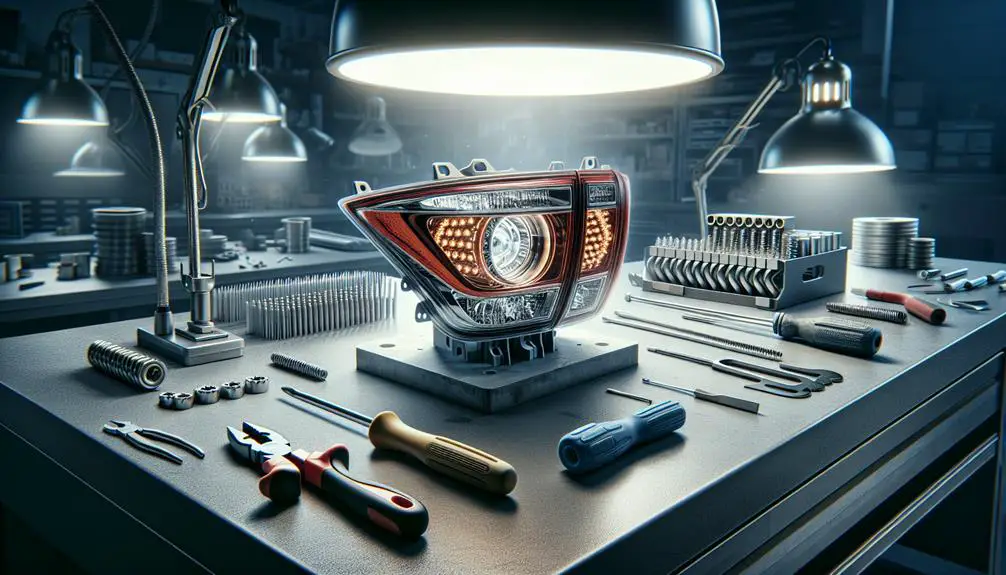
Before you begin, make sure you've gathered all the necessary tools to replace your Hyundai Sonata's tail light socket. This step is important to make sure a smooth and efficient replacement process. You don't want to be halfway through the job only to realize you're missing a key tool.

To start, you'll need a screwdriver set. Your Hyundai Sonata's tail light assembly is likely secured with screws, and having a set makes you've got the right size for the job. It's a good idea to have both flat-head and Phillips-head screwdrivers since you might encounter both types of screws.

Next, grab a pair of needle-nose pliers. These are important for gripping and pulling out the old tail light socket, especially if it's a bit stubborn or if you need to remove any small clips holding it in place.

Don't forget to have a new tail light socket ready. Make sure it's the correct model for your Sonata. Using the wrong socket can lead to poor fitment or even damage to your vehicle's electrical system.

Lastly, consider having some electrical tape and wire strippers on hand. If your new socket doesn't come with pre-stripped wires or if you need to clean up any wiring, these tools will be valuable. They'll help make a secure and safe connection.

Having all these tools ready before you start will save you time and frustration. You'll be able to focus on the task at hand, making sure a successful replacement of your Hyundai Sonata's tail light socket.

Accessing the Tail Light Assembly

Having gathered all the necessary tools, you're now ready to access the tail light assembly on your Hyundai Sonata. This step is important for a successful replacement of the tail light socket. Don't worry; it's simpler than it sounds, and you won't need any special technical skills to get it done.

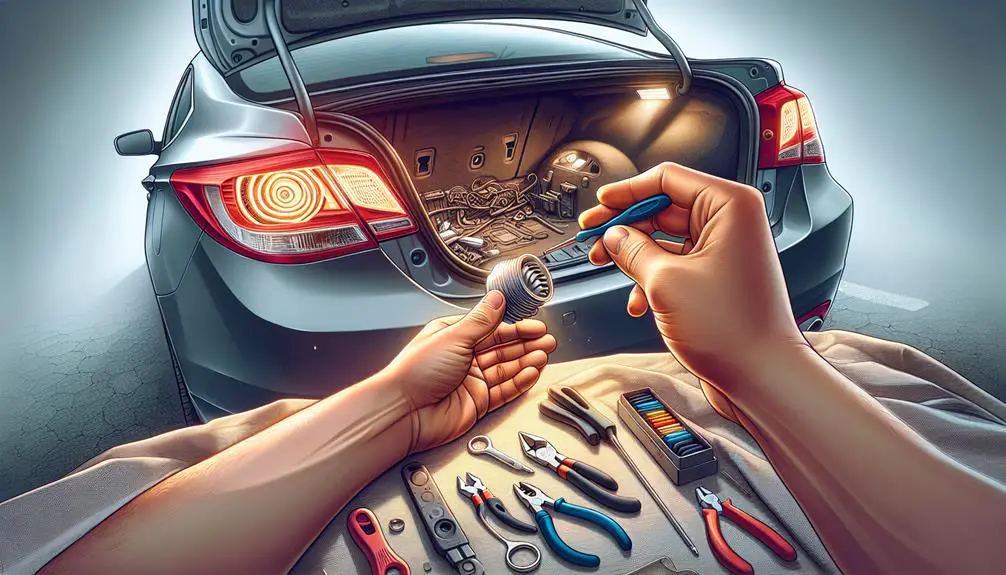
First, you'll need to open your Sonata's trunk to gain access to the tail light assembly. Depending on your model year, the process might vary slightly, but generally, look for access panels or covers on the inside of the trunk, directly behind the tail lights. These panels are typically secured by clips or screws. Use a flathead screwdriver or a panel removal tool to gently pry them off or unscrew them, but do so with care to avoid damaging the clips or the trunk lining.

Once the access panels are removed, you'll have a clear view of the backside of the tail light assembly. Here, you'll see the wiring and the back part of the sockets. It's important to remember not to touch the new bulb with your fingers if you're also planning to replace it, as oils from your skin can shorten its lifespan. Also, take a moment to observe how the assembly is arranged. This will save you time and prevent confusion when you're putting everything back together after replacing the socket.

At this point, you're right at the cusp of reaching the faulty socket. However, be mindful not to rush. Ensuring you've properly accessed and identified the tail light assembly components is foundational for a smooth replacement process.

Removing the Faulty Socket

fixing electrical issues safely

Once you've successfully accessed the tail light assembly, it's time to carefully remove the faulty socket. This step is important for ensuring your Hyundai Sonata's tail lights function correctly and safely. Here's a straightforward, step-by-step guide to get you through the process without a hitch.

  1. Identify the Faulty Socket: To begin, you'll need to identify which socket isn't working properly. Generally, it's the one that either doesn't light up at all or behaves erratically when you turn on your tail lights. Once pinpointed, you're ready to proceed to the next step.
  2. Disconnect the Power Supply: Safety first! Before touching the socket, make sure your car's engine is off and the keys are removed from the ignition. This prevents any electrical accidents. For an added layer of safety, disconnect the car battery. This might seem like an extra step, but it's better to be safe than sorry.
  3. Remove the Faulty Socket: Now, for the main event. Grab the base of the socket firmly and twist it counterclockwise. Most Hyundai Sonata models use a simple twist-and-pull mechanism for their tail light sockets, so it should come out relatively easily. If it feels stuck, double-check to make sure there aren't any locking tabs that you need to press down or release before it can be removed.

After removing the faulty socket, inspect it for any visible signs of damage or wear. This can include burnt areas, corrosion, or broken parts. Understanding the condition of the faulty socket can provide insight into whether this issue might recur and if there are underlying problems you need to address.

But remember, don't jump ahead to installing a new socket just yet. There's a method to that madness, and it deserves its own detailed explanation.

Installing the New Socket

With the faulty socket now removed, it's time to focus on installing your new Hyundai Sonata tail light socket. First off, you'll want to make sure that your replacement socket is the correct model for your Sonata. Compatibility is key to a smooth installation process.

Start by carefully aligning the new socket with the tail light assembly. There's usually a specific way it fits, often with notches or tabs that must align with corresponding slots or grooves in the assembly. This guarantees a secure fit and proper electrical connection. Once you've got it positioned correctly, gently push the socket into place. You should feel it click or snap in, indicating it's securely connected.

Next, take the tail light bulb you previously removed (or a new one if the old was faulty) and insert it into the new socket. Again, there might be a specific orientation for the bulb, so gently rotate it until it slides in smoothly. Then, twist it to secure it in place, usually clockwise.

With the bulb in place, it's important to reconnect any electrical connectors you detached during the removal process. These connectors should snap back together easily but double-check to make sure they're firmly connected. A loose connection could lead to malfunctioning tail lights.

Lastly, carefully position the tail light assembly back onto your Sonata. Secure it with the screws or bolts you removed earlier. Tighten them snugly, but be careful not to overtighten and damage the assembly or your car's body.

That's it! You've successfully installed your new Hyundai Sonata tail light socket.

Testing the Repair

repairing a broken device

Before you hit the road, it's crucial to test your Sonata's tail light to guarantee the repair was successful. You've put in the work to replace the socket, but without a proper test, you can't be sure everything's in top shape. Here's how to make sure your efforts haven't gone to waste.

Initially, gather what you'll need for the test. You're looking for functionality, so make sure the vehicle's electrical system is ready to cooperate. Now, follow these steps:

  1. Turn on the Vehicle: Start your Hyundai Sonata. You don't need to get it rolling; just make sure it's in a state where the electrical system is fully operational. This means either starting the engine or turning the key to the accessory position.
  2. Activate the Tail Lights: Use the headlight switch to turn on the tail lights. You might need to wait until dusk or cover the ambient light sensor to trick the car into thinking it's dark outside if your model auto-adjusts light function.
  3. Check for Brightness and Functionality: Walk around to the rear of your Sonata and inspect the tail light. It should be brightly lit without flickering. Test the brake lights by pressing the brake pedal, and if your model supports it, activate the turn signals and reverse lights to make sure those functions work through the new socket as well.

If everything lights up as expected, you've successfully repaired your Sonata's tail light socket. If not, retrace your steps, checking connections and making sure the bulb is properly seated. Once everything checks out, you're ready to hit the road safely.

Conclusion

Once you've gathered your tools and accessed the tail light assembly of your Hyundai Sonata, removing the faulty socket and installing the new one is important. Make sure to carefully follow the steps for a smooth process.

After installing the new socket, it's important to test the repair to make sure everything works perfectly.

With these simple steps, you've successfully replaced your tail light socket, keeping your Sonata safe and functional on the road.

How to Clear Maintenance Light on Toyota Corolla


To clear the maintenance light on a Toyota Corolla:

  • Turn the ignition key to the 'On' position.
  • Press the odometer button until the total mileage shows.
  • Turn the key to 'Off.'
  • Press and hold the odometer while turning the key back to 'On.'

Understanding the Maintenance Light

decoding car s maintenance indicator

The maintenance light on a Toyota Corolla reminds you to check the car's condition. It tells you to do a routine check-up or oil change. The light turns on every 5,000 miles to remind you of this.

If the light turns on sooner or stays on, it might mean a more serious problem. It's important to pay attention and possibly get professional help if this happens.

Preparing to Reset the Light

Before resetting the maintenance light on your Toyota Corolla, make sure the car is parked safely and the engine is off. Prepare by following these steps:

  1. Park the vehicle safely and turn off the engine.
  2. Collect necessary items, including the car manual. The manual may have important information for the reset.
  3. Learn the dashboard layout, especially where the odometer and trip meter button are.
  4. Adjust your seat to easily reach the dashboard without discomfort.
  5. Be mentally ready for the reset process, stay calm and confident.

These steps will help you reset the maintenance light efficiently and without errors.

Step-by-Step Reset Instructions

resetting device with ease

To reset the maintenance light on your Toyota Corolla, follow these steps:

  1. Turn off your vehicle completely.
  2. Press and hold the odometer button on the dashboard.
  3. Turn your ignition key to the 'On' position without starting the engine.
  4. Wait for the maintenance light to flash and then turn off.
  5. Release the odometer button.
  6. Turn your ignition key to the 'Off' position.
  7. Start your vehicle to check if the maintenance light is off.

No special tools are needed for this process.

Troubleshooting Common Issues

When resetting the maintenance light on your Toyota Corolla, you might run into a few usual problems. Here's how to fix them:

  1. Mode: Make sure your car is in accessory mode (IGNITION ON), just before starting the engine. This is important for the reset to work.
  2. Timing: You need to press and hold the odometer button for at least 5 seconds. If not done correctly, the reset won't happen.
  3. Battery: A low battery can cause issues. Make sure your car's battery is fully charged.
  4. Odometer Button: If the button doesn't press easily or feels broken, it might need fixing.
  5. Vehicle Mode: Double-check your car is in accessory mode and not off or in start mode.
  6. Dashboard Lights: Sometimes, the maintenance light doesn't work because of a problem with the dashboard lights.

If you've tried all these steps and the light still won't reset, it might be time to see a professional. Some problems need an expert to fix. Remember, solving these issues is often about trying different solutions until one works.

Maintaining Your Toyota Corolla

toyota corolla maintenance tips

To ensure your Toyota Corolla works well, it's important to regularly maintain it. This includes:

  • Changing the oil every 5,000 to 7,500 miles to keep the engine in good condition.
  • Rotating the tires every 5,000 to 7,500 miles to make them last longer and improve gas mileage.
  • Checking the brakes at least once a year to avoid any problems.

Doing these tasks helps avoid expensive repairs later.

Conclusion

You've fixed the maintenance light on your Toyota Corolla, so you're ready to keep your car running well. Remember, turning off the light is just the start. Make sure to check your car regularly and fix any problems right away. This will help your Corolla stay in good condition.

If you need to turn off the light again, just follow these steps.

Drive safely and enjoy your well-kept Corolla.

When Was The Hyundai Palisade Made The Flagship Suv From Hyundai


The Hyundai Palisade became Hyundai's flagship SUV in 2020, marking a pivotal moment in the brand's focus on luxury and performance.

This model is notable for its advanced design and safety features, which have significantly influenced the SUV market since its introduction.

The Genesis of Palisade

genesis of urban planning

The Hyundai Palisade, Hyundai's top SUV, was first released in 2018. This was a big step for Hyundai. The SUV market was growing, and people wanted cars that were spacious, versatile, and didn't lose out on performance or luxury. Hyundai saw this and decided to create a new SUV.

Before the Palisade, Hyundai had a good range of SUVs but didn't have a leading model to really stand out in the market. They needed something impressive. So, they made the Palisade.

Creating the Palisade was how Hyundai responded to the market. They used their best technology, design, and engineering to make an SUV that wasn't only big but also had great features, safety, and comfort. Launching the Palisade showed Hyundai's goal to be a leader and innovator in the car industry.

2020: A Flagship Emerges

The Hyundai Palisade quickly became Hyundai's top model after its launch, showing Hyundai's commitment to innovation, quality, and luxury. This was due to careful planning and understanding of the market.

Here's how the Palisade stands out:

  • It's the biggest SUV Hyundai offers, making it noticeable in the market.
  • It has the latest safety and entertainment technology, setting new standards.
  • Its unique exterior and luxurious interior draw attention.
  • It offers powerful engines and a smooth ride, satisfying drivers.
  • Its strong sales and positive reviews confirm its top position.

The Palisade's launch was a key moment for Hyundai. It showed Hyundai can lead in the competitive SUV market, proving Hyundai's growth and ambition to improve.

Design and Luxury Highlights

elegant and opulent features

The Hyundai Palisade is a luxury SUV with a stylish design and high-end features. It has a noticeable design with a large front grille and smooth lines. Inside, it focuses on comfort and luxury for both the driver and passengers. Key features include:

  • Quilted Nappa Leather Seats: These seats offer comfort and a luxury feel.
  • Dual Sunroof: Brings in natural light, making the interior feel more spacious.
  • Ambient Lighting: Allows you to change the interior lighting color to fit your mood.

The Palisade combines luxury with practicality for a top driving experience.

Advancements in Safety and Technology

The Hyundai Palisade is equipped with advanced safety features. These include a Forward Collision-Avoidance Assist that automatically brakes to prevent accidents, and a Lane Keeping Assist that adjusts steering to keep the car in its lane. It also has Smart Cruise Control for maintaining a safe distance from the car ahead, and a Blind-Spot Collision-Avoidance Assist to alert drivers of vehicles in their blind spot during lane changes.

Additionally, the Palisade has a 10.25-inch touchscreen infotainment system compatible with Apple CarPlay and Android Auto, allowing drivers to use navigation, entertainment, and smartphone apps.

Impact on the SUV Market

suv market influence analysis

The Hyundai Palisade has changed the SUV market a lot. It combines luxury, performance, and affordability, making it popular among families and car enthusiasts. This has made other car makers improve their SUVs to match the Palisade's value and quality.

Here are the main impacts of the Palisade:

  • More competition: Other brands are improving their features, pricing, and value to compete with the Palisade. This means customers get more for their money.
  • Higher expectations from consumers: People now expect SUVs to have advanced safety, luxury interiors, and good performance as standard.
  • More people like SUVs: The Palisade's success has made SUVs more popular, leading to more investment in this area by car makers. This means there are more SUV options available.

The Palisade has led to important changes in the SUV market by offering good value and innovations.

Conclusion

The Hyundai Palisade became the top SUV from Hyundai in 2020. It looks really nice and has cool features that make it safe and fun to use.

It's changed what people think a good SUV should be like. The Palisade shows Hyundai's hard work in making a great car that's comfortable, new, and trustworthy for anyone looking for a new SUV.