Recent Posts

Why Is The Parking Brake Light Staying On In My Hyundai Accent


The parking brake light staying on in your Hyundai Accent may be due to low brake fluid levels, a faulty brake sensor, or electrical issues.

Ensuring the parking brake is fully disengaged is a good first step, but if the light persists, these are the critical areas to investigate for resolving the issue and maintaining your vehicle's health and safety.

Parking Brake Engagement

securely locking vehicle wheels

When you turn on the parking brake in your Hyundai Accent, a light on the dashboard should turn on to show it's working. If the light stays on after you release the parking brake, there might be a problem.

It's important to not ignore this because the light also warns about possible issues with the car's braking system.

First, check to make sure the parking brake is completely off. If the light still doesn't go off, you should see a professional. If you ignore the light, it could lead to bigger safety problems later.

Brake Fluid Levels

Check your Hyundai Accent's brake fluid if the parking brake light stays on. This could mean the brake fluid is low. Brake fluid is important for stopping your car safely. If it's low, braking mightn't work well, which is dangerous.

To check the fluid, find the brake fluid reservoir under the hood. It's a small, clear container at the engine bay's back. Make sure your car is on flat ground and the engine is cool. The reservoir has 'min' and 'max' lines showing the right fluid level. If the fluid is below 'min', add more. Only use the brake fluid type recommended in your car's manual to avoid damage.

Faulty Brake Sensor

faulty brake sensor warning

If your parking brake light stays on, and you've checked that your brake fluid levels are okay, the problem might be a broken brake sensor in your Hyundai Accent. This sensor tells the dashboard about your car's brake status. If it's not working right, it can mistakenly show that the parking brake is on when it's not.

Here's what to know about a broken brake sensor:

  1. Diagnosis: Have a professional check to see if the sensor is the problem to avoid fixing things that aren't broken.
  2. Location and Access: The brake sensor is usually near the brake pedal or in the brake fluid reservoir. Knowing where it's helps you understand how hard it's to fix.
  3. Replacement Cost: The cost to replace it can change depending on your car model. It's a good idea to get quotes from different places.
  4. DIY Possibility: If you're good with cars, you might be able to replace the sensor yourself. Just make sure you have the right tools and instructions.

Fixing a broken brake sensor quickly is important for safe driving.

Dashboard Malfunction

A broken dashboard in your Hyundai Accent can make the parking brake light stay on even when the brake isn't used. Knowing about common dashboard issues can help you figure out why this is happening.

Here are some common dashboard problems that might affect the parking brake light:

  • Loose Connections: The light might flicker. Fixing the connections can solve this.
  • Faulty Instrument Cluster: The light might stay on or behave oddly. You may need to repair or replace the cluster.
  • Software Glitch: The light might act strangely. Updating the software or resetting it can fix this.

Understanding these issues can help you fix your Hyundai Accent's dashboard problem more effectively.

Wiring Issues

electrical problems with wiring

Wiring problems can also make the parking brake light on a Hyundai Accent not work properly. To fix wiring issues, follow these steps:

  1. Check Wires: Look at the wires connected to the parking brake system for any damage or signs of chewing by rodents. This can cause electrical issues that make the car think the parking brake is on.
  2. Inspect Connectors: Check if the connectors are corroded or loose, which can lead to bad electrical contact. Make sure they're clean, tight, and not corroded.
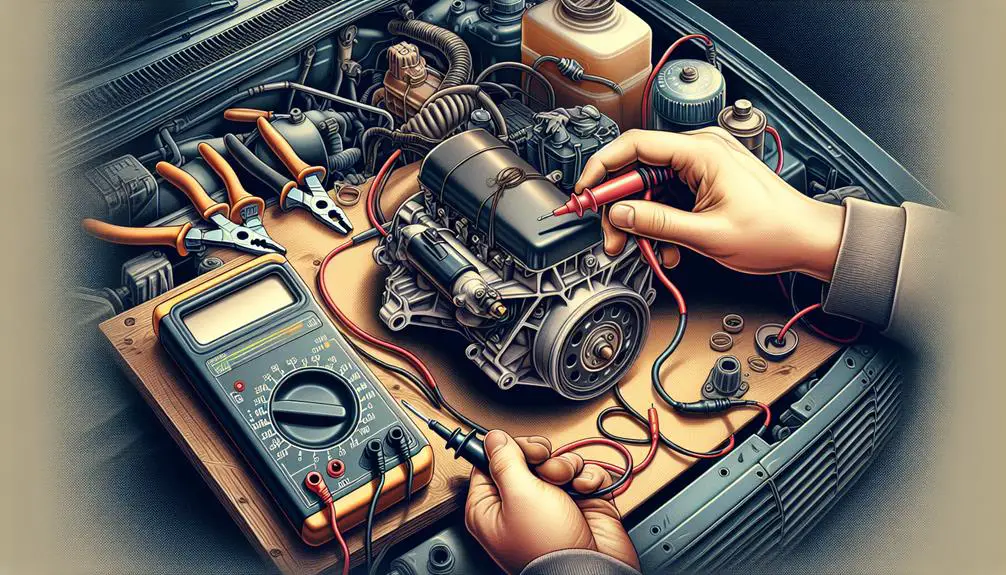
  3. Test Brake Light Switch: The problem might be with the brake light switch. Use a multimeter to test it, or consider replacing it if it seems to be the issue.
  4. Get Professional Help: If you've tried these steps and the light is still on, it's best to get help from a professional. They can look more closely at the car's electrical system to find and fix the problem.

Conclusion

If the parking brake light in your Hyundai Accent won't turn off, it could be for a few reasons. Maybe the parking brake is still on, there mightn't be enough brake fluid, or a brake sensor could be broken. Sometimes, the problem is just a small mistake in the dashboard or the wires.

It's important not to ignore this light. First, check simple things like if the brake is on and if there's enough brake fluid. If those checks don't fix the problem, it might be time to look more closely or ask a professional for help to make sure you're safe while driving.
How to Replace a Starter on a 2005 Toyota Corolla


To replace a starter on a 2005 Toyota Corolla:

  • Gather necessary tools
  • Locate and remove the old starter
  • Install the new one
  • Test the installation

Follow detailed steps carefully to avoid pitfalls and ensure a smooth process.

Gathering Necessary Tools

preparing for upcoming project

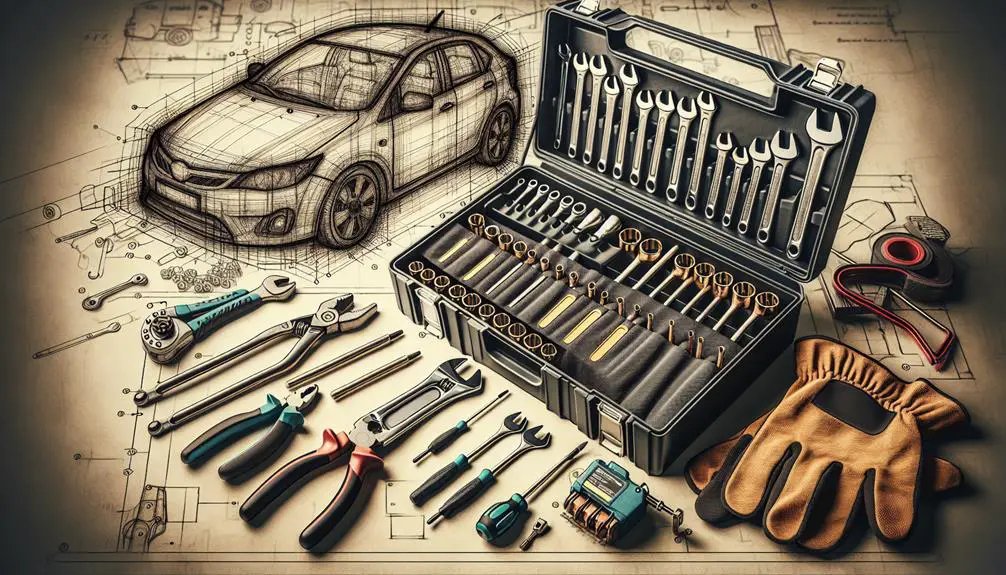
Before starting the replacement of the starter on a 2005 Toyota Corolla, gather the needed tools to make the job easier and faster.

You will need a socket set with 10mm, 12mm, and 14mm sockets for disconnecting the battery and removing the starter bolts. A ratchet with an extension bar is important for reaching and turning bolts in tight spaces.

Also, have a set of wrenches with 10mm, 12mm, and 14mm sizes. Wrenches can reach places sockets cannot, so it's useful to have both.

Include pliers and a screwdriver for removing clips or wires connected to the starter and for prying anything stuck.

Wear safety glasses to protect your eyes from dust, debris, or sparks. Use a flashlight or work light to see the starter's location and mounting clearly when working under the car.

Locating the Starter

To find the starter in your 2005 Toyota Corolla, follow these steps:

  1. Make sure your car is on a flat surface and turned off. For safety, disconnect the battery.
  2. The starter is near the front of the engine compartment, close to the transmission.
  3. Look for a cylindrical part bolted to the engine's block. It's on the lower side of the engine, towards the back and might be hard to see from the top. You may need to look from underneath the car or peer down from above the engine.
  4. The starter has a thick cable from the battery and one or more smaller wires. These connections help you identify it.

Removing the Old Starter

installing a new starter

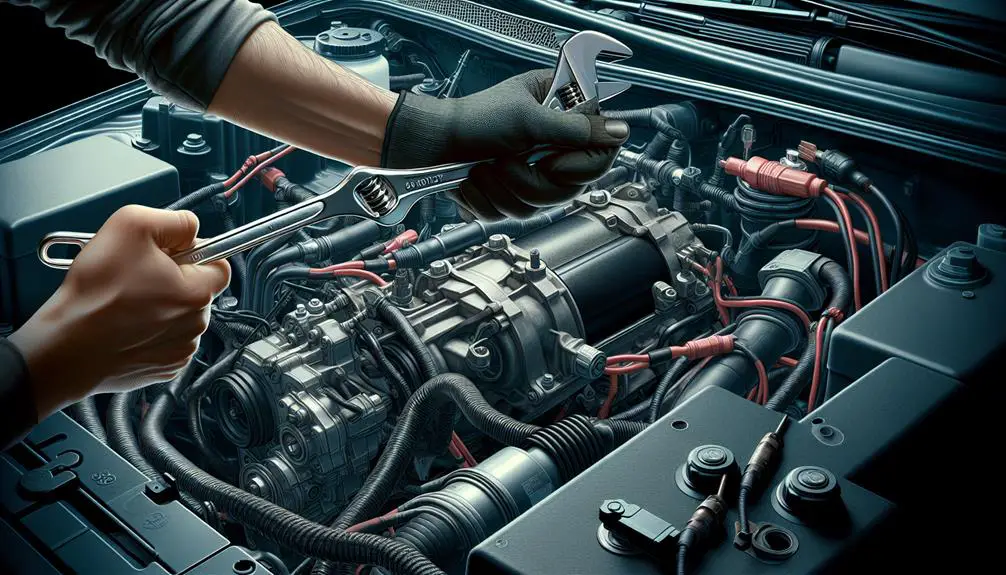
To remove the old starter from your 2005 Toyota Corolla, first, ensure the battery is disconnected. You'll need wrenches and a socket set. Start by locating the two wires connected to the starter: a thick wire from the battery and a thinner wire from the ignition. Use a wrench to remove the nuts that secure these wires. Remember the connection order for reattachment to the new starter.

Next, remove the starter's mounting bolts, typically two or three, using a socket set. If a bolt is hard to reach, use a socket extension.

After removing the bolts, the starter may still be tight. Wiggle it or gently pry it with a flathead screwdriver to loosen it.

Installing the New Starter

To install your new starter in a 2005 Toyota Corolla, make sure it lines up with the mounting bracket where the old one was. Here's a simple guide:

  1. Attach the Starter: Position the new starter and use the bolts you took out before to attach it back to the engine. Start by loosely fitting all the bolts, then tighten them to the specified torque to ensure a secure attachment without causing any damage.
  2. Connect Electrical Wires: Reconnect the electrical wires to the new starter. There should be a thick cable from the battery and a smaller wire for the solenoid. Ensure these are tight and secure.
  3. Reconnect Negative Battery Cable: Reattach the negative battery cable to the battery. This is important to power your car's electrical system.
  4. Check Everything: Before finishing, check all connections and bolts to make sure everything is secure and in the right place. This helps avoid future problems.

Testing the Installation

four word phrase created

After installing a new starter in a 2005 Toyota Corolla, test it by reconnecting the battery, with the negative terminal last for safety.

Then, turn the ignition key and listen for the starter cranking the engine smoothly. If there are issues, like struggling or unusual noises, recheck the installation.

If the engine starts smoothly, the installation is successful. If not, or if clicking sounds are heard, there might be a loose connection or the starter could be faulty. Ensure all connections are secure.

Conclusion

You did a great job changing the starter in your 2005 Toyota Corolla.

First, you got all the tools you needed.

Then, you found the old starter and took it out carefully.

After that, you put in the new starter just right.

Make sure to check that the new starter works well.

By being patient and paying close attention, you avoided having to go to a mechanic and learned how to fix a car.

Well done for taking the step and doing it yourself!

What Should I Do If My Hyundai Doesnt Have An Engine Immobilizer


  • If your Hyundai lacks an engine immobilizer, consider installing an aftermarket immobilizer as a primary measure.
  • Additionally, enhancing your car's security by upgrading alarm systems, using steering wheel locks, and exploring vehicle tracking options can provide comprehensive protection against theft.

Assess Your Current Security

evaluate your current safety

Before worrying about not having an engine immobilizer in your Hyundai, check your car's security. Ensure doors and windows lock properly. This is crucial for preventing theft.

Consider where you park. Choose well-lit, secure areas to reduce theft risk. If you often park in risky areas, think about changing this or taking extra steps to secure your car.

Check your alarm system. Make sure it's working and activated. Don't leave valuables in sight, as this can attract thieves.

Be careful with your keys. Don't hide a spare key on or near your car. Always keep your keys secure.

Install an Aftermarket Immobilizer

To improve your Hyundai's security, consider adding an aftermarket engine immobilizer. This device stops the engine from starting without the correct key or fob, helping to prevent theft.

First, find immobilizers that work well with your Hyundai. Look for one that's effective and fits well with your car's electronics. Use online forums, reviews, and auto security expert advice to help you choose.

After picking an immobilizer, have it installed. It's better to use a professional for installation to make sure it's connected correctly to your car's electrical system and to avoid future problems.

Upgrade Alarm Systems

enhance security with technology

To protect your Hyundai, consider upgrading its alarm system. Modern alarm systems offer advanced features like real-time alerts to your phone if someone tries to access your vehicle without permission.

Upgrades include shock sensors that notice impacts or towing attempts, and interior motion sensors that detect movement inside the car when it should be empty. These features are useful for parking in less secure areas.

Some systems can also integrate with your car's electronics, allowing you to remotely disable the ignition or fuel system, adding extra security.

Investing in a quality alarm system can deter thieves and may lower your insurance costs. It's a good way to keep your car safe.

Use Steering Wheel Locks

Upgrading your car's alarm system is good, but adding a steering wheel lock can further prevent theft. A steering wheel lock, which is visible to anyone trying to steal your car, can make them reconsider. This lock attaches to the steering wheel, stopping anyone from driving the car unless they remove the lock. It's a simple but effective security step.

Here are the main reasons to use a steering wheel lock:

  1. Visibility: A steering wheel lock shows you've secured your car, deterring thieves.
  2. Affordability: Steering wheel locks are less expensive than many other anti-theft devices.
  3. Ease of Use: They're easy to put on and take off, making them convenient for everyday use.

Getting a steering wheel lock is a wise choice to better protect your car. It's affordable and works well with your car's alarm system to keep your vehicle safe.

Consider Vehicle Tracking Options

explore vehicle tracking solutions

Adding a tracking device to your Hyundai adds security by letting you know where it's at all times. There are many types of GPS trackers that fit different budgets and needs. These devices can help find your car if it's stolen and give you updates on its location.

Installing a tracker is easy. Many connect to your car's OBD-II port without needing special tools or skills. You can also choose battery-operated trackers that can be hidden in your car.

After installation, you can check your car's location through an app or website. Some tracking services also offer geofencing, which sends you an alert if your car leaves a set area.

Conclusion

If your Hyundai doesn't have an engine immobilizer, don't worry. First, check what security you already have. Then, you can make your car safer by adding an immobilizer that you buy separately. Also, make your alarm system better.

Don't forget about getting a strong lock for your steering wheel, and think about getting a service that tracks your car if it gets stolen. By doing these things, your Hyundai will be much harder for thieves to steal.

Keep your car safe by being careful and taking action!

How Much Do Brake Pads Cost Hyundai Tucson


The cost of replacing brake pads on a Hyundai Tucson can vary widely.

Factors such as pad quality, choice of DIY or professional installation, and location affect the price.

Understanding the breakdown of expenses and ways to save money can help keep your Tucson in excellent condition without significant financial strain.

Factors Influencing Cost

factors determine project budget

Several factors can influence the cost of brake pads for a Hyundai Tucson, including the quality of materials, brand, and where you choose to purchase them.

To start off, the material of the brake pads plays a major role. You've got options ranging from organic compounds to more durable and expensive ceramic pads. If you're leaning towards longevity and better performance, you might opt for ceramic, but this choice will bump up the price. On the other hand, organic pads are softer and quieter but wear out faster and are cheaper.

Then there's the brand. You've probably heard names like OEM (Original Equipment Manufacturer) and aftermarket. OEM pads are designed specifically for your Hyundai Tucson, ensuring a perfect fit and best performance. They're often pricier but come with the peace of mind of having parts approved by your car's manufacturer. Aftermarket options can be less expensive and offer a wide range of choices, but it's a bit of a gamble as their quality varies.

Where you decide to buy these brake pads also affects the cost. Purchasing them directly from a dealership is convenient but usually the most expensive route. Hunting for deals online or at auto parts stores can save you some cash, but it requires a bit more effort on your part.

Average Price Range

Comprehending the factors that influence the cost, let's now investigate the average price range for Hyundai Tucson brake pads. Knowing how much you might spend can help you budget for this necessary maintenance.

Typically, the price for a set of Hyundai Tucson brake pads falls somewhere between $50 and $150. This range, however, can vary based on several factors such as the brand, material, and if you're buying front or rear pads. Let's break this down a bit more to give you a clearer picture:

  1. Brand: Premium brands tend to be on the higher end of the price spectrum, offering extended longevity and better performance. Meanwhile, generic brands can save you money upfront, though they mightn't last as long.
  2. Material: Brake pads are made from different materials, each with its own set of benefits and drawbacks. Ceramic pads, known for their quiet operation and reduced brake dust, typically cost more than metallic or organic options.
  3. Front vs. Rear: Front brake pads usually wear out faster than rear ones because the front brakes handle a greater share of the braking load. As a result, front brake pads might be slightly more expensive, though this isn't always the case.

DIY Replacement Costs

diy home repair guide

If you're considering replacing Hyundai Tucson brake pads yourself, you'll likely save on labor costs, though you'll still need to budget for the parts and any necessary tools. The cost of brake pads for your Hyundai Tucson can vary widely depending on the brand and material, ranging from $30 to $100 for a set that covers either the front or rear wheels. It's important to choose the right pads for your driving needs; ceramic pads, for example, are pricier but offer quieter operation and less dust.

You might need a few tools if you don't already have them in your garage. A basic toolkit for this job includes a jack and jack stands, a lug wrench, and a C-clamp or brake caliper tool. Altogether, these could set you back an additional $20 to $100, depending on quality and where you shop. Remember, investing in tools is a one-time expense; they can be reused for different maintenance tasks.

Don't overlook the importance of a good manual or online tutorial. While there's no direct cost unless you're buying a book, setting aside time to study the process is part of the investment. Patience and attention to detail are key to a successful DIY brake pad replacement.

Professional Service Fees

Turning to professional service for your Hyundai Tucson's brake pad replacement can greatly increase the cost due to labor fees. While you're paying for the convenience and expertise, it's crucial to understand what you're getting into financially. Professional mechanics offer a range of services that contribute to the total cost, not just the price of the brake pads themselves.

Here are three key factors that affect professional service fees:

  1. Labor Rates: These can vary significantly depending on where you live and the reputation of the service center. Most auto repair shops charge an hourly rate for labor, and brake pad replacement can take anywhere from one to two hours per axle. This means labor can be a substantial portion of your total bill.
  2. Quality of Brake Pads: Professionals often recommend higher-quality brake pads for their durability and performance, which come at a higher cost. However, these can offer better value over time than cheaper alternatives.
  3. Additional Services: During the replacement process, the mechanic may identify other issues such as worn rotors or a compromised brake system that require attention. Addressing these concerns simultaneously can save you time and future expenses but will increase your current bill.

Saving Money on Brake Pads

frugal brake pad shopping

Cutting costs on brake pads for your Hyundai Tucson doesn't mean you have to compromise on quality. You can save money and still keep your vehicle in excellent condition. It's all about knowing where to look and what to look for. You've got options that won't empty your wallet but will keep you safe on the road.

One effective way to save money is by comparing prices from different suppliers. Don't just buy from the initial place you check. Prices can vary widely, so shop around. Additionally, consider purchasing aftermarket brake pads instead of OEM parts. They often offer the same performance at a fraction of the cost. Just make sure they meet or exceed the specifications set by Hyundai for your Tucson.

Here's a quick look at the potential savings:

Source Quality Potential Savings
OEM Parts High Low
Aftermarket Parts High to Medium High
Bulk Purchases Varies Medium to High
Online Deals Varies High
Local Auto Shops Medium to High Medium

Another tip is to keep an eye out for sales and promotions. Many auto parts stores offer significant discounts during holiday sales or special events.

Conclusion

To sum up, the cost of brake pads for your Hyundai Tucson can vary widely, depending on several factors. On average, you're looking at a range from $30 to $50 for DIY replacements, while professional installations can set you back $100 to $300.

Remember, choosing between DIY and professional services affects your final bill greatly. To save money, consider purchasing the pads yourself and either installing them or finding a trusted mechanic who'll do the job for a reasonable fee.

What Is The Difference Between Front Wheel Drive And Rear Wheel Drive


The main difference between front wheel drive (FWD) and rear wheel drive (RWD) lies in their performance, handling, and vehicle design implications.

FWD vehicles channel power directly to the front wheels, offering better traction and fuel efficiency, making them practical for everyday use.

In contrast, RWD vehicles deliver power to the rear wheels, enhancing handling and acceleration, ideal for performance-oriented driving.

This distinction influences vehicle dynamics, weight distribution, and maintenance needs, with FWD generally being more cost-effective and RWD offering a more engaging driving experience.

Defining FWD and RWD

differences between front wheel drive and rear wheel drive

Front Wheel Drive (FWD) powers the front wheels of a car, while Rear Wheel Drive (RWD) powers the rear wheels. This affects how the car drives and its efficiency and space.

FWD has the engine over the front wheels, improving traction in bad weather, and makes cars more space-efficient. It's common in smaller cars.

RWD balances the car's weight better, making it preferred for sports and luxury cars. This basic understanding is important for knowing how a car handles.

Performance Comparison

When choosing between FWD (front-wheel drive) and RWD (rear-wheel drive) cars, consider how each impacts driving performance. Here are the main differences:

  • Acceleration and Traction: RWD cars generally accelerate better because the weight distribution improves road grip. FWD cars might've traction issues during quick starts since the front wheels have to steer and move the car.
  • Efficiency: FWD cars are usually more fuel-efficient than RWD cars. This is because FWD systems are simpler and lighter, needing less power to move.
  • Weight Distribution: RWD cars have a more balanced weight distribution, which can enhance performance in some situations, but it may not be very noticeable in daily driving.
  • Maintenance Costs: FWD cars typically cost less to maintain because their drivetrain is simpler.
  • Driving in Conditions: FWD cars are often better in slippery conditions because the engine's weight is over the driving wheels, improving traction.

Knowing these differences can help you choose the right car for your needs.

Handling and Control

precise control and handling

Understanding how FWD (front-wheel drive) and RWD (rear-wheel drive) cars handle and control differently can change how you drive. Let's see how these drivetrain setups impact your driving.

Aspect FWD RWD
Traction Better in wet or slippery places because the engine's weight is over the driving wheels. Might have trouble in bad conditions unless there's extra weight on the rear wheels.
Control in Curves Can understeer, meaning it might not turn well and prefers to go straight. Has a better balance and might oversteer, which skilled drivers can handle more easily.

| Weight Distribution | More weight in the front, making handling less balanced. | Weight is more evenly spread, improving stability and control.

FWD cars are generally better in bad weather because they have better traction. But, if you want more control when driving, especially around curves, RWD might be better. RWD cars offer better balance and stability, which is great for those who like an exciting drive.

Impact on Vehicle Design

Choosing between front-wheel drive (FWD) and rear-wheel drive (RWD) affects a vehicle's design and performance. Here are the main impacts:

  • Space: FWD vehicles usually have more interior and cargo space because their drivetrain components are all located at the front, making them more compact.
  • Weight Distribution: RWD cars often have a more even weight distribution since their drivetrain components stretch from the front to the back. This can improve handling and stability.
  • Engine Placement: FWD vehicles typically have their engines placed sideways to save space, while RWD cars have their engines placed lengthwise, which can help with power delivery.
  • Aerodynamics: The choice between FWD and RWD can affect the car's shape and, therefore, its aerodynamics. For example, RWD cars might've a longer front to fit the drivetrain.
  • Design Flexibility: RWD allows for more design options, especially for high-performance and luxury cars, as it can accommodate larger engines and provides better handling at higher speeds.

These factors show how important the choice between FWD and RWD is for a vehicle's design and performance.

Maintenance and Durability

maintenance and longevity emphasized

When comparing front-wheel drive (FWD) and rear-wheel drive (RWD) vehicles, it's important to understand their maintenance and durability differences. Each type has its advantages and disadvantages that influence how often you'll need to maintain your vehicle and its overall lifespan.

Aspect FWD RWD
Maintenance Lower, because there are fewer parts in the drivetrain. Higher, due to a more complex drivetrain and more parts.
Tire Wear Front tires wear out faster because they carry the engine's weight and handle steering. Rear tires may wear out faster, especially in powerful cars.

| Durability | Good in city driving and bad weather. | Excellent for high torque and towing.

Your choice should depend on your driving needs. If you drive mostly in the city and in mild bad weather, FWD might be better. If you need a vehicle for performance driving or towing, consider RWD.

Conclusion

To sum it up, FWD and RWD change how your car drives, feels, and is built.

FWD is good for driving in bad weather because it helps your car stick to the road better, making it easier to control.

RWD gives you a smoother ride and is better for fast driving and sharp turns. Cars with RWD might need more fixes but last longer.

In the end, if you like driving fast or in a certain way, or if you drive a lot in snow or rain, that can help you decide if you want a car with FWD or RWD.

How Much Gas Does It Take To Fill Up A Hyundai Sonata


The amount of gas needed to fill up a Hyundai Sonata varies depending on the model and year, with fuel capacities generally ranging from 13.2 to 18.5 gallons.

Understanding your specific vehicle's capacity, along with considering driving habits and maintenance, is essential for optimizing fuel efficiency and saving money.

Hyundai Sonata Fuel Capacity

fuel tank size information

The Hyundai Sonata has a fuel tank that can hold about 18.5 gallons. This large tank size means fewer stops for gas on long trips.

It's competitive with other cars in its class, offering good range. This is helpful for areas with few gas stations or for long-distance driving.

Factors Influencing Fuel Consumption

Several factors impact the fuel consumption of a Hyundai Sonata, including driving habits, vehicle maintenance, tire pressure, and weight and aerodynamics.

  • Driving habits: High impact. Example: Aggressive driving increases fuel use.
  • Vehicle Maintenance: High impact. Example: A well-maintained engine uses less fuel.
  • Tire Pressure: Moderate impact. Example: Low tire pressure increases resistance.
  • Weight and Aerodynamics: Moderate impact. Example: Extra weight or open windows reduce efficiency.

Driving fast, accelerating quickly, and braking hard use more fuel. Regular maintenance like oil changes and air filter replacements, along with keeping tires inflated, reduces fuel consumption. Also, reducing the car's weight and minimizing drag by not carrying unnecessary items or using roof racks helps save fuel. Paying attention to these factors improves the Sonata's fuel efficiency.

Calculating Your Gas Needs

managing fuel consumption efficiency

To calculate your gas needs for a Hyundai Sonata, first find the average miles per gallon (MPG) from the manufacturer's specs or your driving history. Then, figure out the distance you'll travel. If it's for a trip, calculate the total miles. For daily use, estimate your weekly or monthly mileage.

Next, divide the total distance by the MPG to find out how many gallons of gas you need. For example, if your Sonata gets 30 MPG and you're going on a 300-mile trip, you'll need 10 gallons of gas. Remember to adjust your calculation based on your current fuel level.

Tips for Efficient Fuel Use

To save fuel in your Hyundai Sonata, follow these steps:

  1. Keep the car in good condition. Check tires regularly and keep them at the right pressure. Change oil and air filters on time to improve efficiency.
  2. Drive smoothly. Accelerate gently, keep a constant speed, and try to avoid stopping and starting. Use cruise control on highways.
  3. Don't carry unnecessary weight. Remove items from your trunk or roof that you don't need.
  4. Turn off your engine if you're waiting for more than a minute. Modern cars use less fuel when restarting.

These steps will help reduce fuel use.

Understanding Fuel Economy Ratings

summarizing fuel efficiency information

To understand how far your Hyundai Sonata can travel on one gallon of gas, it's important to know about fuel economy ratings. These ratings are given in miles per gallon (MPG) and show how fuel-efficient your car is. A higher MPG means you need less gas to travel a certain distance, saving you money.

There are two types of fuel economy ratings: city and highway. The city rating is for driving in areas with lots of stops and starts, like cities or neighborhoods. This is usually lower because starting and stopping uses more gas. The highway rating is for driving at constant speeds, like on freeways, which is more fuel-efficient.

Conclusion

To fill up a Hyundai Sonata with gas depends on its tank size, which changes with the type of Sonata you have. The amount of gas you need can also change. It depends on how you drive, the roads you're on, and the weather.

To use less gas, follow our simple tips and learn about how much gas your car uses. This way, you'll spend less on gas and help the environment too. Remember to drive carefully and fill up your gas tank smartly!